
RTO Honeycomb ceramic regenerators are applied in fresh air system air conditioners to achieve energy recovery through their high-efficiency heat storage characteristics, enhancing system energy efficiency and comfort. The detailed analysis of working principles, advantages, application scenarios, and design considerations is as follows:
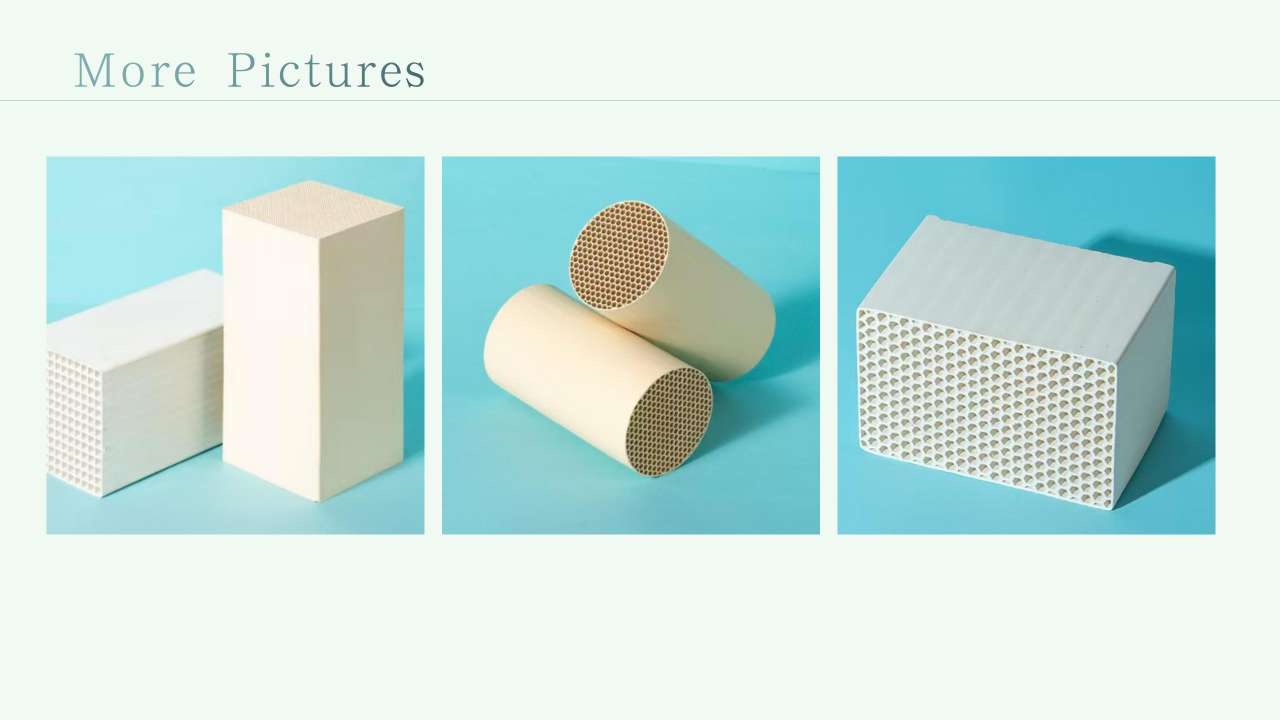
I. Working Principle of RTO Honeycomb ceramic regenerators
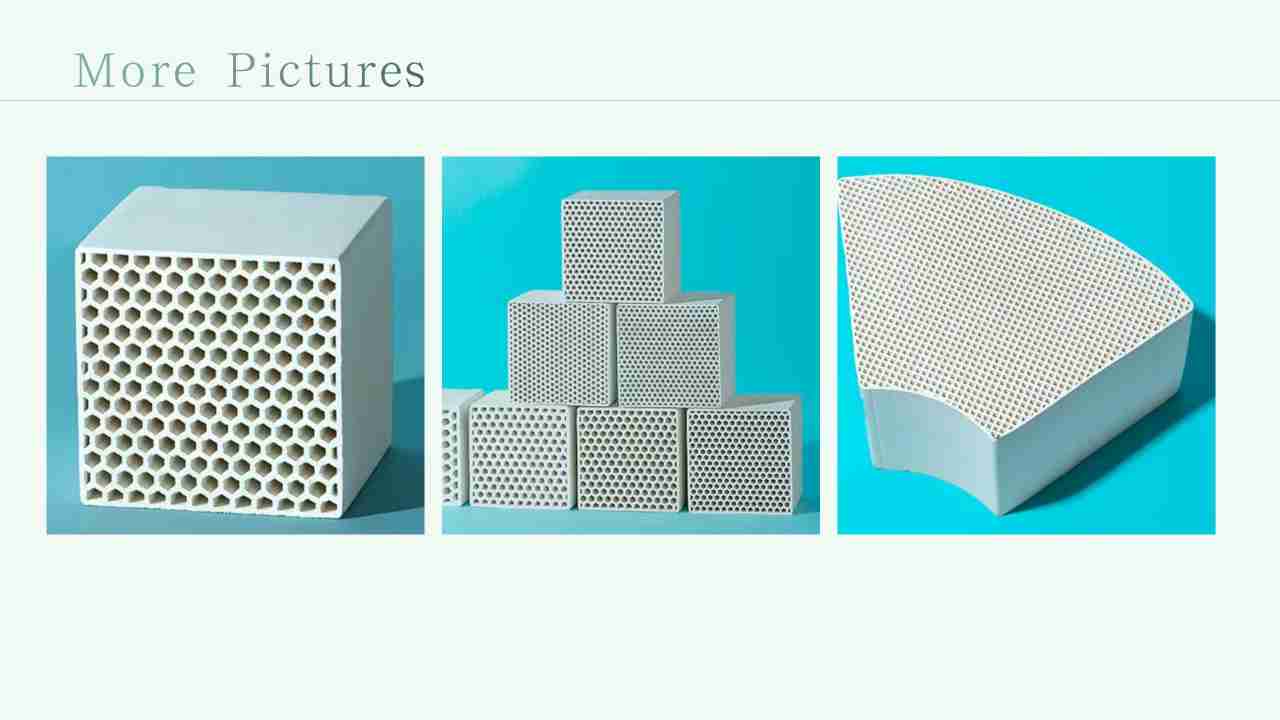
Honeycomb ceramic regenerators feature a porous honeycomb structure (with pore diameters typically 0.5–5 mm and porosity 70%–90%), mainly made of cordierite, silicon carbide, etc., with the following properties:
- High specific heat capacity and heat storage density: Capable of quickly absorbing and storing heat (or cold).
- Large specific surface area: Enhances heat exchange efficiency with air (heat exchange efficiency reaches 70%–90%).
In fresh air systems, the workflow is:
- Energy recovery phase:
- Indoor exhaust air (high temperature in summer/low temperature in winter) flows through the regenerator, and heat is absorbed and stored by the regenerator.
- Outdoor fresh air (low temperature in summer/high temperature in winter) then flows through the same regenerator, absorbing the stored heat (or cold) for temperature preprocessing.
- Periodic switching: Valves or rotating structures periodically switch the flow directions of fresh air . And exhaust air to prevent temperature imbalance in the regenerator and ensure continuous efficient heat exchange.
II. Core Advantages in Fresh Air System Air Conditioners
| Advantage Dimension | Specific Performance |
|---|---|
| High energy efficiency | – Reduces fresh air load by 30%–50% in summer and heat loss by 40%–60% in winter, lowering air conditioner energy consumption. – Less sensitive to humidity than traditional plate heat exchangers, suitable for high-humidity areas. |
| Compact and durable structure | – Withstands high temperatures (cordierite: ≤1200°C, silicon carbide: ≤1600°C), resists corrosion, and has a service life of over 10 years. – Small volume and light weight, saving installation space. |
| Auxiliary air purification | – The porous structure can adsorb partial dust and odors (with coatings, it can enhance formaldehyde and VOCs purification). |
| Strong adaptability | – Suitable for scenarios with large temperature differences and fluctuating air volumes (e.g., industrial workshops, commercial complexes), with better dust tolerance than plate heat exchangers. |
III. Typical Application Scenarios
- Commercial buildings and public spaces
- Scenarios: Malls, office buildings, hotels, hospitals, and other places requiring continuous fresh air ventilation.
- Value: Reduces energy consumption of central air conditioning systems. In transitional seasons (spring and autumn). And regenerators can achieve “free” pre-cooling/pre-heating, reducing host start-stop frequency.
- Industrial and special environments
- Scenarios: Electronic factories (requiring constant temperature and humidity), spraying workshops (exhaust air with waste heat), data centers (high sensible heat load).
- Features: Combined with high-temperature resistant silicon carbide regenerators. And it can handle high-temperature exhaust air (e.g., drying line waste gas) and recover heat for preheating fresh air.
- Residential and household systems
- Scenarios: Whole-house fresh air systems in high-end residences and passive buildings.
- Advantages: Reduces indoor temperature fluctuations, lowers heating/cooling energy consumption, and improves air comfort (avoids temperature difference caused by direct fresh air blowing).
IV. System Design and Selection Key Points
- Material selection
- Cordierite: Cost-effective, suitable for conventional temperatures (≤400°C) and humidity, with good acid and alkali resistance.
- Silicon carbide: High thermal conductivity (10 times that of cordierite), resistant to high humidity and temperature (≤1200°C), ideal for high-load industrial scenarios.
- Structural parameter optimization
- Pore diameter and density: Smaller pore diameters and higher densities (e.g., 400–600 pores per square inch) improve heat exchange efficiency but increase air resistance. Balance energy consumption and heat exchange needs.
- Module size: Selected based on air volume, with common sizes 300 mm × 300 mm × 100 mm–500 mm, allowing combined installation.
- System matching design
- Wind direction switching frequency: Typically switches every 30–60 seconds, controlled automatically by PLC or sensors to ensure uniform regenerator temperature.
- Filtration pretreatment: Install medium-efficiency filters (F7 grade) at the fresh air inlet to reduce dust blockage in honeycomb channels and extend service life (recommend cleaning/replacing filters quarterly).
- Energy efficiency calculation
- Take a 10,000 m³/h fresh air system as an example: in winter, with outdoor temperature -10°C and indoor 20°C, the fresh air can be preheated to 5–10°C using honeycomb ceramic regenerators. And saving about 120–180 kW of heat per hour, and approximately 100,000 kWh annually . (calculated by 12 hours/day, 120 days/year).
V. Precautions and Maintenance
- Anti-freezing protection: In low-temperature areas, install temperature sensors before and after the regenerator. When exhaust air temperature is below 0°C, activate electric heating or bypass valves to prevent internal frosting and blockage.
- Regular cleaning: If air resistance increases after long-term operation (exceeding 150% of the initial value). And use compressed air backblowing or low-pressure water flushing (silicon carbide can be cleaned with weak acid) to remove dust in the channels.
- Anti-corrosion treatment: If exhaust air contains acidic gases (e.g., kitchen fumes, industrial waste gas), choose acid-resistant coatings (e.g., ceramic glaze) or switch to silicon carbide.
VI. Industry Trends and Innovation Directions
- Integrated composite functions: Load photocatalysts, activated carbon, etc., on the honeycomb ceramic surface to achieve simultaneous heat storage and air purification (e.g., removing formaldehyde and PM2.5).
- Combination with renewable energy: Pair with solar collectors, ground-source heat pumps, etc., to store excess heat using regenerators and optimize new energy efficiency.
- Intelligent control: Use AI algorithms to predict indoor and outdoor temperature and humidity, dynamically adjusting regenerator switching frequency and fresh air volume for further energy efficiency.
Honeycomb ceramic regenerators, with their high efficiency and durability, are becoming an important technological direction for energy-saving retrofits in fresh air systems. Especially under the “dual carbon” goal. And their application prospects in construction and industry are broad. For specific project selection, further refine the plan based on air volume, temperature/humidity conditions, and budget.https://www.chempackings.com/honeycomb-ceramic/honeycomb-ceramic-heat-exchanger.html