
Mullite Honeycomb Ceramic Regenerators: A Technical Overview
1. Definition and Structure
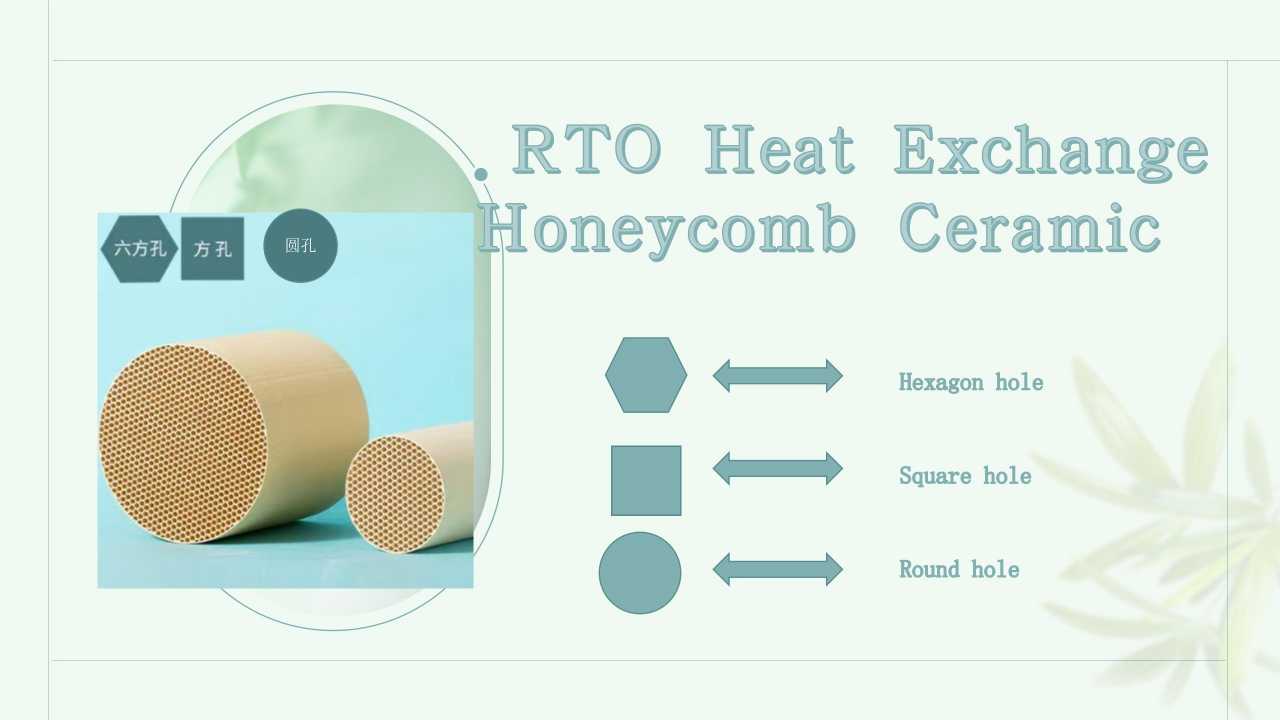
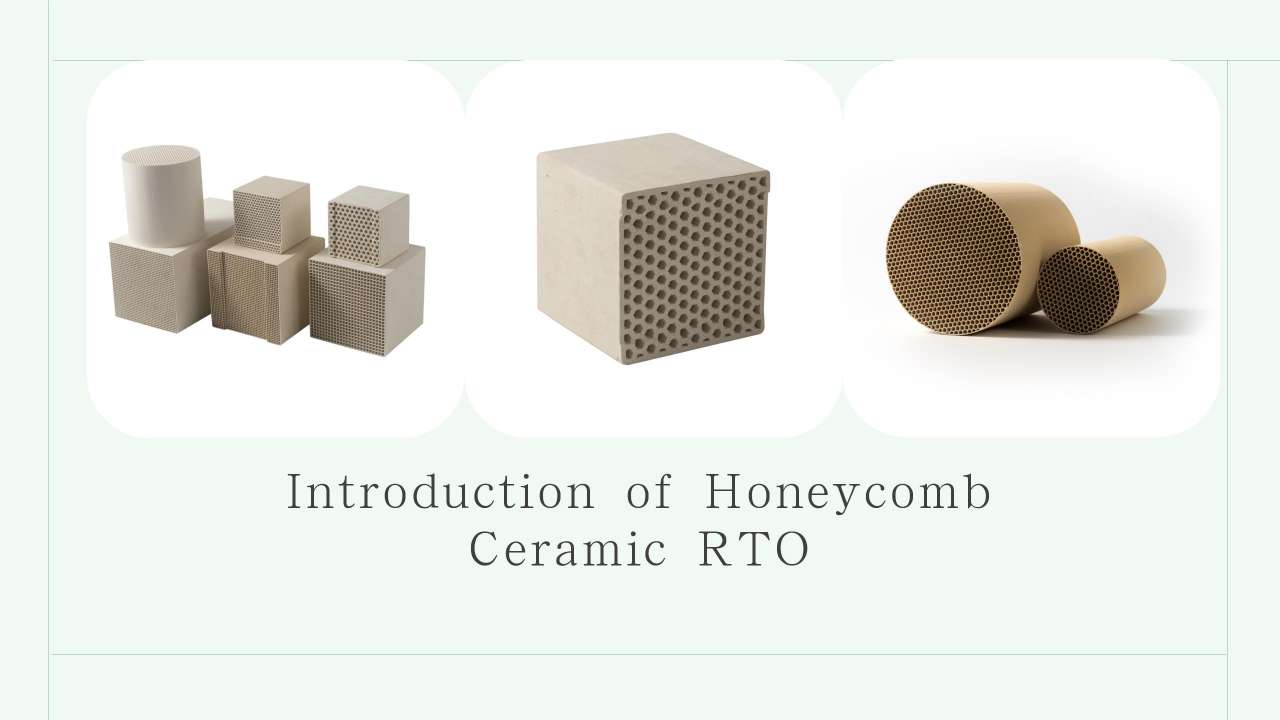
Mullite honeycomb ceramic regenerators are high-performance thermal energy storage materials characterized by their periodic hexagonal cellular structure. This design creates a large specific surface area (typically 100–300 m²/m³) and uniform pore channels, enabling efficient heat transfer and storage. The honeycomb geometry minimizes pressure drop while maximizing thermal contact with flowing gases, making them ideal for regenerative thermal systems.
2. Composition and Manufacturing
- Primary Components: Composed mainly of mullite (3Al₂O₃·2SiO₂), a refractory mineral known for its high melting point (≈1,890°C) and chemical stability.
- Matrix Reinforcement: Often integrated with reinforcing phases (e.g., alumina or silica) to enhance mechanical strength.
- Fabrication Process: Manufactured via extrusion molding, followed by high-temperature sintering at 1,400–1,600°C to form a dense, porous ceramic matrix.
3. Key Properties
| Property | Typical Value | Significance |
|---|---|---|
| Working Temperature | ≤1,600°C | Suitable for high-temperature industrial applications |
| Thermal Conductivity | 1.5–3.0 W/(m·K) at 1,000°C | Enables rapid heat absorption and release |
| Thermal Shock Resistance | ≤1,000°C (thermal cycle) | Withstands abrupt temperature changes without cracking |
| Bulk Density | 1.8–2.5 g/cm³ | Balances thermal storage capacity and structural integrity |
| Compressive Strength | ≥80 MPa | Resists mechanical stress in regenerative systems |
4. Applications
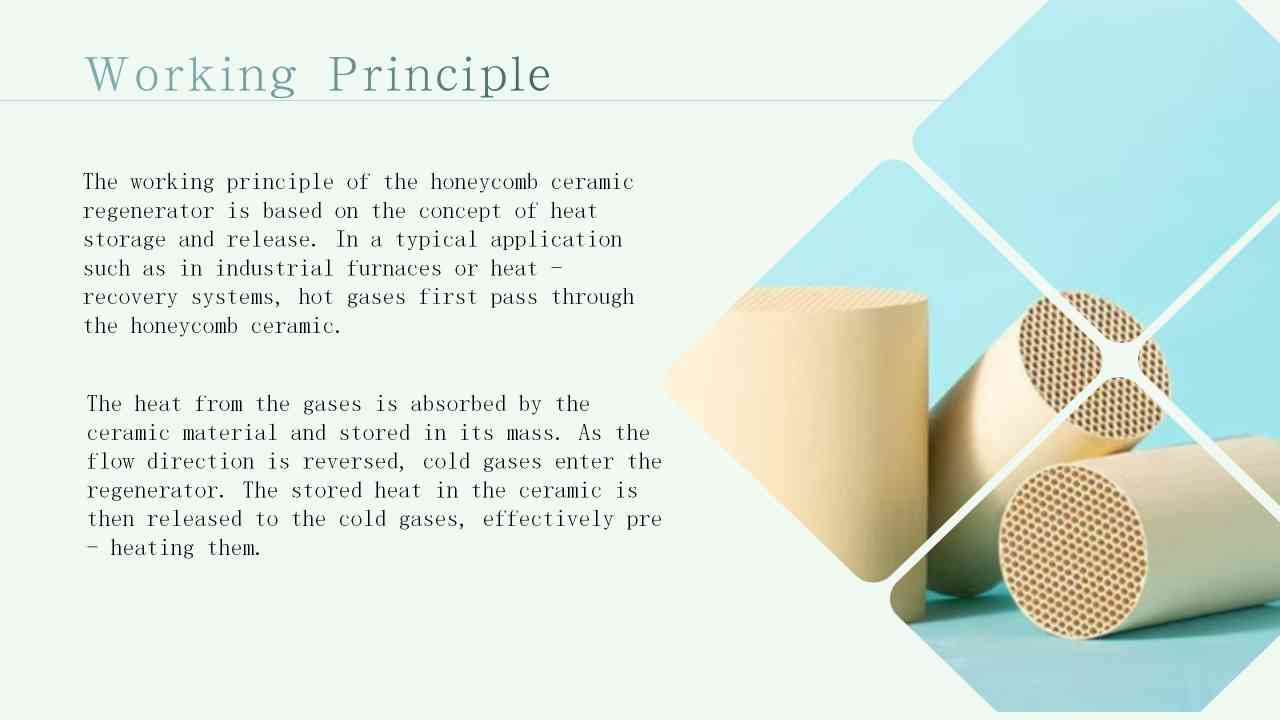
- Industrial Furnaces: Used in regenerative burners for steel, glass, and ceramics production, recovering 70–90% of waste heat to reduce fuel consumption.
- Thermal Oxidizers: In waste gas treatment systems (e.g., VOC abatement), where they preheat combustion air to optimize pollutant destruction efficiency.
- Heat Exchangers: For high-temperature air preheating in power plants and boilers, improving energy conversion rates.
- Catalytic Reactors: As supports for catalysts in chemical processes, combining thermal storage with reaction enhancement.
5. Advantages over Traditional Materials
- Superior Thermal Efficiency: The honeycomb structure minimizes heat loss and maximizes energy recycling.
- High Durability: Resistant to corrosion, abrasion, and thermal fatigue, ensuring long service life in harsh environments.
- Environmental Benefits: Reduces CO₂ emissions by up to 30% and NOx formation via low-temperature combustion support.
- Design Flexibility: Customizable cell density (10–600 cells per square inch) and size to fit specific system requirements.https://www.rtoceramic.com/product/honeycomb-ceramic-heat-exchanger/
6. Technical Trends
Recent developments focus on nano-composite modifications to further improve thermal shock resistance and integrate functional coatings for catalytic applications. These advancements drive their adoption in emerging clean energy technologies, such as solid oxide fuel cells and carbon capture systems.
This introduction highlights the technical excellence of mullite honeycomb ceramics, positioning them as a cornerstone in modern energy-saving and environmental protection solutions.https://www.chempackings.com/ceramic-foam-filter/sic-ceramic-foam-filter-for-metal-filtration.html