
1. Definition and Structure Mullite Honeycomb Ceramic Regenerator
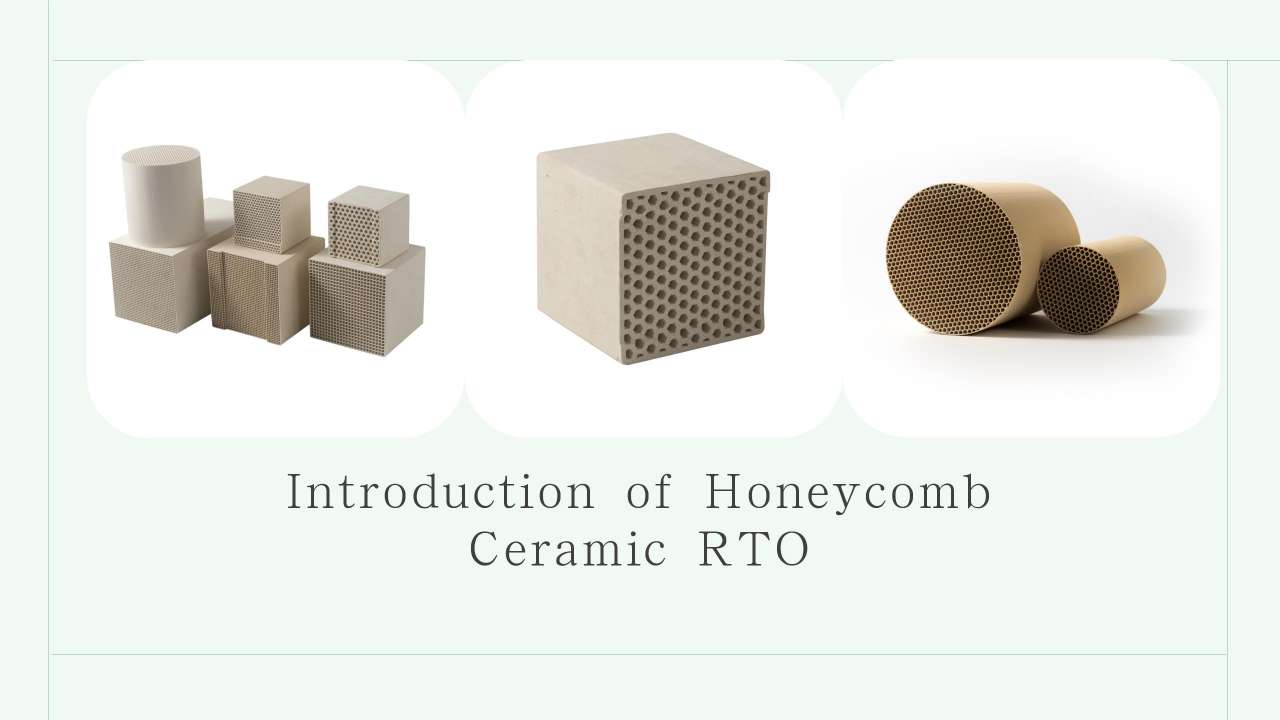
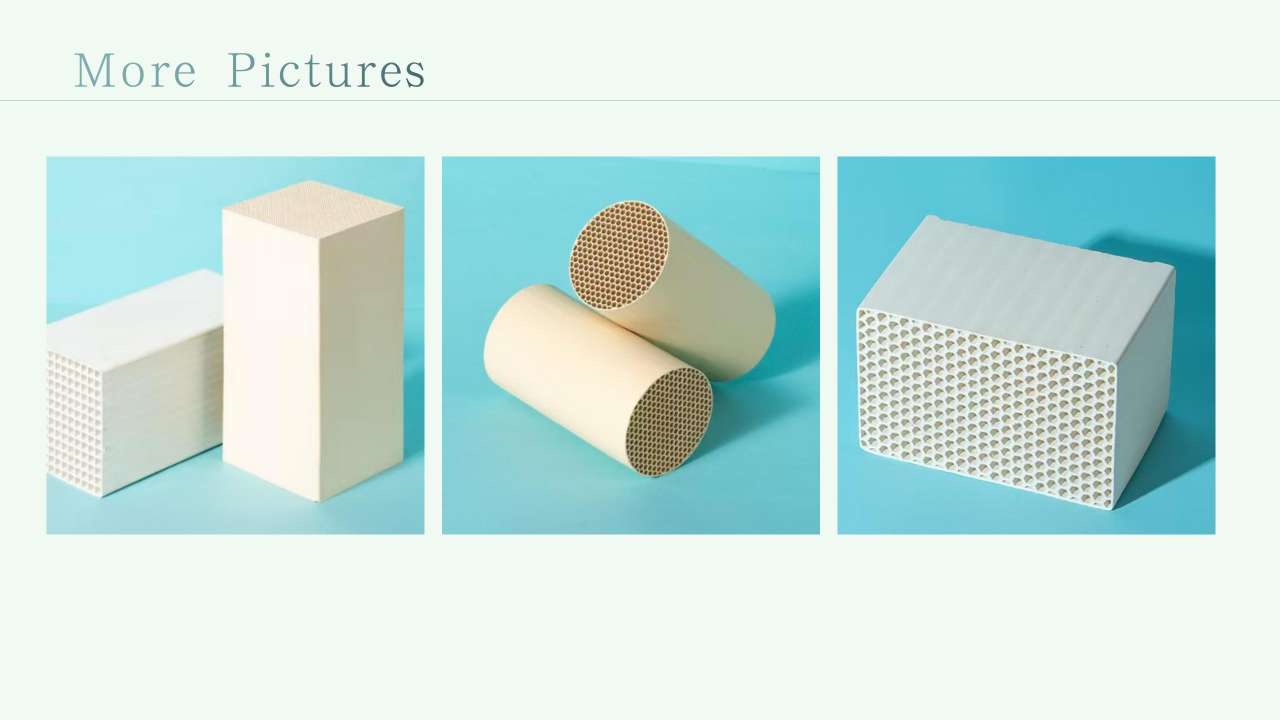
Mullite honeycomb ceramic regenerator is a high-performance thermal energy storage material, characterized by its honeycomb-like cellular structure. Made primarily from mullite (3Al₂O₃·2SiO₂), it features numerous parallel channels with high porosity (typically 70%-85%) and a large specific surface area (200-500 m²/m³). This design enables efficient heat transfer and thermal energy storage, making it ideal for high-temperature industrial applications.https://www.rtoceramic.com/product-category/all-products/rto-honeycomb-ceramic/
2. Key Properties
| Property | Description |
|---|---|
| High-temperature resistance | Withstands temperatures up to 1300–1600°C, suitable for harsh thermal environments. |
| Thermal shock stability | Resists cracking from rapid temperature changes (e.g., thermal cycling between 800°C and 25°C without damage). |
| Excellent thermal conductivity | High heat storage capacity (thermal storage density: 1.0–1.5 kJ/(kg·K)) for rapid heat absorption and release. |
| Chemical corrosion resistance | Immune to most acidic/alkaline gases, ensuring long service life in combustion systems. |
| Mechanical strength | Maintains structural integrity under high pressure (compressive strength > 30 MPa). |
3. Working Principle
- Heat Storage Phase: When hot flue gas (800–1200°C) flows through the honeycomb channels, the ceramic matrix absorbs and stores thermal energy.
- Heat Release Phase: As cold air passes through the regenerator, the stored heat is transferred to the air, preheating it to 600–1000°C. This cycle repeats, achieving energy recovery rates of 85%–95%.
4. Applications
- Industrial Furnaces: Preheats combustion air in steel annealing furnaces, glass melting kilns, and ceramic kilns, reducing fuel consumption by 30%–50%.
- Thermal Oxidizers: Used in regenerative thermal oxidizers (RTOs) to treat volatile organic compounds (VOCs), converting pollutants into CO₂ and H₂O while recycling heat.
- Power Generation: Enhances efficiency in gas turbines and waste heat recovery systems.
- Renewable Energy: Supports concentrated solar power (CSP) plants for thermal energy storage.
5. Manufacturing Process
- Raw Material Preparation: Mullite powder, kaolin, and additives are mixed to form a plastic paste.
- Extrusion Molding: The paste is extruded through a honeycomb die to create uniform cellular structures.
- Drying & Calcination: Dried at 100–200°C, then sintered at 1300–1500°C to achieve crystalline mullite structure.
- Quality Testing: Inspected for dimensional accuracy, thermal shock resistance, and porosity.
6. Advantages over Traditional Regenerators
- Higher energy efficiency due to increased surface area and thermal conductivity.
- Compact design reduces equipment size and installation costs.
- Longer lifespan (5–10 years) compared to metal or refractory brick regenerators.
- Environmentally friendly by minimizing fuel use and CO₂ emissions.
7. Typical Specificationshttps://www.chempackings.com/honeycomb-ceramic/honeycomb-ceramic-heat-exchanger.html
| Parameter | Common Values |
|---|---|
| Cell size | 3–10 mm (customizable for specific applications) |
| Wall thickness | 0.2–0.5 mm |
| Bulk density | 1.8–2.2 g/cm³ |
| Thermal expansion coefficient | 2.5–4.0×10⁻⁶/°C (20–1000°C) |
Conclusion
Mullite honeycomb ceramic regenerators play a pivotal role in energy conservation and environmental protection by enabling efficient thermal recycling in high-temperature systems. Their unique combination of thermal stability, corrosion resistance, and structural efficiency makes them indispensable in modern industrial processes aiming for low-carbon operations.