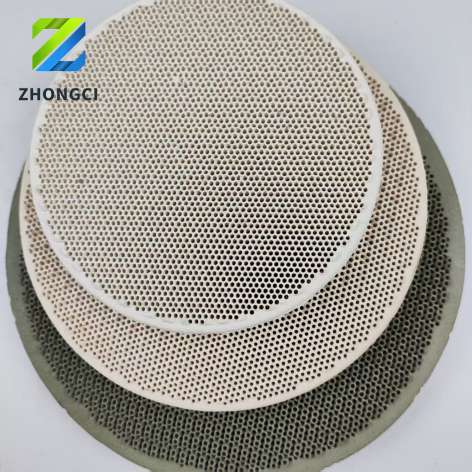
are advanced functional ceramic materials characterized by their unique honeycomb-like porous structure and remarkable far-infrared radiation properties.
They are typically composed of inorganic ceramic powders (such as cordierite, mullite, or zirconia) combined with specific additives, formed through processes like extrusion or sintering, and possess numerous interconnected hexagonal or polygonal channels, resembling a honeycomb.
Far-infrared ceramic plate – Honeycomb ceramic plate
We make these plates from high – quality ceramic materials. They have excellent heat – resistance and chemical stability.
The ceramic material can withstand high temperatures without deforming or degrading, making it suitable for applications that demand thermal stability. Also, it has good chemical resistance. It won’t easily react with various chemicals, ensuring its durability in different environments.
.https://www.rtoceramic.com/product/round-infrared-honeycomb-ceramic-burner-disc/
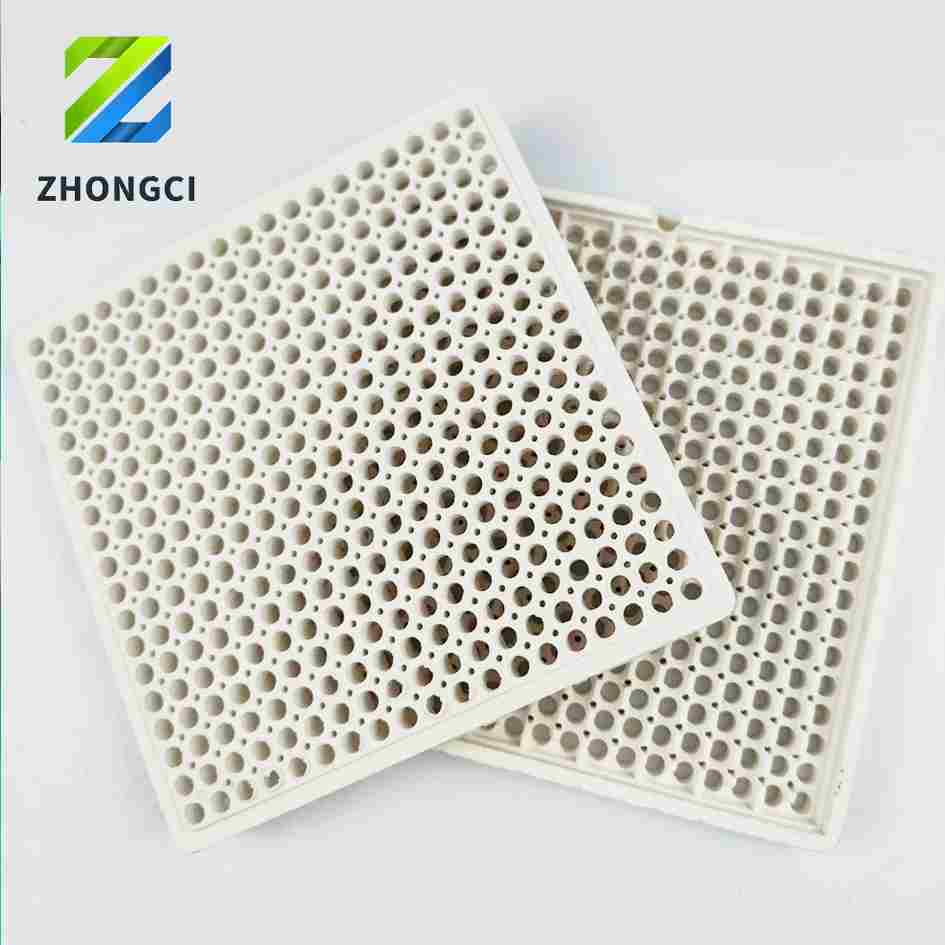
Hole Structure
Hole Structure
The holes on the ceramic plates play a vital role. They can help gases or liquids pass through. This makes these plates useful in filtration or catalytic reaction applications.
For instance, in a filtration system, the holes can let the fluid pass while blocking solid particles.
In catalytic reactions, the large surface area from the holes can increase the contact area between reactants and catalysts, thus improving the reaction efficiency.
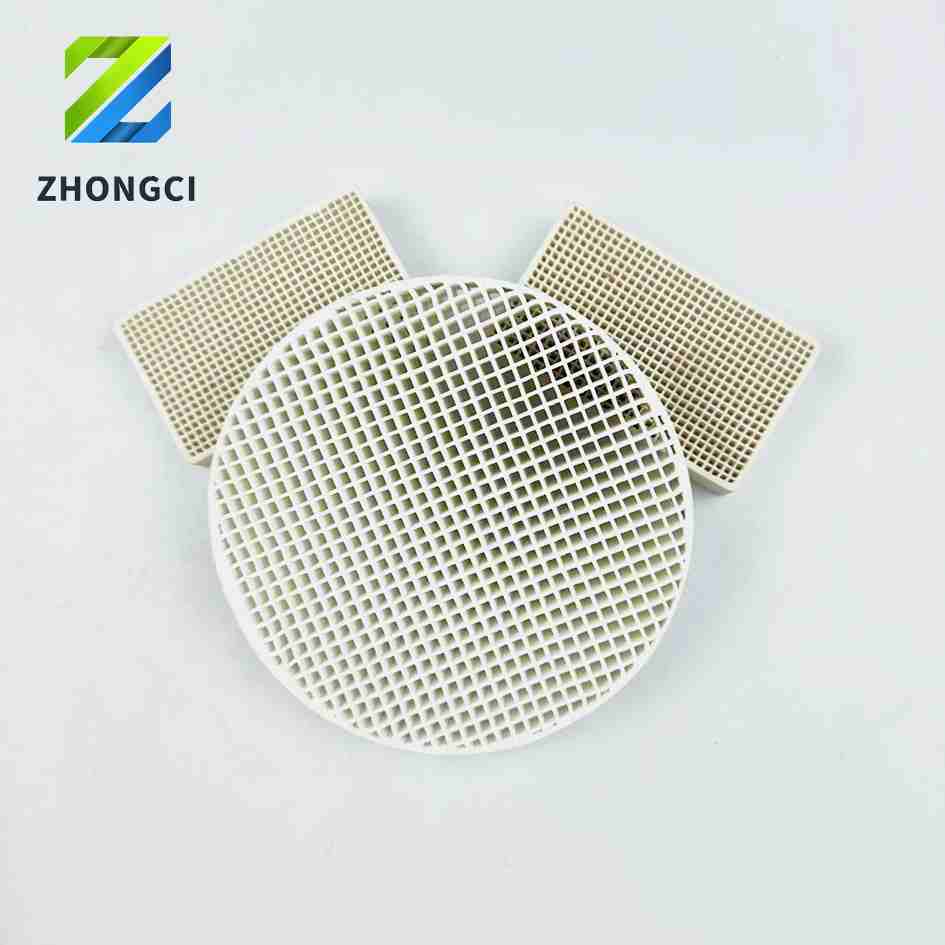

Using applicaiton Far-infrared ceramic plate
We widely use these ceramic plates in industries like environmental protection, chemical engineering. And energy. we can use them in air – purification devices to filter out harmful substances.
In chemical engineering, they can act as carriers for catalysts in chemical reactions.
In the energy field, we can apply them in fuel – cell systems to promote the transport of reactant gases.https://www.chempackings.com/honeycomb-ceramic/