
Composition and Structure
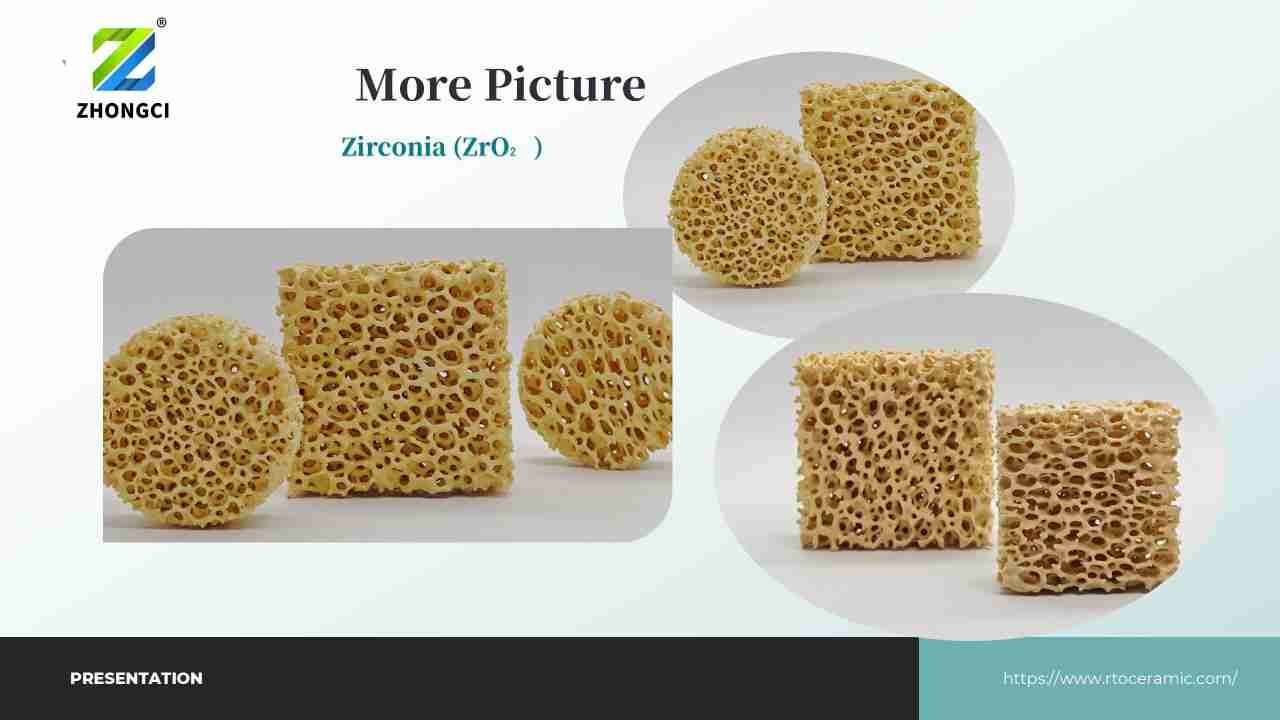
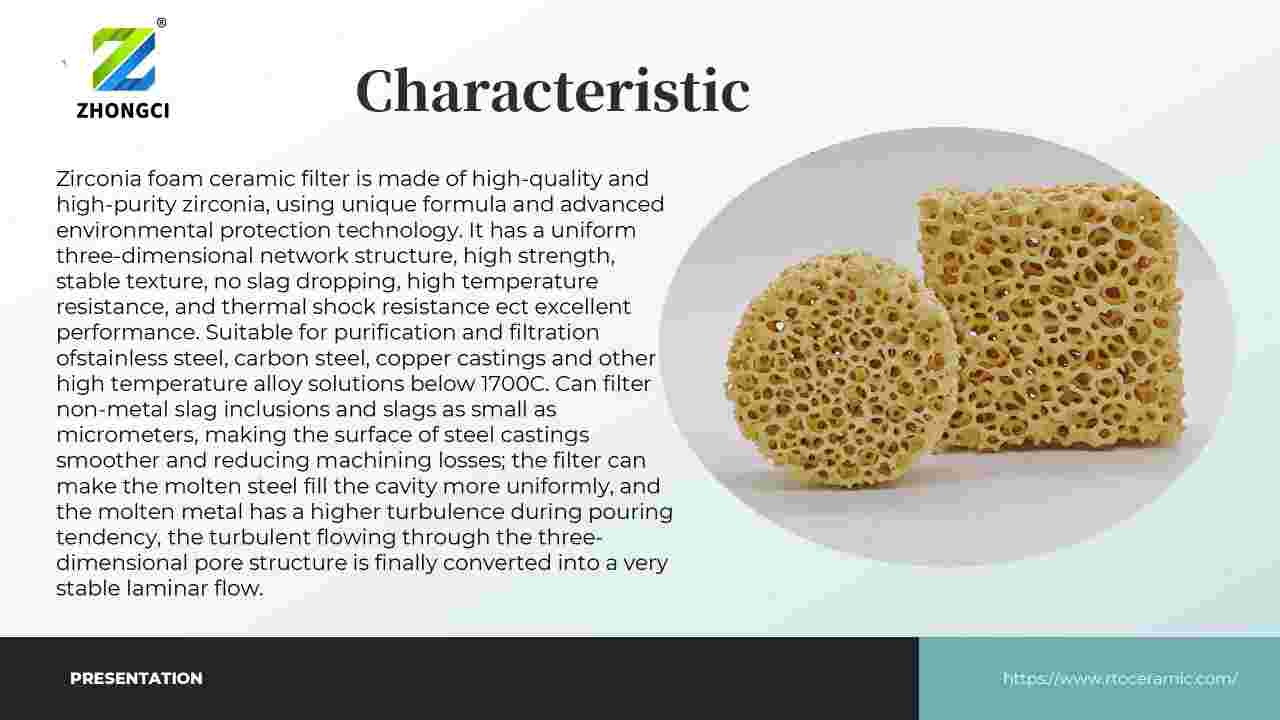
They primarily consist of zirconium oxide (ZrO2)). Usually, they have a porous, open-cell structure, and sometimes manufacturers can prepare a closed-cell structure. The unique structure endows them with high porosity, allowing gases, liquids, and molten metals to pass through.
Properties
- High-temperature Resistance: Zirconia has a high melting point, so zirconia foam ceramics generally withstand temperatures above 1760 °C. Some high-performance products can even operate at up to 2200 °C, with excellent high-temperature impact resistance.
- Good Mechanical Properties: They feature relatively high strength—for example, the flexural strength of certain products reaches 80–120 MPa.
- Strong Corrosion Resistance: Zirconia foam ceramics exhibit excellent chemical resistance, enabling them to resist erosion from various corrosive liquids and molten metals.
- Low Thermal Conductivity: With low thermal conductivity, they minimize heat loss during filtration. For instance, some products have a thermal conductivity of only 0.09–0.12 W·m⁻¹·K⁻¹ at 350 °C and maintain good thermal stability at high temperatures.https://www.rtoceramic.com/product-category/all-products/ceramic-foam-filter-plate/
Preparation Methods
- Organic Foam Impregnation Method: Manufacturers impregnate organic foams (such as explosion-proof sponges) with ceramic slurries, form green bodies, and then dry and sinter them to prepare open-cell foam ceramics with high porosity.
- Foaming Method: Add organic or inorganic chemical foaming substances to ceramic components. Through chemical reactions or high-temperature decomposition, these substances generate volatile gases, which form bubbles sealed within the system. After drying, manufacturers fire the material into foam ceramics. This method can produce closed-cell foam ceramics with high porosity, small pore sizes, and high strength.
- Pore-forming Agent Method: Add a certain proportion of pore-forming agents to the matrix. After high-temperature calcination and decomposition, the agents leave pores, resulting in foam ceramics. Although this method allows control over pore size and shape, the pore distribution tends to be less uniform.
- Sol-gel Method: Utilize the accumulation process during sol-gel transformation. After heat treatment, the accumulated structure leaves small pores. This method is suitable for preparing microporous materials and thin-film materials.
Applications
- Metal Filtration: Widely used in filtering stainless steel, carbon steel, and large-scale molten metal castings, these ceramics effectively remove inclusions, reduce gas entrapment in liquid metal, and purify the metal to improve casting quality.
- Chemical and Pharmaceutical Fields: Filter and purify gases and liquids to remove impurities from fluids.
- Aerospace Field: Serve as regeneratively cooled thrust chambers in rocket engines and high-temperature heat exchangers in aviation gas turbines.
- Energy Field: Apply in fuel gas conditioning skid-mounted devices to filter and purify fuel gas.https://www.chempackings.com/ceramic-foam-filter/