
1. Definition and Structure
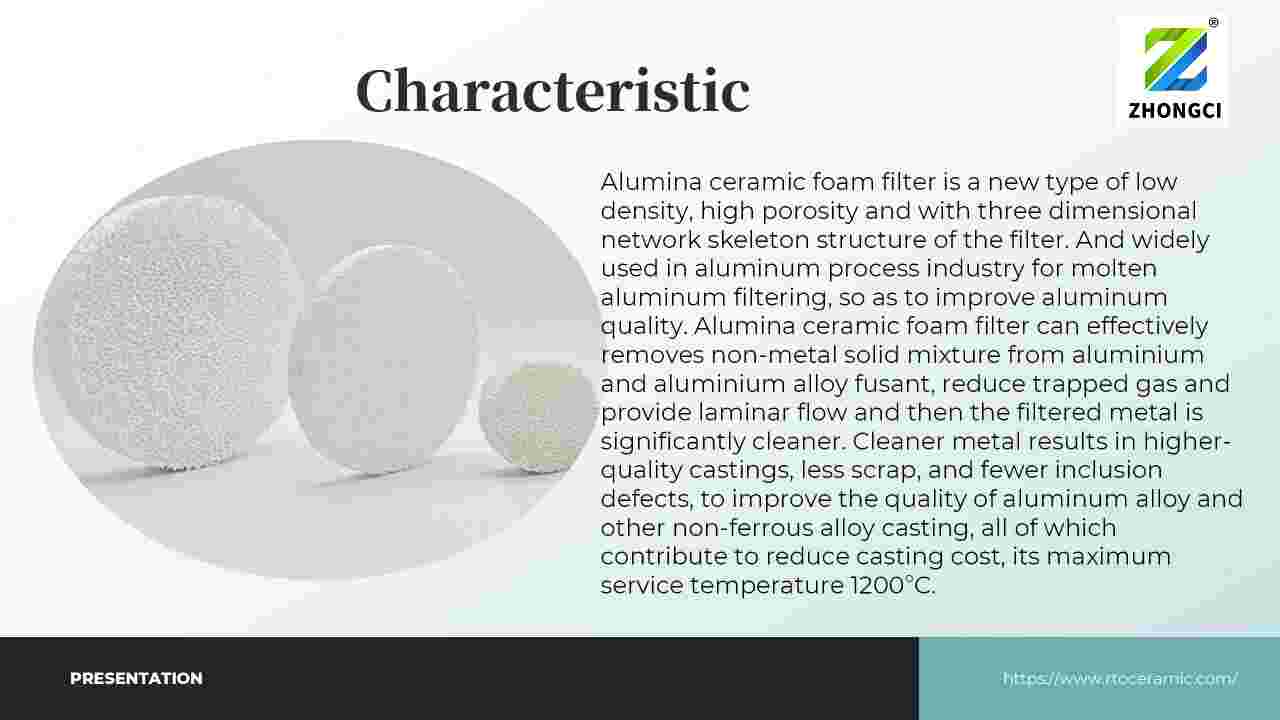
Zirconia foam ceramic filter is a porous functional material primarily composed of zirconium dioxide (ZrO₂). It features a three-dimensional interconnected network structure with high porosity (typically 70–95%) and uniform pore sizes (ranging from 10 to 1000 micrometers). This unique architecture combines the chemical stability of ceramics with the permeability of foam, making it ideal for high-temperature and harsh environment applications.
2. Key Properties
| Property | Description |
|---|---|
| High Temperature Resistance | Can withstand temperatures up to 1600°C, maintaining structural integrity in extreme heat. |
| Chemical Stability | Resistant to corrosion from acids, alkalis, and molten metals, suitable for filtering aggressive media. |
| Mechanical Strength | Exhibits high compressive and tensile strength despite its porous structure, ensuring durability during use. |
| Thermal Insulation | Low thermal conductivity due to its foam structure, reducing heat loss in high-temperature systems. |
| Filtration Efficiency | Captures fine particles (down to sub-micron levels) through physical interception and adsorption, achieving high purification rates.https://www.rtoceramic.com/product-category/all-products/ceramic-foam-filter-plate/ |
3. Manufacturing Processes
Common methods include:
- Template Replication Method: Using polyurethane or polymeric foams as templates, coated with zirconia slurry, then sintered to remove the template and form the ceramic skeleton.
- Direct Foaming Technique: Introducing gas bubbles into zirconia suspensions, followed by gelation and sintering to create uniform pores.
- Freeze-Casting: Freezing a zirconia slurry to form ice templates, which are sublimated to create directional porous structures.
4. Applications
a. Metal Casting Industry
- Molten Metal Filtration: Filters impurities (e.g., oxides, slag) from aluminum, steel, and magnesium alloys during casting, improving product quality and mechanical properties.
- Foundry Applications: Reduces defects in castings (e.g., porosity, inclusions) and enhances surface finish.
b. Environmental Engineering
- Wastewater Treatment: Removes heavy metals, suspended solids, and oil droplets from industrial effluents.
- Air Filtration: Captures particulate matter (PM) and harmful gases in high-temperature flue gases, such as in power plants or incinerators.
c. Energy and Aerospace
- Heat Exchangers: Utilizes thermal insulation and high-temperature resistance in gas turbines and nuclear reactors.
- Aerospace Components: Used in thermal protection systems and lightweight structural parts for aircraft and spacecraft.
5. Advantages Over Traditional Filters
- Superior Durability: Resists thermal shock and mechanical wear better than polymeric or metallic filters.
- High Filtration Precision: Controllable pore sizes enable efficient removal of fine particles.
- Reusability: Can be cleaned and reused multiple times, reducing operational costs.
- Versatility: Adaptable to various industries due to its chemical and thermal stability.
6. Future Developments
Research focuses on optimizing pore structure for higher filtration efficiency, reducing production costs. And expanding applications in advanced fields like hydrogen energy storage and biomedical implants (e.g., bone tissue engineering scaffolds).
For industries requiring high-performance filtration under extreme conditions. Zirconia foam ceramic filters offer a reliable and efficient solution, driving innovation in material science and industrial processes.https://www.chempackings.com/ceramic-foam-filter/