
After understanding the functions, usage methods, matters needing attention during use, errors to be avoided, and improvement methods of foam ceramic filters. Let’s return to the essence and, from the perspectives of customers and manufacturing plants. And understand the most crucial issues: the quality and performance requirements of the filters themselves.
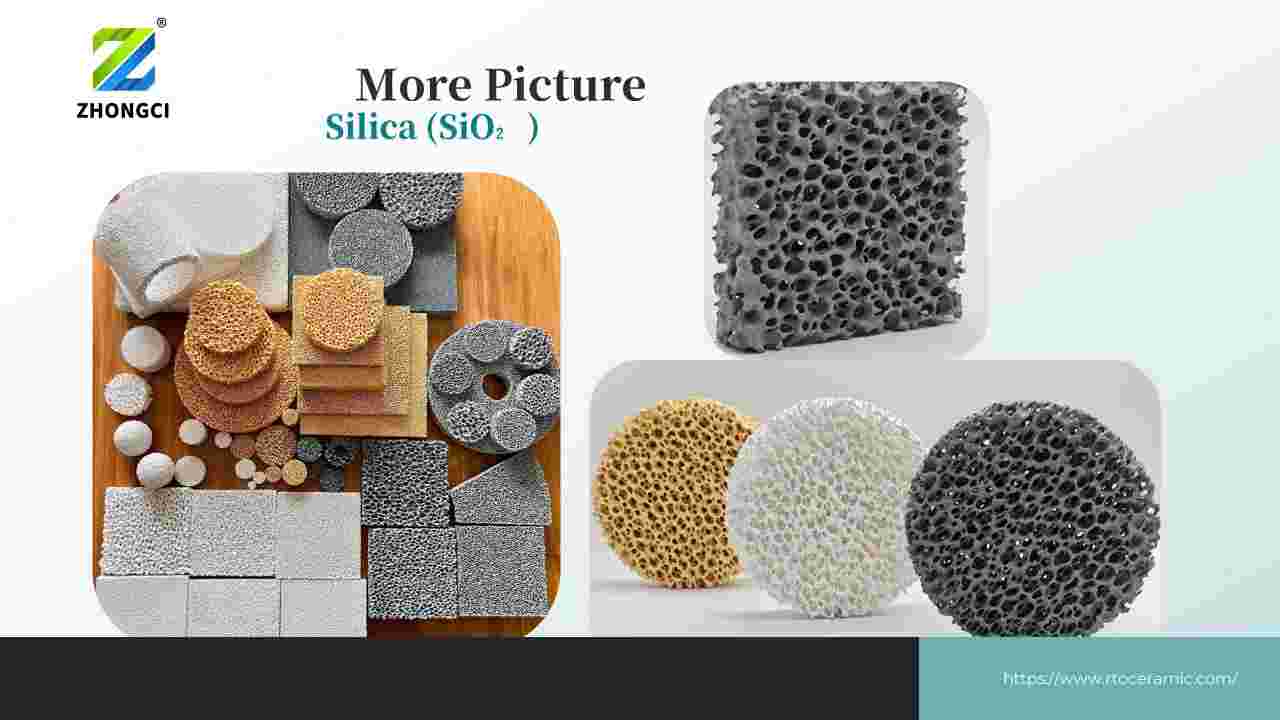
1. Room Temperature Strength Foam Ceramic Filters
The filter should have good room temperature strength, specifically manifested as no chipping during transportation and operation. Generally, the room temperature compressive strength of common foam ceramic filters should be ≥ 0.8~1.5 Mpa depending on the material. The room temperature compressive strength requirement for straight-hole ceramic filters is higher, usually around 15 Mpa.
The formulation of the room temperature strength requirement is mainly to ensure that the ceramic plates will not be broken during transportation and operation. So as to avoid unnecessary losses. In addition, the existence of chipping will also cause troubles in the use of ceramic plates. It will increase the probability of slag and sand inclusion in castings during use. Which will indirectly reduce the filtering performance of the ceramic plates and increase the scrap rate of castings. Therefore, in the actual use process, a sandblasting operation should add. which is generally carried out simultaneously with the preheating treatment. And aiming to remove the chipping and dust that occur during the transportation and storage of the ceramic plates to avoid affecting the effect.
2. High Temperature Strength Foam Ceramic Filters
The ceramic filter should have good high temperature strength, specifically manifested as a certain thermal shock resistance and the ability to resist the scouring of molten metal. The thermal shock resistance means that the filter needs to undergo at least two hot and cold shock tests between 1100 °C . And room temperature during the factory inspection to ensure that the filter can withstand the scouring of the high-temperature molten metal without breaking . When used for filtering high-temperature molten metal. Generally, a filter that can withstand the thermal shock resistance test already has good resistance to the scouring of high-temperature molten metal.
3. Chemical Stability
We generally make foam ceramic filters from high-strength wear-resistant and anti-oxidation materials such as silicon carbide, aluminum oxide, silicon dioxide, and zirconium oxide. We usually make straight-hole ceramic filters from mineral materials with stable chemical properties such as cordierite and mullite. A basic requirement for the filter is. It should not react chemically with the molten casting metal to avoid contaminating the composition of the molten metal . And causing other types of casting defects such as segregation and changes in mechanical properties.
4. Appearance Quality
Appearance quality does not mean that the filter needs to be beautiful. It refers to the performance indicators that the filter should have and can be directly measured in line with the standards. Generally, it includes pore density, porosity, open pore rate, dimensional deviation. And no deformation. Pore density: refers to the number of pores on a straight line per inch. Pore density is one of the indicators that can intuitively reflect the filtering ability. And it is also the first indicator that users should consider when choosing a filter. The filtering precision of filter sheets with different pore densities is different.
Open pore rate: refers to the percentage of the filter mesh that is not blocked, and of course, the higher the better. Porosity: Different from the open pore rate, due to the basic framework of the foam ceramic filter. the porosity cannot reach 100%. Generally, a porosity ranging from 70% to 90% is within the specification range depending on the material.https://www.chempackings.com/ceramic-foam-filter/