Classification of foam Ceramics

Table of Contents

Classification of foam Ceramics
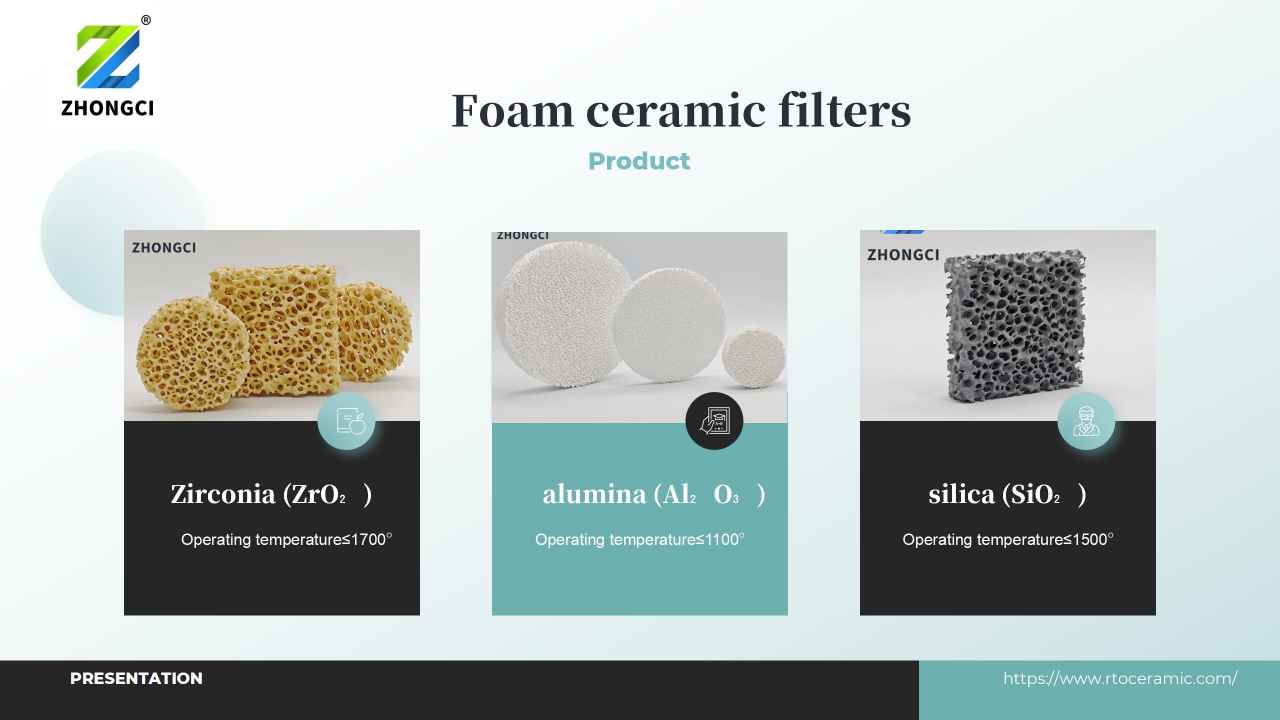
(1) According to whether each pore has a solid wall surface, foam ceramics can be divided into open-cell (reticulated) ceramic materials and closed-cell ceramic materials. If the solid that forms the foam body is only contained in the pore edges. It is call an open-cell ceramic material, and its pores are interconnected. If there is a solid wall surface, the foam body is call a closed-cell ceramic material. Which the pores are separated from each other by a continuous ceramic matrix. However, most cellular ceramics have both open pores and a small number of closed pores.

(2) According to the size of the pore diameter, cellular ceramics can generally be divide into two types: microporous materials and macroporous materials. Generally speaking, materials with pores having a diameter less than 2 nm are microporous materials. Materials with pores between 2 and 50 nm are mesoporous materials. and materials with pores larger than 50 nm are macroporous materials.

(3) Cellular ceramics can be classified by material as follows:

(3) Cellular ceramics can be classify by material as follows:
① Diatomite-based materials: Mainly made from selected diatomite as raw material and sintered with clay, used for fine water filtration and in acidic media.
② Aluminosilicate materials: Using refractory clay clinker, calcined bauxite, sillimanite and synthetic mullite particles as aggregates. It is resistant to acids and weak alkalis. And the service temperature can reach 1000 °C.
③ High-silica silicate materials: Mainly produced using hard porcelain slag, acid-resistant ceramic slag and other acid-resistant synthetic ceramic particles as aggregates. It has water resistance and acid resistance, and the service temperature can reach 700 °C.
④ Ceramic materials: The composition is close to that of high-silica silicate materials. And it is a kind of microporous ceramic material mainly obtained by mixing various clay clinker particles with clay, etc.
⑤ Corundum and emery materials: Using different types of electrofused corundum and silicon carbide particles as aggregates. It has the characteristics of being resistant to strong acids and high temperatures. And the high-temperature resistance can reach 1600 °C.
⑥ Zirconia materials: The basic material is zirconia (ZrO₂), which has high strength and high-temperature impact resistance, and the heat resistance temperature is higher than 1700 °C.https://www.chempackings.com/products

What is a honeycomb ceramic regenerator and what is its function?

Honeycomb ceramic regenerator is the key and core component of regenerative high-temperature combustion technology (HTAC technology). It has been widely used in various pusher-type heating furnaces, walking-type heating furnaces, heat treatment furnaces, forging furnaces, melting furnaces, ladle/tundish roasters, soaking furnaces, radiant tube burners, and hood-type furnaces in the metallurgical machinery industry. Furnace, blast furnace hot blast stove; various ceramic kilns, various glass kilns in the building materials industry; various tubular heating furnaces, cracking furnaces and other industrial furnaces in the petrochemical industry. Material of honeycomb ceramic regenerator: Regenerator material——mullite, cordierite, cordierite-mullite, corundum-mullite, high-aluminum and other materials honeycomb ceramic regenerator are resistant to With significant advantages such as high temperature, corrosion resistance, good thermal stability, high strength, large heat storage, and good thermal conductivity, the various indicators of the product can fully meet the use and operation requirements of industrial furnaces.

What is honeycomb ceramic regenerator – honeycomb ceramic regenerator hole pattern:

Thermal body hole type——Produces four hole types including square hole, hexagonal hole, round hole, and triangular hole.

Application of honeycomb ceramic regenerator: The principle of the regenerative incineration system (RTO) is to use ceramic regenerators to store the heat generated when organic waste gases are decomposed, and use the thermal energy stored in the ceramic regenerators to decompose untreated organic waste gases. , thereby achieving high thermal efficiency.

In view of the process requirements of the regenerative combustion deodorization oven (RTO), honeycomb ceramic products of various materials and sizes such as dense cordierite, loose cordierite, lithium porcelain, mullite, etc. are developed, which have large specific surface area and excellent exhaust resistance. Small, low thermal expansion and contraction coefficient, high bulk density, good thermal shock resistance and other characteristics.

This product is widely used in waste gas treatment equipment in the chemical industry, automotive paint, spray paint drying equipment, organic chemical industry, petrochemical industry, engraving printing, offset printing, food processing and other industries. For more specifications, please see the product page: Honeycomb Ceramic Regenerator

Share your Needs!

Share

Get Custom Quote

Have a question? Get in touch instantly using the form below.
Our customer support team would get back to you soon.

    Get Custom Quote