
1. Exceptional Thermal Stability-Advantages of Silicon Carbide
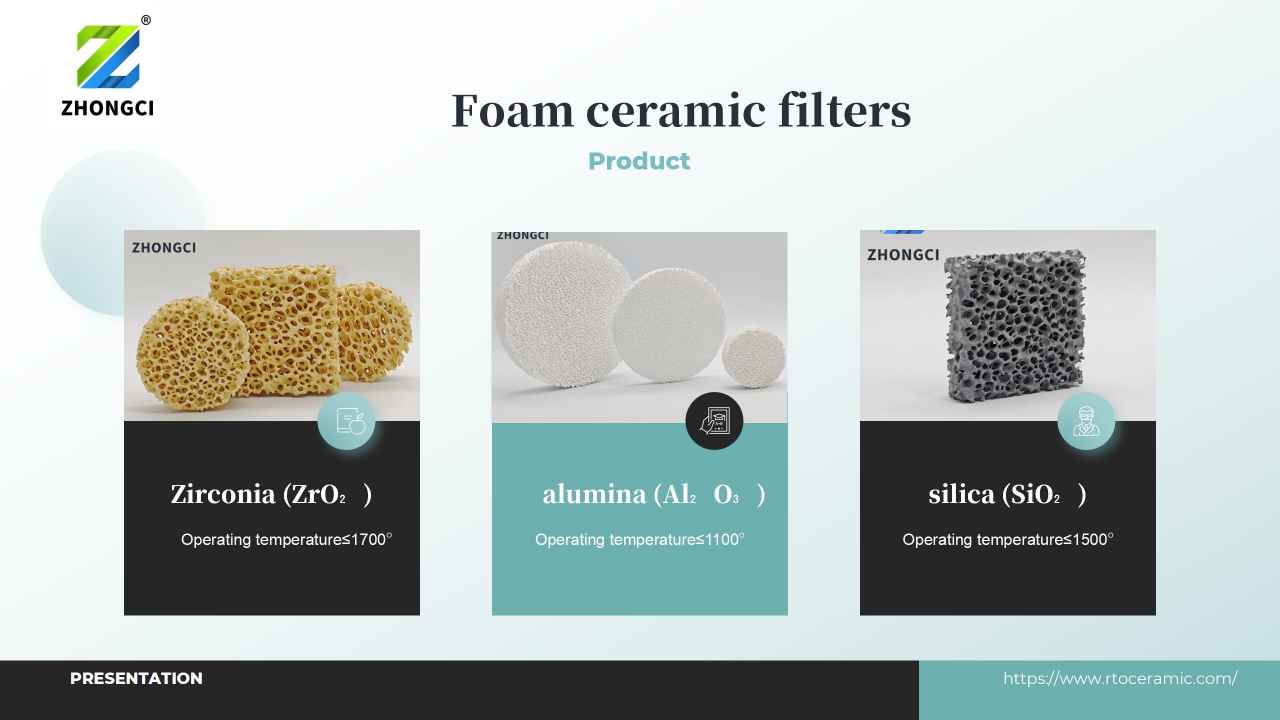
- High Temperature Resistance: Maintains structural integrity up to 1,600°C or higher, far exceeding most metal and polymer foams. This makes it ideal for applications in aerospace engines, industrial furnaces, and high-temperature filtration systems.https://www.chempackings.com/ceramic-foam-filter/sic-ceramic-foam-filter-for-metal-filtration.html
- Superior Thermal Conductivity: With a thermal conductivity of 80–200 W/(m·K), SiC foam ceramics efficiently dissipate heat, outperforming many ceramic foams (e.g., alumina) and enabling use in heat exchangers and semiconductor cooling systems.
- Thermal Shock Resistance: Resists cracking under rapid temperature fluctuations (e.g., from -200°C to 1,000°C), thanks to its low coefficient of thermal expansion (4.5×10⁻⁶/K) and robust cellular structure.
2. Outstanding Chemical Corrosion Resistance
- Inertness in Harsh Environments: Unaffected by strong acids (e.g., sulfuric acid), alkalis (e.g., sodium hydroxide), and corrosive gases (e.g., chlorine, nitrogen oxides). This makes it suitable for chemical reactors, waste incineration systems, and marine applications.
- Oxidation Resistance: Forms a protective SiO₂ layer at high temperatures, preventing further degradation in oxidizing atmospheres.
3. Optimal Mechanical Strength-to-Weight Ratio
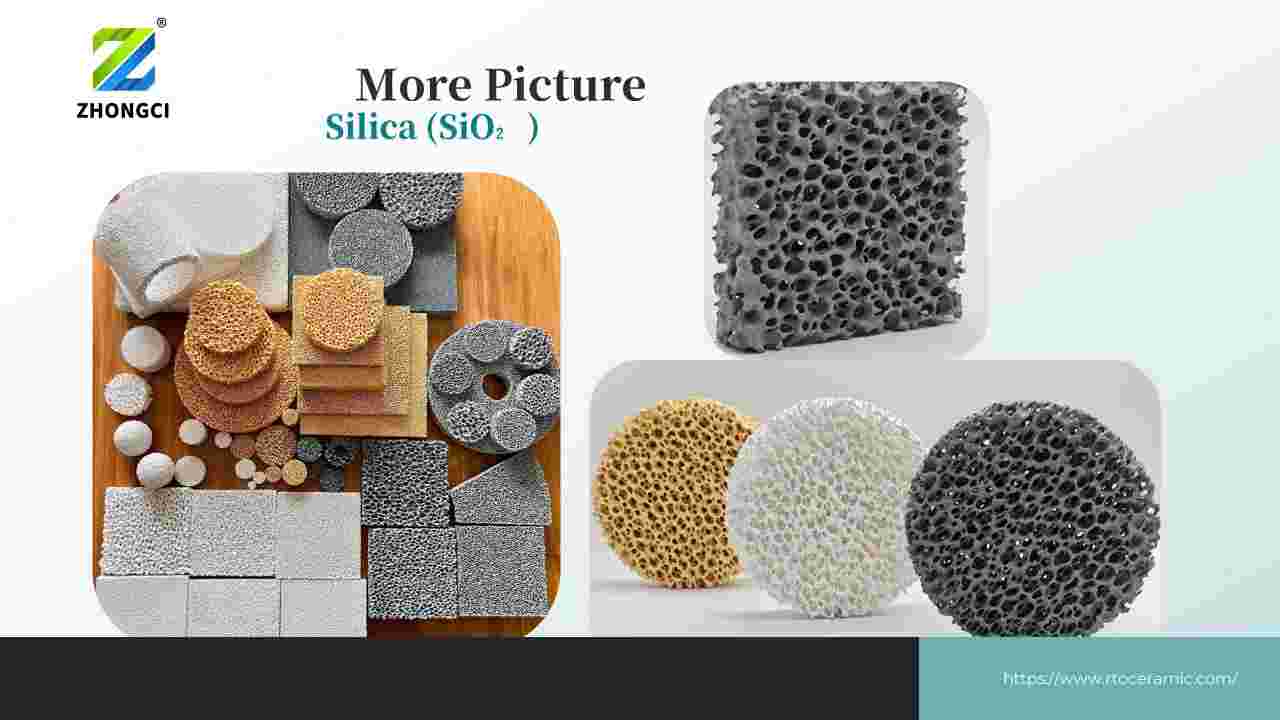
Advantages of Silicon Carbidehttps://www.zhongciceramic.com/products_12/181.html
- Lightweight yet Robust: With densities of 0.3–1.0 g/cm³ (50–90% lower than solid SiC), it retains compressive strength of 1–30 MPa (depending on porosity), making it ideal for lightweight structural components in aerospace and automotive industries.
- Durability under Load: Resists creep deformation at high temperatures, ensuring long-term reliability in load-bearing applications.
4. Tailorable Porous Structure for Functional Efficiency
- High Porosity & Interconnectivity: Porosity of 70–95% with interconnected pores allows for:
- Efficient gas/liquid filtration (e.g., removing particulates from exhaust gases in diesel engines).
- Enhanced surface area for catalyst support in chemical reactions (e.g., NOₓ reduction in automotive catalytic converters).
- Controllable Pore Size: Pore diameters from 10–5000 μm can be tuned for specific functions, such as fine particle filtration (small pores) or high-flow heat exchange (large pores).
5. Electrical & Thermal Management Versatility
- Semiconductive Properties: Unlike most ceramic foams, SiC foam can be doped to adjust electrical conductivity, making it suitable for electromagnetic interference (EMI) shielding and energy storage devices.
- Low Dielectric Constant: In dielectric applications, its porous structure reduces effective permittivity, beneficial for microwave components and radar systems.
6. Longevity and Low Maintenance
- Resistance to Wear and Erosion: The hard SiC skeleton (Mohs hardness 9.2) withstands abrasion from high-velocity fluids or particulates, extending service life in filtration and exhaust systems.
- Non-degradable in Extreme Conditions: Unlike polymer-based foams, it does not decompose or release toxins at high temperatures, ensuring environmental stability.
Comparison with Other Foam Materials:
| Property | SiC Foam Ceramics | Metal Foams (e.g., Al) | Traditional Ceramic Foams (e.g., Al₂O₃) |
|---|---|---|---|
| Max Service Temp | 1,600°C+ | 300–500°C | 1,200°C |
| Chemical Resistance | Excellent (acids, alkalis) | Susceptible to corrosion | Good but lower than SiC |
| Thermal Conductivity | High (80–200 W/(m·K)) | Medium (20–200 W/(m·K)) | Low (1–20 W/(m·K)) |
| Electrical Conductivity | Tunable (semiconductive) | High | Insulative |
In essence, SiC foam ceramics integrate thermal, chemical, and mechanical excellence with functional porosity, positioning them as a premium material for demanding applications where traditional foams fall short.https://www.rtoceramic.com/product/silicon-carbide-foam-ceramic-filter/