
How to Select Suitable Alumina Foam Ceramic Filters for Specific Application Scenarios? Al2O3 Ceramic Filters
Selecting appropriate alumina foam ceramic filters for specific application scenarios requires a comprehensive consideration of the filters’ performance parameters, specification characteristics. And compatibility with the application environment, based on the core needs of the scenario. Here are the specific selection methods and key considerations:
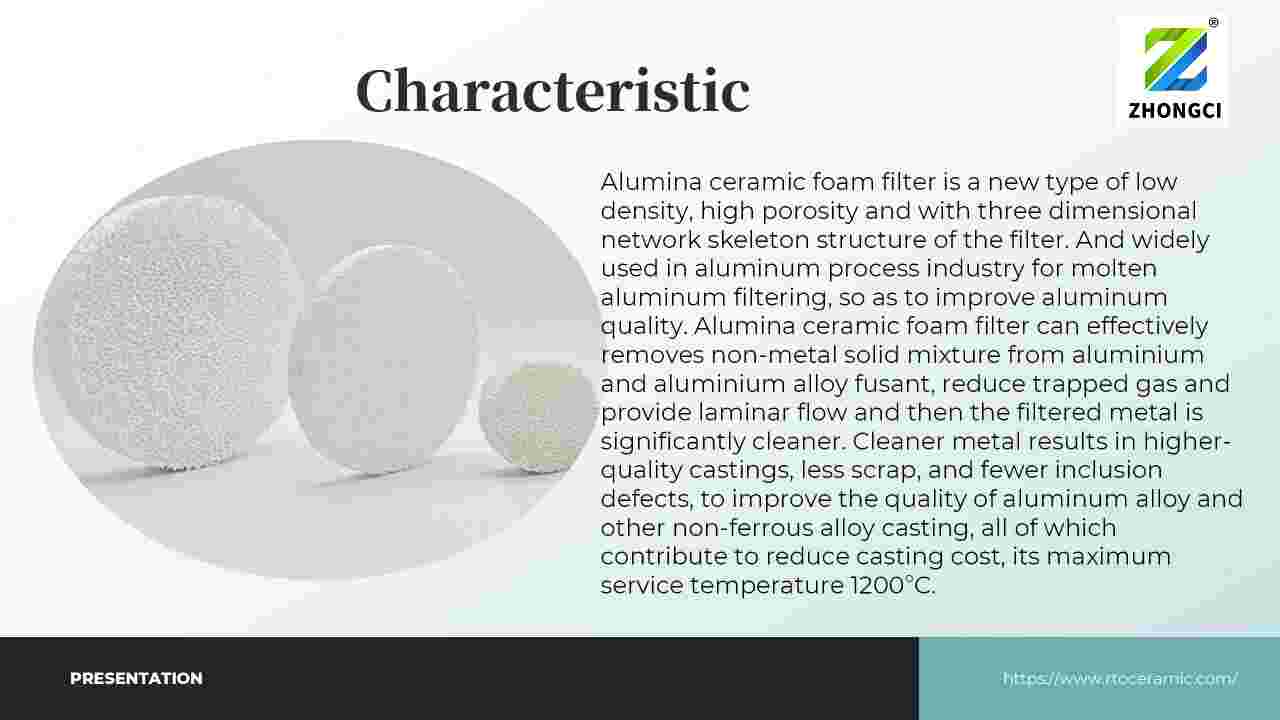
I. Clarify the Core Needs of the Application Scenario-Al2O3 Ceramic Filters
Different scenarios have significantly different performance requirements for filters, so it is necessary to first identify the core indicators:
- Metal casting field (e.g., aluminum alloys, copper alloys, cast iron, etc.): Focus on filtration efficiency (ability to remove inclusions), high-temperature resistance (matching the temperature of the molten metal), and thermal shock resistance (withstanding alternating hot and cold impacts).
- High-temperature gas filtration field (e.g., industrial flue gas purification): Emphasize porosity (ensuring gas flux), chemical stability (resistance to flue gas corrosion), and high-temperature strength (maintaining shape under long-term high temperatures).
- Catalyst carrier field: Pay attention to specific surface area (providing catalytic reaction sites) and pore connectivity (ensuring reactant diffusion).
II. Matching of Key Performance Parameters
According to the core needs, screen the key parameters of the filter:
1. Alumina Purity
Purity directly determines the filter’s high-temperature resistance, chemical stability. And mechanical strength, and must match the temperature and medium characteristics of the application scenario:
- Low purity (≤85%): Contains more impurities such as SiO₂ and MgO, with low cost and limited high-temperature resistance (applicable temperature ≤1200°C). Suitable for scenarios with low temperature requirements. (e.g., low-temperature aluminum alloy casting, room-temperature liquid filtration).
- Medium purity (90%-95%): Balances performance and cost, with improved high-temperature resistance (applicable temperature 1200-1600°C) . And strong resistance to molten metal corrosion. Suitable for most aluminum alloy and copper alloy casting scenarios.
- High purity (≥99%): Excellent high-temperature resistance (applicable temperature ≥1600°C). Extremely strong chemical stability, high thermal shock resistance, and mechanical strength. However, the cost is high, making it suitable for high-temperature scenarios. (e.g., cast iron, cast steel, high-temperature flue gas filtration).
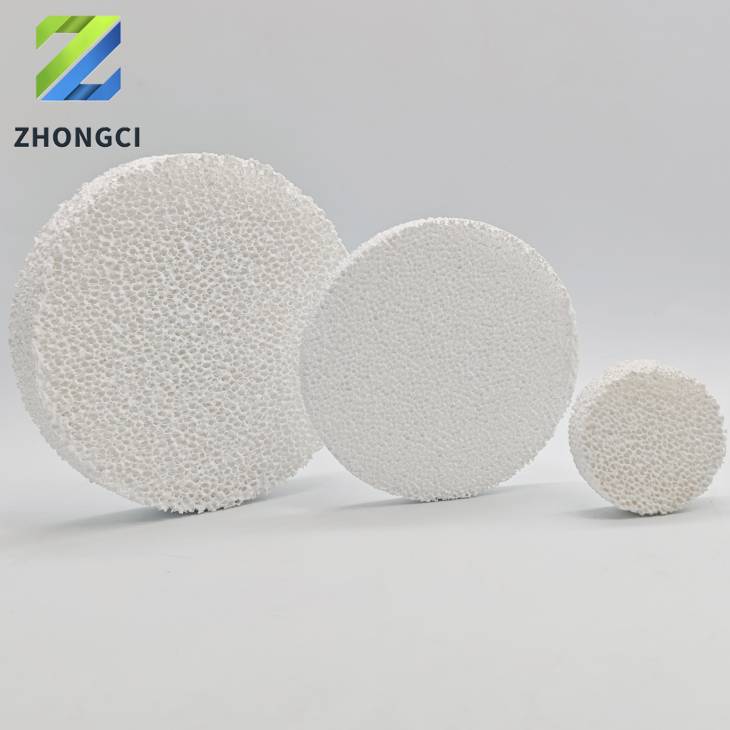
2. Pore Structure Parameters-Al2O3 Ceramic Filters
The pore structure directly affects filtration efficiency, flow rate, and service life, and must match the characteristics of the filtered medium (such as impurity size and flow rate):
- Pore size:
- The pore size should be smaller than the size of the impurities to be filtered (usually 1/3-1/2 of the impurity size).
- Too small a pore size is prone to clogging, leading to a sudden increase in filtration resistance (e.g., high-precision casting requires high filtration accuracy and can use 80-100 PPI, but it needs to be combined with low flow rates); too large a pore size will reduce filtration efficiency (e.g., large-flow rough filtration can use 10-30 PPI).
- Porosity:
- Higher porosity (usually 60%-90%) means a larger filtration area and higher flow rate, but lower mechanical strength (easily damaged by high-pressure fluid impact). For example, high-pressure molten metal pouring scenarios require filters with a porosity of 70%-80%. (balancing flow rate and strength); low-pressure scenarios can use 80%-90% to improve efficiency.
- Pore uniformity: Priority should be given to products with uniform pore distribution and good connectivity (which can be confirmed by microstructure testing) to avoid filtration “short circuits” or local clogging due to abnormal local pore sizes.
3. Mechanical Strength and Thermal Shock Resistance
- Mechanical strength: It needs to match the fluid impact strength of the application scenario. For example, in molten metal pouring with high flow rates and strong impact, filters with thick skeletons and high flexural strength (usually ≥10MPa) should be selected; for gas filtration (with low impact force), the strength requirement can be appropriately reduced.
- Thermal shock resistance: In scenarios with sudden high-temperature changes (e.g., intermittent casting, alternating hot and cold filtration), products with excellent thermal shock resistance should be selected (which can be verified by “rapid cooling and heating tests”, such as no cracking when suddenly cooled from 800°C to room temperature). High-purity alumina (with few impurities) usually has better thermal shock resistance, while low-purity products are prone to cracking under thermal shock due to uneven thermal expansion coefficients caused by impurities.
III. Adaptability of Specifications and Forms to Application Scenarios
- Size and shape: Choose according to the size of the filtration device (such as filter boxes, launders). Common shapes include circular (diameters 100-500mm) and square (100×100mm to 500×500mm). Special scenarios can customize special shapes (e.g., arc, cone). It is necessary to ensure a good seal between the filter and the device to prevent fluid from passing through gaps without being filtered.
- Thickness: Increasing thickness can improve filtration efficiency (by extending the fluid passage path and increasing the chance of impurity adsorption), but it will increase resistance. Generally, select according to the flow rate: thin filters (10-20mm) are suitable for high-flow scenarios, and thick filters (20-50mm) are suitable for low-flow and high-precision scenarios.https://www.rtoceramic.com/product/alumina-foam-ceramic-filter-plate-for-aquarium-filter-media/
IV. Refer to Practical Application Cases and Industry Standards
- Industry practices: For example, in aluminum alloy casting, 30-50 PPI filters with 90% purity are commonly used in low-pressure casting; 20-30 PPI filters are often used in high-pressure die casting to reduce resistance due to high flow rates; for cast iron casting, which requires resistance to temperatures above 1500°C, filters with over 95% purity and 20-40 PPI are needed.
- Supplier qualifications: Priority should be given to products that have passed industry certifications (e.g., filters for casting need to comply with ASTM or GB standards). You can ask suppliers to provide test data for specific scenarios (such as filtration efficiency and service life simulation reports).
Summary
The core logic for selecting alumina foam ceramic filters is: guided by the core needs of the application scenario (such as temperature, impurity size, flow rate), match the key parameters of the filter such as purity, pore size, and strength, while considering specification compatibility and verification with practical application cases. Through targeted screening, the filter can achieve efficient filtration while ensuring the longest service life and optimal cost-effectiveness.