
1. Honeycomb Ceramic Regenerators: Fundamentals-Cordierite vs Mullite Materials
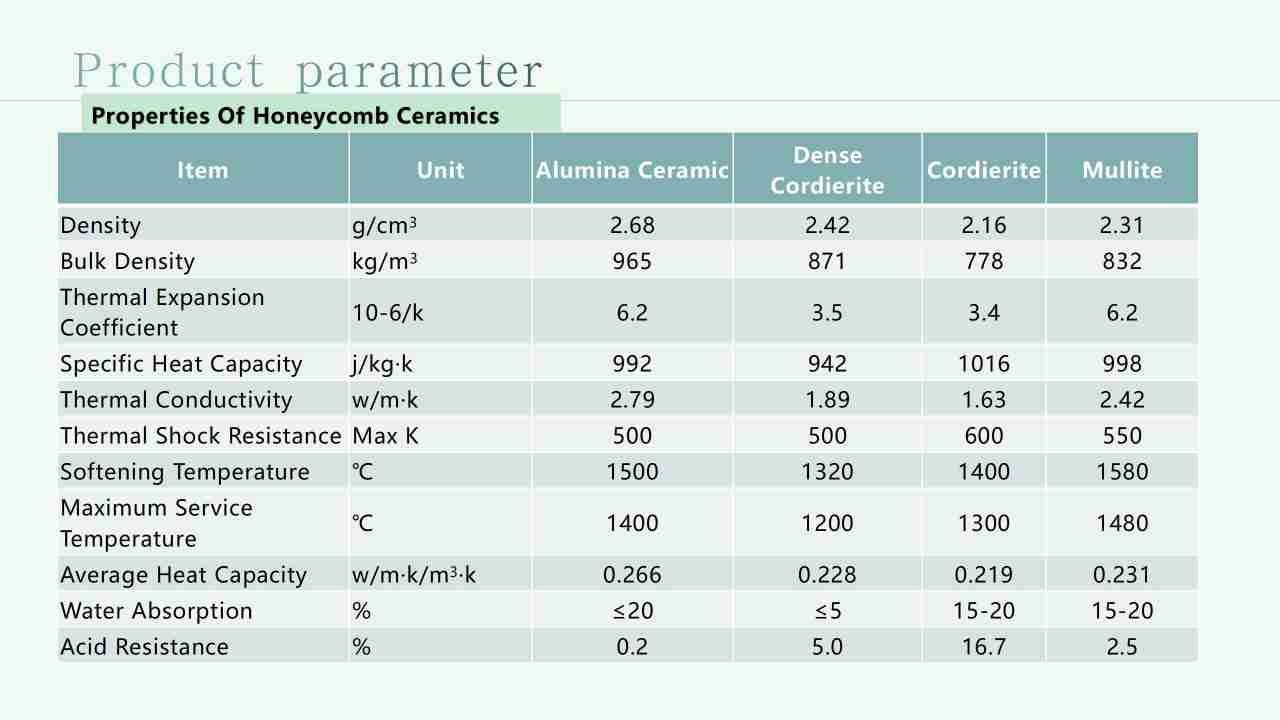
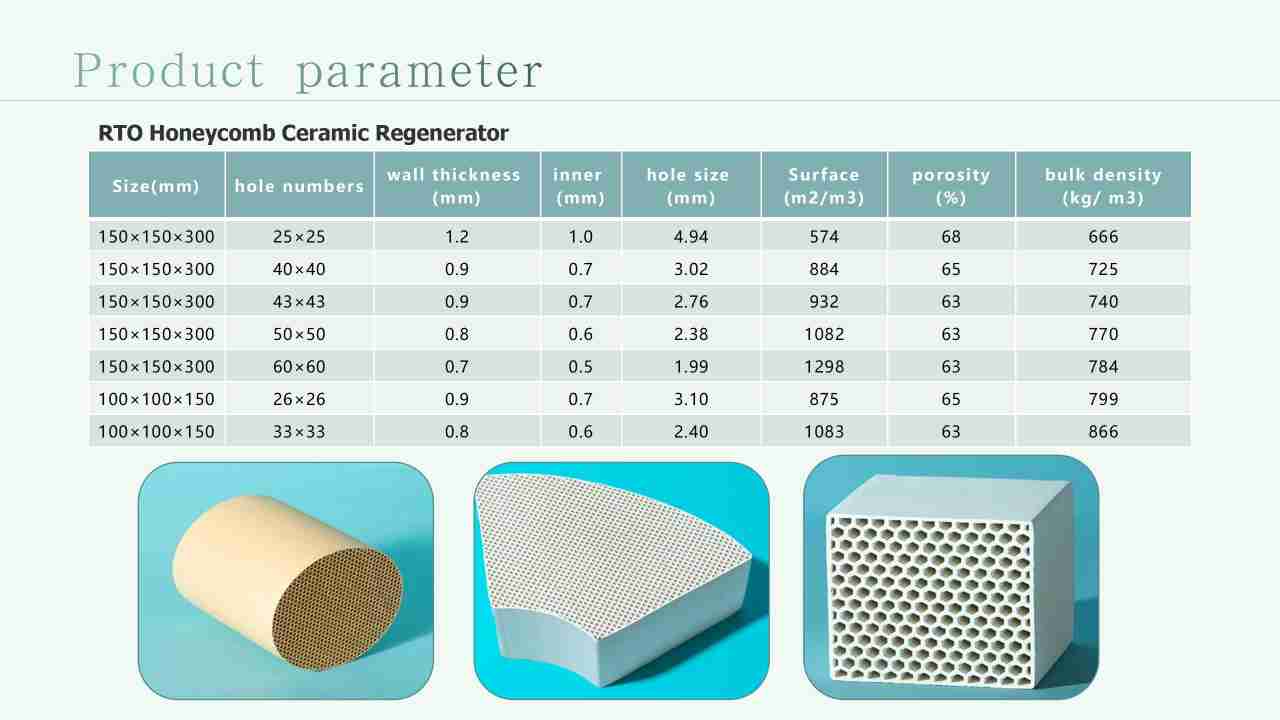
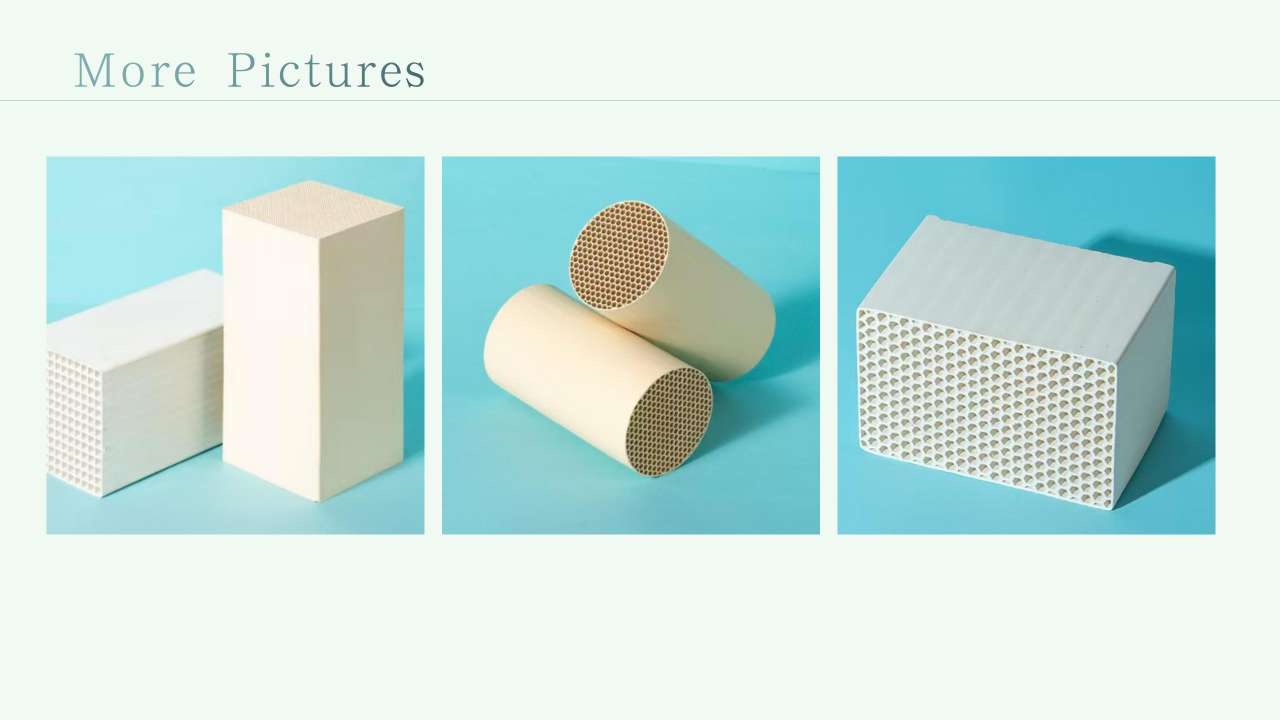
Honeycomb ceramic regenerators are porous, structured ceramics designed to store and release thermal energy efficiently in high-temperature systems. Their unique honeycomb cell structure (typically with 100-600 cells per square inch, CPSI) maximizes surface area, enabling rapid heat transfer and high thermal storage capacity. They are widely used in:
- Industrial furnaces, boilers, and kilns for waste heat recovery.
- Thermal oxidizers and incinerators for pollutant destruction.
- Automotive exhaust systems (e.g., diesel particulate filters).
2. Cordierite-Based Honeycomb Regenerators
Composition & Structure
- Chemical Formula: Mg₂Al₄Si₅O₁₈ (Magnesium aluminosilicate).
- Microstructure: Fine-grained crystalline phase with low thermal expansion coefficient (1.4-1.7×10⁻⁶/°C), enabling excellent thermal shock resistance.
- Manufacturing: Formed via extrusion molding, sintered at 1300-1400°C, resulting in high porosity (40-60%) and low bulk density (1.0-1.3 g/cm³).
Key Properties
- Temperature Resistance: Stable up to 1200°C, suitable for medium-to-high-temperature applications.
- Thermal Shock Resistance: Withstands rapid temperature changes (e.g., 800°C to ambient) without cracking, ideal for cyclic heating-cooling systems.
- Mechanical Strength: Compressive strength of 30-50 MPa, sufficient for most industrial flow conditions.
Applications
- Industrial Waste Heat Recovery: In regenerative thermal oxidizers (RTOs) for VOC abatement.
- Glass Furnaces: To preheat combustion air, improving energy efficiency.
- Automotive Catalytic Converters: Due to low thermal mass and good heat retention.
3. Mullite-Based Honeycomb Regenerators
Composition & Structure
- Chemical Formula: 3Al₂O₃·2SiO₂ (Aluminum silicate).
- Microstructure: Corundum (Al₂O₃) and silica (SiO₂) phases with high crystallinity, sintered at 1600-1700°C, leading to dense structure (bulk density 2.5-2.8 g/cm³).
- Higher Al₂O₃ content (60-75%) enhances high-temperature stability.
Key Properties
- Temperature Resistance: Operates up to 1600°C, suitable for extreme high-temperature environments.
- Thermal Conductivity: Slightly higher than cordierite, enabling faster heat transfer.
- Mechanical Strength: Compressive strength exceeding 80 MPa, resistant to abrasion and thermal erosion.
Applications
- High-Temperature Furnaces: Steel reheating furnaces, ceramic kilns, and petrochemical reactors.
- Regenerative Burners: In glass melting furnaces requiring temperatures >1400°C.
- Incineration of Hazardous Waste: Withstands corrosive gases and extreme heat in waste-to-energy plants.
4. Comparative Analysis: Cordierite vs Mullite
| Property | Cordierite | Mullite |
|---|---|---|
| Max Service Temperature | 1200°C | 1600°C |
| Thermal Expansion Coefficient | Low (1.4-1.7×10⁻⁶/°C) | Medium (4.0-5.0×10⁻⁶/°C) |
| Thermal Shock Resistance | Excellent | Good, but slightly lower than cordierite |
| Mechanical Strength | Moderate (30-50 MPa) | High (80+ MPa) |
| Cost | Lower due to lower sintering temperature | Higher due to high-purity raw materials |
| Ideal Applications | Medium-temperature, cyclic heat systems | High-temperature, corrosive environments |
5. Conclusion
Cordierite and mullite honeycomb regenerators serve distinct thermal management needs. Cordierite excels in applications requiring high thermal shock resistance and cost-effectiveness, while mullite dominates in extreme heat and harsh chemical environments. Their 蜂窝 (honeycomb) structure remains pivotal for optimizing heat transfer efficiency across industries, driving energy conservation and emission reduction.https://www.chempackings.com/honeycomb-ceramic/honeycomb-ceramic-heat-exchanger.html