
1. Physical Structure and Dimensions-Hexagonal RTO Ceramic
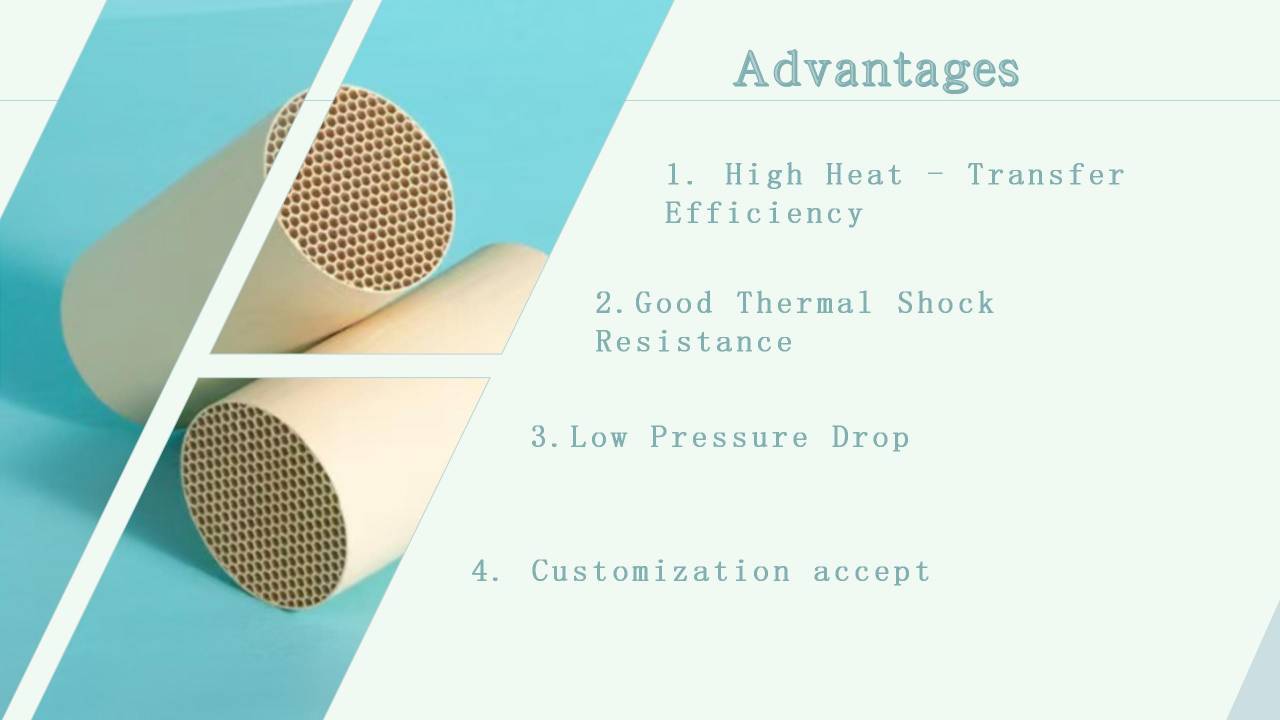
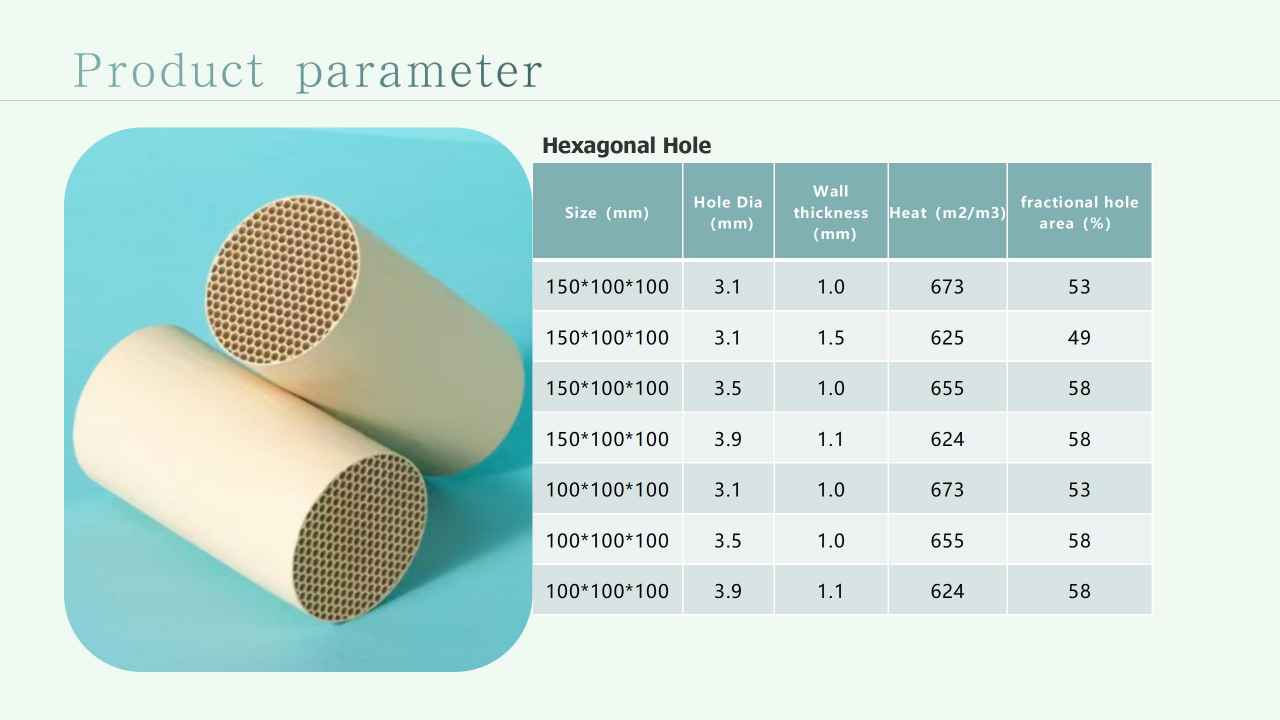
The honeycomb ceramic regenerator is a prismatic block measuring 150mm×150mm×300mm, featuring a hexagonal cell matrix that extends through its entire length. The hexagonal geometry is engineered to optimize thermal performance, combining structural rigidity with efficient heat transfer. Each cell’s wall thickness typically ranges from 0.3–1.5mm, depending on the design, while the cell aperture (opening) size varies with the cell density (detailed below).
2. Material Composition
Commonly fabricated from high-temperature-resistant ceramics:
- Cordierite: Ideal for applications up to 1200°C, offering excellent thermal shock resistance and low thermal expansion.
- Mullite: Suited for extreme temperatures (up to 1600°C), with higher mechanical strength and chemical stability.
- SiC (Silicon Carbide): Used in specialized cases for ultra-high heat conductivity and durability.
3. Cell Density and Configurations-Hexagonal RTO Ceramic
Cell density is specified by the number of cells per linear inch (cpsi, cells per square inch). For the 150×150mm cross-section:
- 13×13 cells per inch (169 cpsi):
- Aperture size: ~1.5–2mm
- Surface area: ~180 m²/m³
- 25×25 cells per inch (625 cpsi):
- Aperture size: ~0.5–0.8mm
- Surface area: ~500 m²/m³
- Other configurations: Ranging from 100 cpsi (coarse) to 900 cpsi (ultra-fine), tailored for specific heat transfer needs.
4. Working Principle
The regenerator operates on the principle of thermal energy storage and release in a cyclic process:
- Heat Absorption Phase: Hot exhaust gases flow through the honeycomb, transferring heat to the ceramic matrix.
- Heat Release Phase: Cold incoming gases pass through the preheated matrix, absorbing stored thermal energy.
The hexagonal cell structure maximizes the surface area for heat exchange while minimizing pressure drop, making it critical for energy recovery in industrial systems.
5. Key Performance Features
- High Thermal Efficiency: Recovers 60–95% of waste heat, depending on cell density (higher cpsi = higher efficiency).
- Low Thermal Mass: Rapid heat absorption/release due to lightweight ceramic materials.
- Chemical Resistance: Resists corrosion from acidic flue gases (e.g., SOx, NOx) in combustion processes.
- Mechanical Strength: Maintains structural integrity under high-temperature gradients and gas flow pressures.
6. Applications
- Industrial Furnaces: Recovers heat from flue gases in steel, glass, and cement production.
- Regenerative Thermal Oxidizers (RTOs): Destroys volatile organic compounds (VOCs) while recycling heat.
- Automotive Exhaust Systems: Preheats combustion air in turbochargers or diesel particulate filters.
- Power Generation: Enhances efficiency in gas turbines and waste heat boilers.
7. Design Advantages of Hexagonal Cells
- Optimal Packing Density: Hexagons achieve a ~90% space fill rate, minimizing voids compared to square or round cells.
- Uniform Flow Distribution: Symmetric geometry reduces turbulence and hotspots in gas flow.
- Structural Stability: Hexagonal walls distribute thermal stress evenly, reducing cracking risks.
- Self-Supporting Structure: Eliminates the need for additional support frames in most installations.
8. Installation and Maintenance
- Modular Design: Multiple 150×150×300mm blocks can be stacked to fit large-scale systems.
- Sealing Requirements: Gaskets or refractory mortars prevent gas leakage between blocks.
- Cleaning Methods:
- Mechanical: High-pressure air or water jetting for particulate removal.
- Chemical: Acidic or alkaline solutions for salt/oxide deposits (rarely needed for clean gases).
9. Comparison with Alternative Cell Shapes
| Cell Shape | Hexagonal | Square | Round |
|---|---|---|---|
| Flow Resistance | Low (streamlined corners) | Medium (edged corners) | High (circular cross-section) |
| Heat Transfer | Excellent (high surface area) | Good | Moderate |
| Clogging Risk | Low (smooth edges) | Medium (corner particulates) | High (narrow circular channels) |
| Manufacturing Complexity | High (precision molding) | Low | Medium |
10. Innovations and Future Trends
- Gradient Porosity Design: Thicker walls at the inlet to resist erosion, thinning toward the outlet for efficiency.
- Coated Surfaces: Catalytic coatings (e.g., Pt, Pd) for combined heat recovery and chemical reaction.
- 3D Printed Structures: Custom cell patterns via additive manufacturing for niche applications.
Conclusion
The 150×150×300mm hexagonal honeycomb ceramic regenerator stands as a pinnacle of thermal energy management, balancing structural ingenuity with operational efficiency. Its modularity, material versatility, and customizable cell density make it indispensable across industries, driving sustainability by converting waste heat into reusable energy. As energy costs rise, this technology continues to evolve, promising even higher performance in next-generation heat recovery systems.https://www.chempackings.com/products