
Far-infrared honeycomb ceramic plate
Far-infrared honeycomb ceramic plate is a high-performance functional material that combines far-infrared radiation properties with the unique honeycomb structure of ceramics. It plays a key role in multiple fields due to its special structure and functional advantages.
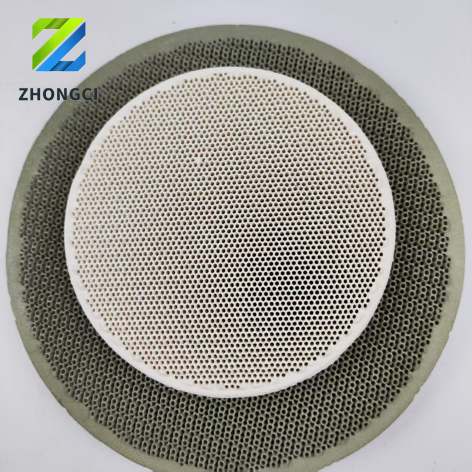
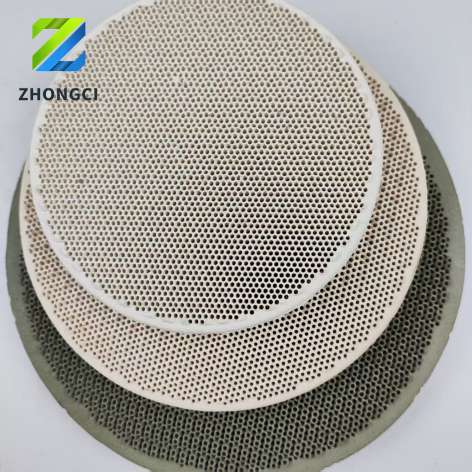
First, let’s look at its core composition and structure. Manufacturers mainly use high-purity ceramic raw materials (such as alumina, cordierite, and other mineral components) and add far-infrared radiating agents (like zirconia, titanium dioxide) during the production process. The honeycomb structure is not random; it features regular hexagonal or square pores that connect through the entire plate. This design maximizes the specific surface area—1 square meter of the plate can have a surface area equivalent to dozens of square meters when accounting for all pore walls. The large surface area directly boosts its far-infrared radiation efficiency and heat transfer speed.
Core function
Next is its core function: far-infrared radiation. When heated to a certain temperature (usually 100–600°C, depending on application needs), the plate emits far-infrared rays with a wavelength of 5–15 micrometers. This wavelength range matches the “life light wave” that the human body and most organic substances easily absorb. Unlike traditional heating methods that rely on air convection (which causes uneven heating and heat loss), far-infrared radiation transfers heat directly to the heated object. For example, in household heaters, it warms the human body or furniture directly without wasting energy on heating the surrounding air; in food drying equipment, it penetrates the surface of food (like fruits or grains) to evaporate moisture from the inside out, keeping the food’s nutrients and texture intact.
Application scenarios
In terms of application scenarios, it covers both daily life and industrial production:
- Household and daily use: It serves as the core heating component in far-infrared heaters, electric heating panels, and smart toilet seats. It provides comfortable, non-dry heating and avoids the stuffiness caused by traditional heaters.
- Industrial heating and drying: It is widely used in equipment like coating curing ovens, plastic molding heaters, and agricultural product dryers. It shortens heating time, reduces energy consumption by 20–30% compared to conventional heating methods, and ensures consistent heating quality.
- Environmental protection and energy saving: In exhaust gas treatment systems, it preheats exhaust gas through far-infrared radiation, improving the efficiency of subsequent purification processes (such as catalytic combustion). It also works in solar water heaters as a supplementary heating layer, enhancing heat storage and utilization rates.
Additionally, it has outstanding durability and safety. The ceramic material itself resists high temperatures, corrosion, and thermal shock—it won’t crack even when heated and cooled repeatedly. It contains no toxic substances and emits no harmful radiation during use, meeting international safety standards for household and industrial materials.
In summary, far-infrared honeycomb ceramic plate stands out for its efficient far-infrared radiation, energy-saving structure, and wide adaptability. It continues to replace traditional heating materials in more fields, driving the development of energy-saving and high-efficiency technologies.