
Advantages of Honeycomb Ceramic Regenerators
High heat recovery efficiency-RTO CERAMICS
It can recover 85–95% of waste heat from high-temperature exhaust gases, a rate much higher than traditional ceramic balls or brick regenerators. In industrial processes like RTO ceramics (Regenerative Thermal Oxidizer) for VOC treatment, this high efficiency means most of the heat from exhaust is reused to preheat fresh air. This cuts down fuel consumption by 30–50%, directly lowering the factory’s energy costs and reducing carbon emissions, which fits modern low-carbon production needs.https://www.chempackings.com/ceramic-foam-filter/sic-ceramic-foam-filter-for-metal-filtration.html
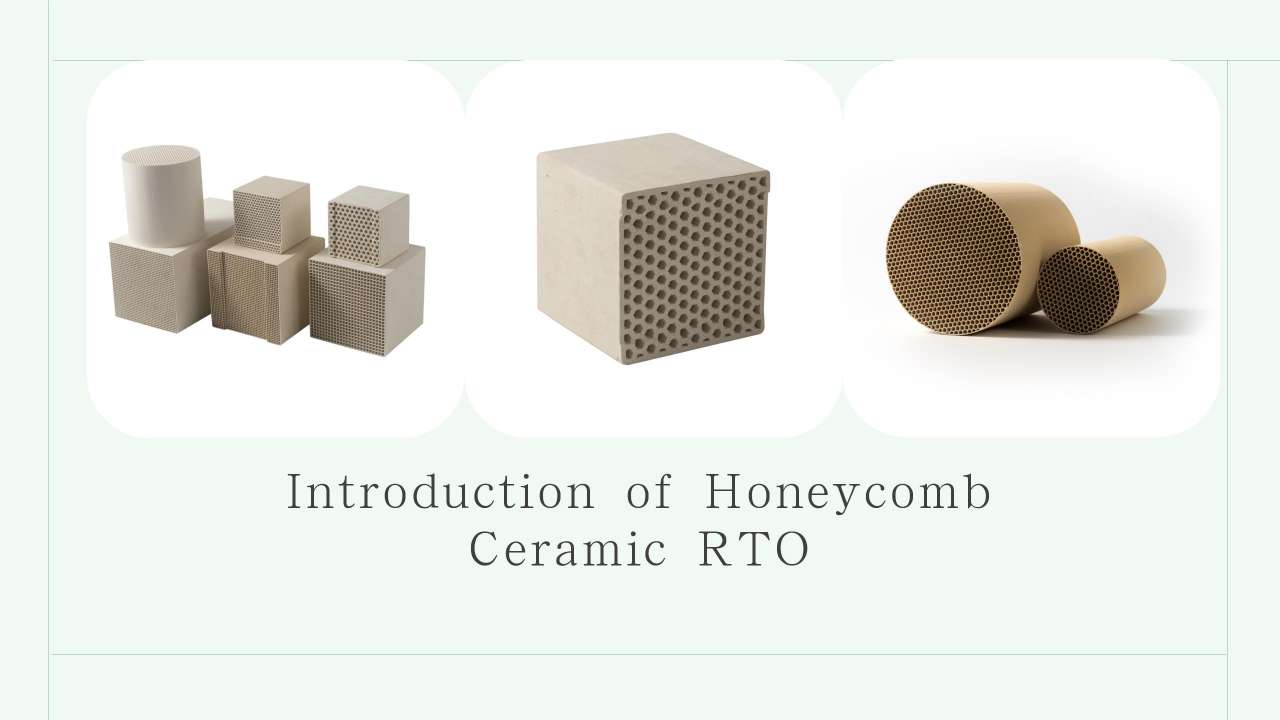
Excellent high-temperature resistance-Regenerative Thermal Oxidizer
It works stably at temperatures ranging from 800–1,400°C, and the specific heat resistance depends on the ceramic material—for example, silicon carbide ones handle higher temps than cordierite. Even when the temperature changes rapidly (like a sudden drop or rise of over 500°C), it won’t crack easily. This makes it perfect for high-temperature industrial scenarios such as metallurgical heating furnaces and glass kilns, where temperature fluctuations are common.https://www.rtoceramic.com/product/honeycomb-ceramic-heat-exchanger/
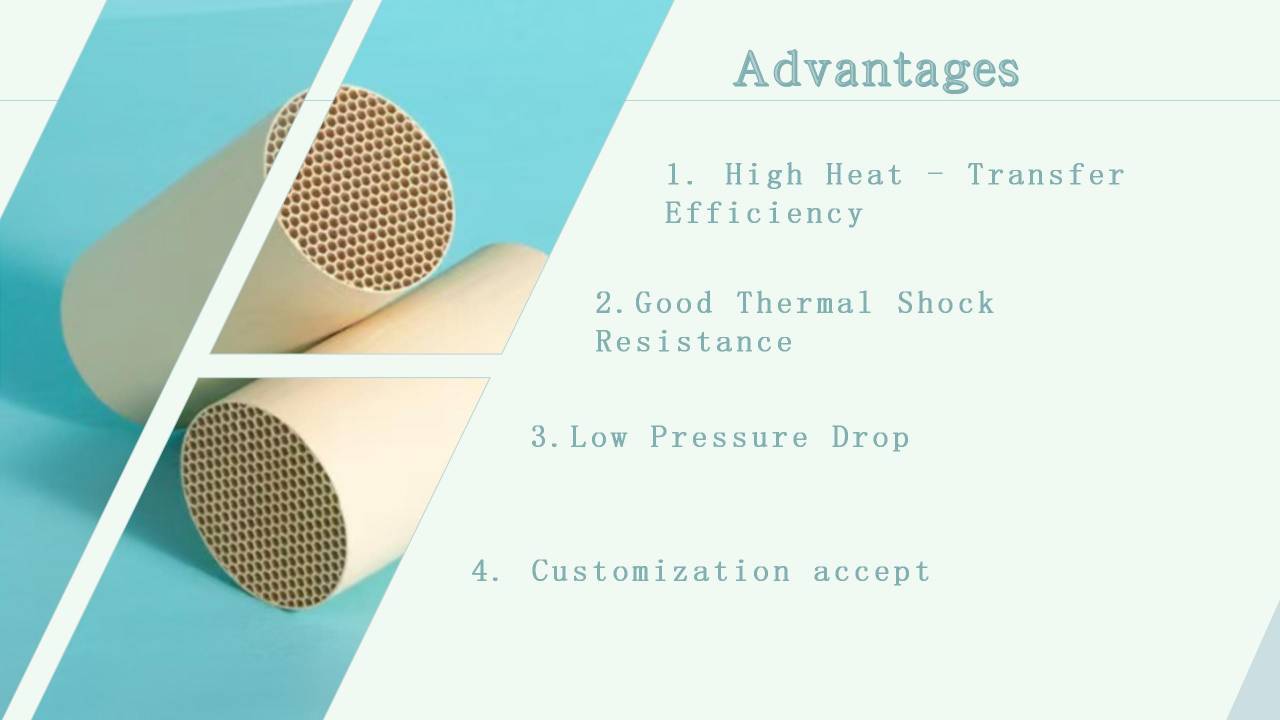
Low airflow resistance-RTO ceramics
Its honeycomb structure has smooth channel walls—whether hexagonal or square cells, the inner surfaces of the channels are free of sharp protrusions. When air or process gas flows through these channels, it encounters little resistance. This means the system doesn’t need extra power to push the gas, reducing the load on fans or air pumps. It also avoids excessive pressure loss in the entire heat exchange system, ensuring stable operation of industrial equipment.
Strong durability
It resists corrosion well—even when in contact with acidic or alkaline exhaust gases (like those from waste incineration or chemical reactions), its ceramic material won’t rust or degrade easily. Besides corrosion resistance, it also stands up to thermal fatigue. After repeated heating and cooling cycles (hundreds of times a day in some processes), it still keeps its structure intact. Usually, it can work continuously for 3–5 years in harsh industrial environments, which reduces the frequency of replacement and maintenance.
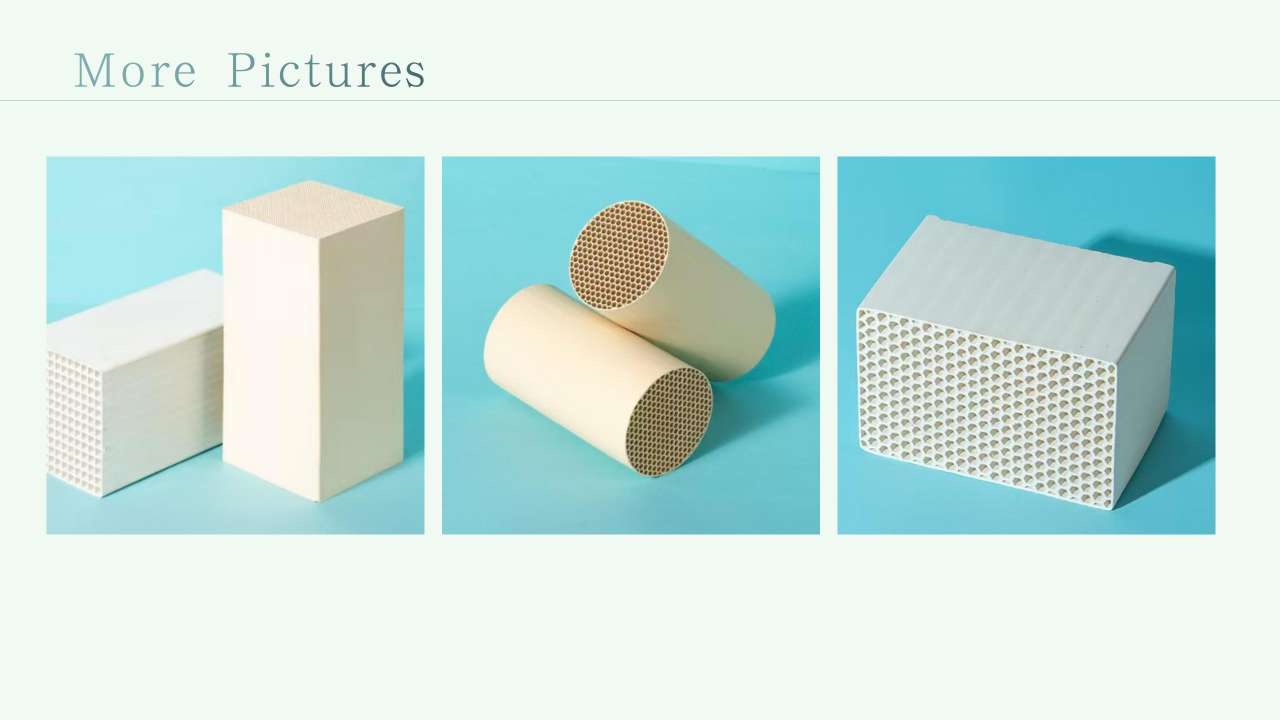
Space-saving compact design
Its honeycomb structure has an extremely high surface area-to-volume ratio, reaching up to 3,000 square meters per cubic meter. This means a small-sized regenerator unit can provide a large heat transfer surface. For example, a regenerator with a volume of 1 cubic meter can achieve the same heat exchange effect as a traditional bulk ceramic system that takes up 3–4 cubic meters. This saves a lot of factory space, making it easier to install in workshops with limited area.
Strong adaptability to different needs
It has two main cell designs to fit different industrial scenarios. Hexagonal cells have no sharp corners, so they distribute stress evenly and are great for low-dust, high-temperature uses like RTO for VOC treatment. Square cells have right-angle corners that reduce particle buildup, making them ideal for dusty, medium-temperature processes such as waste-to-energy plants and metallurgical forging furnaces. Besides cell shape, it also uses different materials (cordierite, mullite, etc.) to match different temperature ranges, so it can meet the needs of various industries.
Low thermal expansion, stable structure-Honeycomb Ceramic Regenerators
Its ceramic material (especially cordierite) has a very low coefficient of thermal expansion, as low as 1.5×10⁻⁶ per °C. When it heats up or cools down, it only deforms slightly—so small that it won’t affect the overall structure of the regenerator. This stability ensures that the channels don’t get blocked or narrowed over time, keeping airflow smooth and heat transfer efficient. It also avoids damage caused by deformation, further extending its service life.