
Classification of foam Ceramics
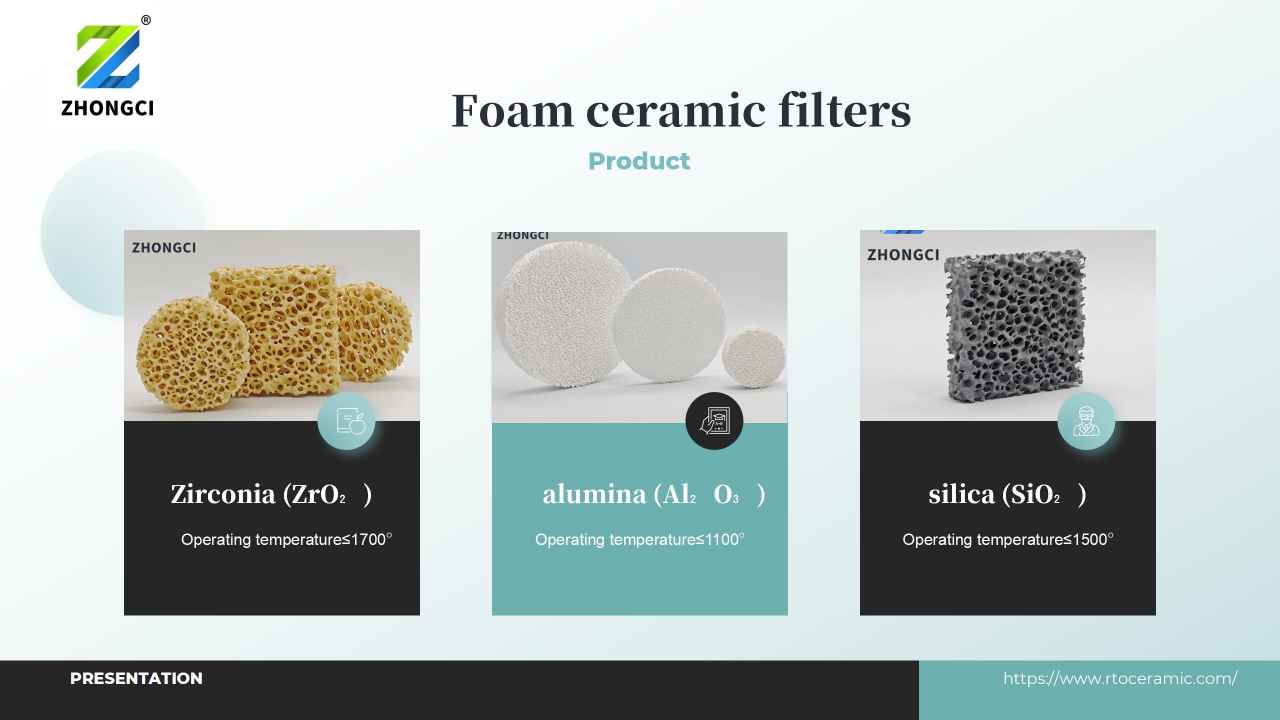
(1) According to whether each pore has a solid wall surface, foam ceramics can be divided into open-cell (reticulated) ceramic materials and closed-cell ceramic materials. If the solid that forms the foam body is only contained in the pore edges. It is call an open-cell ceramic material, and its pores are interconnected. If there is a solid wall surface, the foam body is call a closed-cell ceramic material. Which the pores are separated from each other by a continuous ceramic matrix. However, most cellular ceramics have both open pores and a small number of closed pores.
(2) According to the size of the pore diameter, cellular ceramics can generally be divide into two types: microporous materials and macroporous materials. Generally speaking, materials with pores having a diameter less than 2 nm are microporous materials. Materials with pores between 2 and 50 nm are mesoporous materials. and materials with pores larger than 50 nm are macroporous materials.
(3) Cellular ceramics can be classified by material as follows:
(3) Cellular ceramics can be classify by material as follows:
① Diatomite-based materials: Mainly made from selected diatomite as raw material and sintered with clay, used for fine water filtration and in acidic media.
② Aluminosilicate materials: Using refractory clay clinker, calcined bauxite, sillimanite and synthetic mullite particles as aggregates. It is resistant to acids and weak alkalis. And the service temperature can reach 1000 °C.
③ High-silica silicate materials: Mainly produced using hard porcelain slag, acid-resistant ceramic slag and other acid-resistant synthetic ceramic particles as aggregates. It has water resistance and acid resistance, and the service temperature can reach 700 °C.
④ Ceramic materials: The composition is close to that of high-silica silicate materials. And it is a kind of microporous ceramic material mainly obtained by mixing various clay clinker particles with clay, etc.
⑤ Corundum and emery materials: Using different types of electrofused corundum and silicon carbide particles as aggregates. It has the characteristics of being resistant to strong acids and high temperatures. And the high-temperature resistance can reach 1600 °C.
⑥ Zirconia materials: The basic material is zirconia (ZrO₂), which has high strength and high-temperature impact resistance, and the heat resistance temperature is higher than 1700 °C.https://www.chempackings.com/products