What is Infrared ceramic plates

Table of Contents

What is Far infrared ceramic Plate

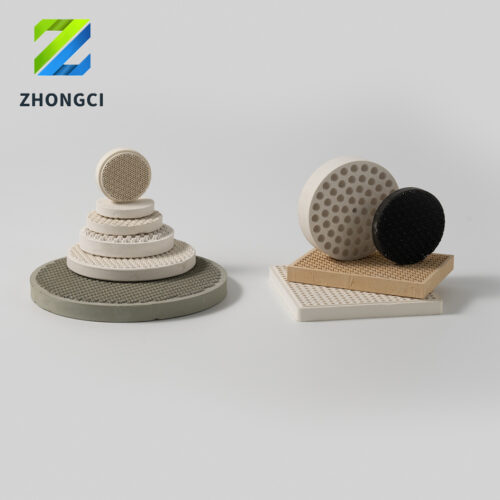
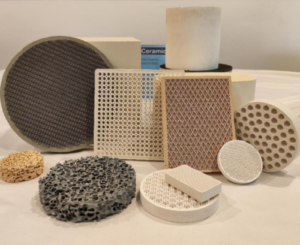
Far infrared ceramic chips refer to ceramic materials that can emit far infrared rays within a certain wavelength range. They possess the following characteristics and applications:  https://www.rtoceramic.com/product/infrared-radiation-cordierite-honeycomb-ceramic-plate-for-burner/
Characteristics

  • High Temperature Resistance: Manufactured through high-temperature sintering processes, they can endure high temperatures without significant deformation or property alterations.
  • Excellent Chemical Stability: Exhibiting strong resistance to chemical corrosion. They do not easily react with other substances, thereby maintaining their performance and quality over an extended period.
  • Low Thermal Conductivity: Having relatively low thermal conductivity, they can reduce heat loss and serve as thermal insulation materials.
  • Good Infrared Emissivity: Capable of efficiently emitting far infrared rays. With an emissivity typically ranging from 0.85 to 0.95.

Working Principle

  • Molecular Vibration: The atoms and molecules within the ceramic material constantly vibrate and rotate due to thermal motion. When the material is heated, these vibrations and rotations become more intense. Resulting in the emission of electromagnetic waves in the far infrared region.
  • Energy Level Transition: Electrons in the atoms of the ceramic material can transition between different energy levels. When they return to lower energy levels from higher ones. They release energy in the form of far infrared rays.

Manufacturing Process

  • Raw Material Preparation: Utilizing metal oxides such as silicon dioxide, aluminum oxide, and titanium dioxide. As well as other additives, these raw materials are mixed in specific proportions and ground into fine powders.
  • Forming: Employing methods like pressing, injection molding, or casting to shape the powder into the desired form.
  • Sintering: Placing the formed green body in a high-temperature furnace and sintering it at temperatures between 1000°C and 1600°C to enhance its density and mechanical strength.
  • Surface Treatment: Conducting surface polishing, coating, or other treatments as necessary to improve the surface quality and infrared emissivity of the ceramic chip.
  • https://www.rtoceramic.com/product-category/all-products/ceramic-foam-filter-plate/

Applications

  • Healthcare Products: Far infrared ceramic chips are believed to have certain health benefits. Such as promoting blood circulation, enhancing metabolism, relieving pain, and eliminating fatigue. As a result, they are extensively used in healthcare products like far infrared therapy belts, mattresses, pillows, and clothing.
  • Cooking Utensils: When utilized in cookware such as pots and pans, they can evenly distribute heat. Prevent food from burning, and enhance the cooking efficiency and flavor.
  • Industrial Heating: Employed in industrial heating equipment like heaters, ovens, and drying devices to provide efficient heat sources, boost energy efficiency, and lower production costs.
  • Agriculture and Horticulture: Placed in greenhouses or agricultural production environments, they can increase the temperature, enhance the growth rate and yield of crops. And improve the quality of agricultural products.
  • Water Treatment: Far infrared ceramic chips can be utilized to treat water. And facilitating the decomposition of organic matter and bacteria in the water. Improving water quality, and making it more suitable for human consumption and industrial use.
  • https://www.chempackings.com/products

What is a honeycomb ceramic regenerator and what is its function?

Honeycomb ceramic regenerator is the key and core component of regenerative high-temperature combustion technology (HTAC technology). It has been widely used in various pusher-type heating furnaces, walking-type heating furnaces, heat treatment furnaces, forging furnaces, melting furnaces, ladle/tundish roasters, soaking furnaces, radiant tube burners, and hood-type furnaces in the metallurgical machinery industry. Furnace, blast furnace hot blast stove; various ceramic kilns, various glass kilns in the building materials industry; various tubular heating furnaces, cracking furnaces and other industrial furnaces in the petrochemical industry. Material of honeycomb ceramic regenerator: Regenerator material——mullite, cordierite, cordierite-mullite, corundum-mullite, high-aluminum and other materials honeycomb ceramic regenerator are resistant to With significant advantages such as high temperature, corrosion resistance, good thermal stability, high strength, large heat storage, and good thermal conductivity, the various indicators of the product can fully meet the use and operation requirements of industrial furnaces.

What is honeycomb ceramic regenerator – honeycomb ceramic regenerator hole pattern:

Thermal body hole type——Produces four hole types including square hole, hexagonal hole, round hole, and triangular hole.

Application of honeycomb ceramic regenerator: The principle of the regenerative incineration system (RTO) is to use ceramic regenerators to store the heat generated when organic waste gases are decomposed, and use the thermal energy stored in the ceramic regenerators to decompose untreated organic waste gases. , thereby achieving high thermal efficiency.

In view of the process requirements of the regenerative combustion deodorization oven (RTO), honeycomb ceramic products of various materials and sizes such as dense cordierite, loose cordierite, lithium porcelain, mullite, etc. are developed, which have large specific surface area and excellent exhaust resistance. Small, low thermal expansion and contraction coefficient, high bulk density, good thermal shock resistance and other characteristics.

This product is widely used in waste gas treatment equipment in the chemical industry, automotive paint, spray paint drying equipment, organic chemical industry, petrochemical industry, engraving printing, offset printing, food processing and other industries. For more specifications, please see the product page: Honeycomb Ceramic Regenerator

What is Far infrared ceramic Plate

Far infrared ceramic chips refer to ceramic materials that can emit far infrared rays within a certain wavelength range. They possess the following characteristics and applications:  https://www.rtoceramic.com/product/infrared-radiation-cordierite-honeycomb-ceramic-plate-for-burner/

Characteristics

  • High Temperature Resistance: Manufactured through high-temperature sintering processes, they can endure high temperatures without significant deformation or property alterations.
  • Excellent Chemical Stability: Exhibiting strong resistance to chemical corrosion. They do not easily react with other substances, thereby maintaining their performance and quality over an extended period.
  • Low Thermal Conductivity: Having relatively low thermal conductivity, they can reduce heat loss and serve as thermal insulation materials.
  • Good Infrared Emissivity: Capable of efficiently emitting far infrared rays. With an emissivity typically ranging from 0.85 to 0.95.

Working Principle

  • Molecular Vibration: The atoms and molecules within the ceramic material constantly vibrate and rotate due to thermal motion. When the material is heated, these vibrations and rotations become more intense. Resulting in the emission of electromagnetic waves in the far infrared region.
  • Energy Level Transition: Electrons in the atoms of the ceramic material can transition between different energy levels. When they return to lower energy levels from higher ones. They release energy in the form of far infrared rays.

Manufacturing Process

  • Raw Material Preparation: Utilizing metal oxides such as silicon dioxide, aluminum oxide, and titanium dioxide. As well as other additives, these raw materials are mixed in specific proportions and ground into fine powders.
  • Forming: Employing methods like pressing, injection molding, or casting to shape the powder into the desired form.
  • Sintering: Placing the formed green body in a high-temperature furnace and sintering it at temperatures between 1000°C and 1600°C to enhance its density and mechanical strength.
  • Surface Treatment: Conducting surface polishing, coating, or other treatments as necessary to improve the surface quality and infrared emissivity of the ceramic chip.
  • https://www.rtoceramic.com/product-category/all-products/ceramic-foam-filter-plate/

Applications

  • Healthcare Products: Far infrared ceramic chips are believed to have certain health benefits. Such as promoting blood circulation, enhancing metabolism, relieving pain, and eliminating fatigue. As a result, they are extensively used in healthcare products like far infrared therapy belts, mattresses, pillows, and clothing.
  • Cooking Utensils: When utilized in cookware such as pots and pans, they can evenly distribute heat. Prevent food from burning, and enhance the cooking efficiency and flavor.
  • Industrial Heating: Employed in industrial heating equipment like heaters, ovens, and drying devices to provide efficient heat sources, boost energy efficiency, and lower production costs.
  • Agriculture and Horticulture: Placed in greenhouses or agricultural production environments, they can increase the temperature, enhance the growth rate and yield of crops. And improve the quality of agricultural products.
  • Water Treatment: Far infrared ceramic chips can be utilized to treat water. And facilitating the decomposition of organic matter and bacteria in the water. Improving water quality, and making it more suitable for human consumption and industrial use.
  • https://www.chempackings.com/products

Share your Needs!

Share

Get Custom Quote

Have a question? Get in touch instantly using the form below.
Our customer support team would get back to you soon.

    Get Custom Quote