Honeycomb Ceramic Regenerators RTOhttps://www.rtoceramic.com/products/
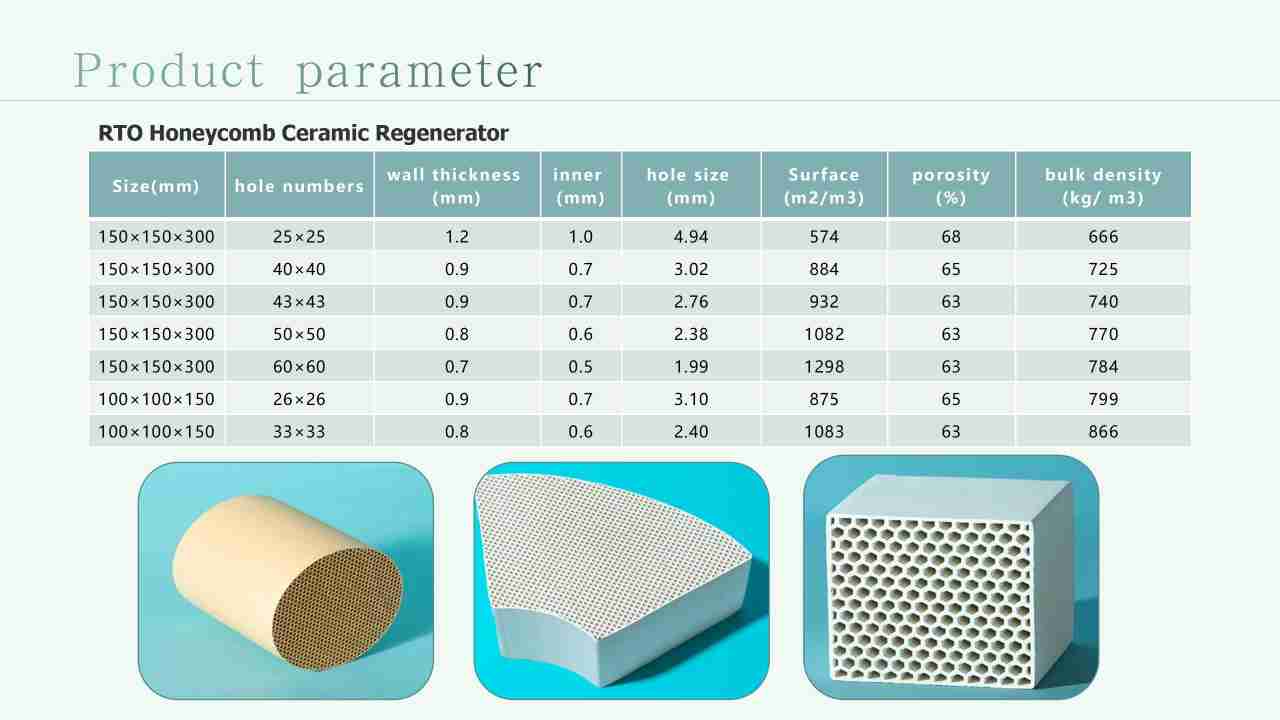
Honeycomb Ceramic Regenerators RTO
In the complex system of industrial production, thermal management is a crucial aspect. Directly related to energy efficiency, production costs, and environmental impact. The emergence of honeycomb ceramic regenerators has brought innovative solutions to this field. It becoming an important supporting technology for high – efficiency and green development in many industrial sectors.
Structure and Principle
Honeycomb ceramic regenerators have a unique microstructure. Their interiors fill with numerous parallel honeycomb – shaped channels separated by extremely thin partitions, creating a large specific surface area. When high – temperature exhaust gas passes through these channels. Heat is quickly absorbed and stored by the regenerator walls, raising the regenerator’s temperature. L ater, when cold air or low – temperature fluid flows through, the stored heat released to heat it. This cycle enables efficient heat recovery and reuse, significantly improving the system’s energy efficiency.
Performance Features
- High – efficiency heat exchange: Thanks to the large specific surface area, honeycomb ceramic regenerators can complete heat exchange in a short time. It quickly reducing the temperature of hot fluids and increasing that of cold fluids, minimizing energy waste during heat transfer.
- High – temperature stability: They can maintain stable physical and chemical properties in high – temperature environments. Without softening, deformation, or chemical reactions, ensuring reliable operation in various high – temperature industrial kilns.
- Strong thermal shock resistance: In industrial production, temperature fluctuations are common. These regenerators can withstand rapid temperature changes without cracking or damage. It greatly extending their service life and reducing equipment maintenance and replacement costs.
- Low airflow resistance: The straight honeycomb channels result in small resistance losses when airflow passes through. Which helps reduce the energy consumption of fans and other equipment, ensures smooth airflow. And reduces the risk of blockage, enhancing the overall system stability.
Classification
By hole shape
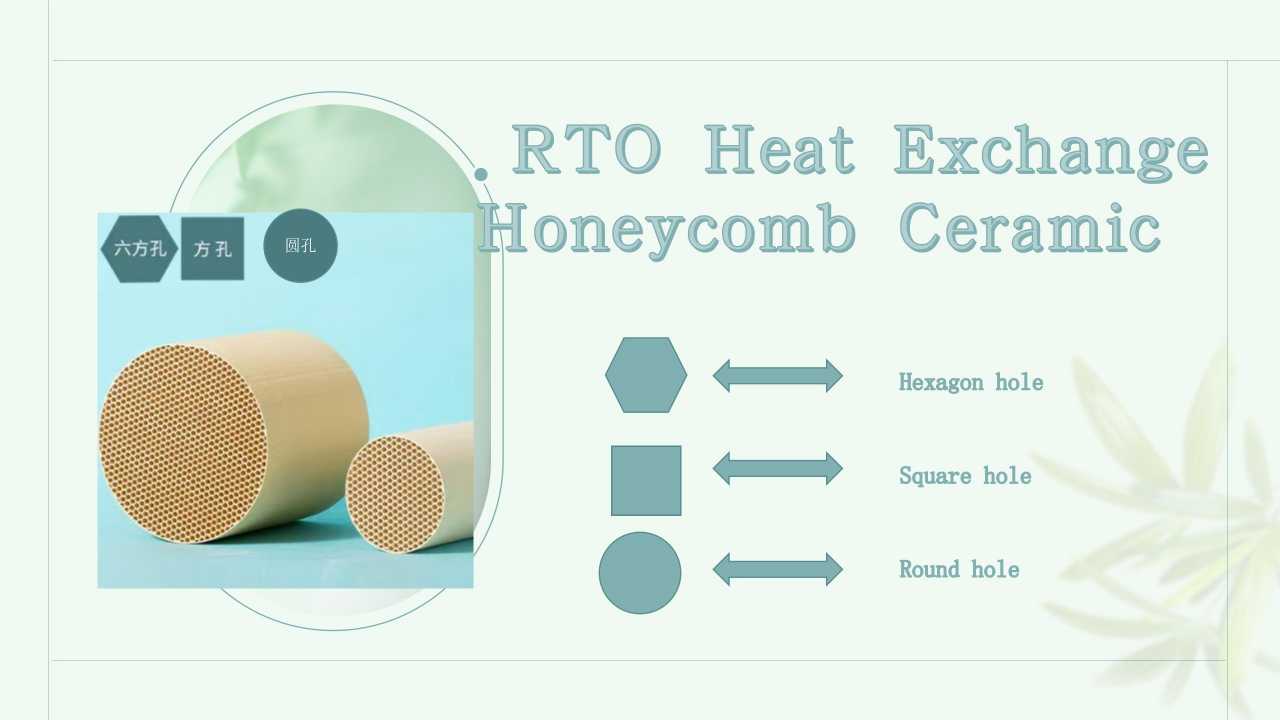
- Square holes: They have a regular structure and uniform airflow distribution, allowing for even heat transfer during heat exchange. They are suitable for applications requiring high heat – exchange uniformity, such as glass – manufacturing kilns.
- Rectangular holes: While maintaining a certain specific surface area. they can handle high – flow requirements and are commonly used in industrial sectors with large exhaust – gas flows. Like the sintering machine flue – gas treatment systems in large steel plants.
- Regular hexagonal holes: They have the most compact structure, high strength, and stability, and can operate stably under harsh conditions. Such as in waste – incineration furnace waste – heat recovery devices.
- Circular holes: They have excellent fluid – dynamics performance with the lowest airflow resistance and are used in systems with extremely strict airflow – resistance requirements. Such as the thermal management systems of special aerospace experimental equipment.
By material
- Cordierite: Known for its good heat resistance and excellent thermal shock resistance, it is one of the most widely used materials. It performs well in automotive exhaust – treatment systems and small – to – medium – sized industrial boilers. It coping effectively with frequent start – stop and temperature – change conditions.
- Mullite: With a high melting point, high strength, and excellent creep resistance, it is suitable for high – temperature, high – pressure industrial environments where high strength of the regenerator is required. Such as the ultra – high – temperature flue – gas waste – heat recovery systems in large thermal power plants and ceramic – firing kilns.
- Chrome – corundum: It has high hardness, strong wear resistance, and chemical corrosion resistance. It has unique advantages in handling high – temperature exhaust gas containing corrosive gases or particles and is commonly found in acid . And alkali – waste – gas treatment equipment in the chemical industry and high – temperature flue – gas purification systems in metal smelters.
Application Areas
- Steel industry: Honeycomb ceramic regenerators are widely used in waste – heat recovery systems in blast – furnace hot – blast stoves and steel – rolling heating furnaces. They can recover the heat of high – temperature exhaust gas. It increase the hot – air temperature, reduce fuel consumption, and decrease greenhouse – gas emissions.
- Energy and power industry: They play a key role in boiler flue – gas waste – heat recovery in thermal power plants, intake air pre – heating in gas turbines, and heat utilization in waste – incineration power plants. By recovering waste heat, they improve power – generation efficiency, achieve cascaded energy utilization, and help reduce pollutant emissions.
- Chemical industry: In various chemical reactors, cracking furnaces, and heating furnaces. They are used to recover the waste heat of high – temperature process gases. The pre – heat reaction raw materials or combustion – supporting air, saving energy. It improving reaction conversion rates and product quality, and reducing environmental impact from exhaust – gas emissions.
- Environmental protection engineering: In industrial waste – gas treatment equipment, such as VOCs incinerators and denitrification reactors, they act as heat – exchange and catalytic – reaction carriers. It enabling efficient heat recovery while promoting the oxidation, decomposition, or reduction of harmful gases, thus reducing exhaust – gas toxicity and pollution.
As industrial technology advances and environmental requirements become stricter, honeycomb ceramic regenerators are also continuously evolving. As a core technology in industrial thermal management, they are injecting continuous impetus into the global green. And high – efficiency industrial development with their excellent performance and broad application prospects. In the future industrial transformation. They will surely continue to shine and become a key force in building a resource . Which means saving and environment – https://www.chempackings.com/honeycomb-ceramic/friendly industrial system.