
Silicon carbide foam ceramics, a remarkable class of advanced materials, have been attracting increasing attention in various industrial fields due to their unique combination of properties.
Composition and Structure
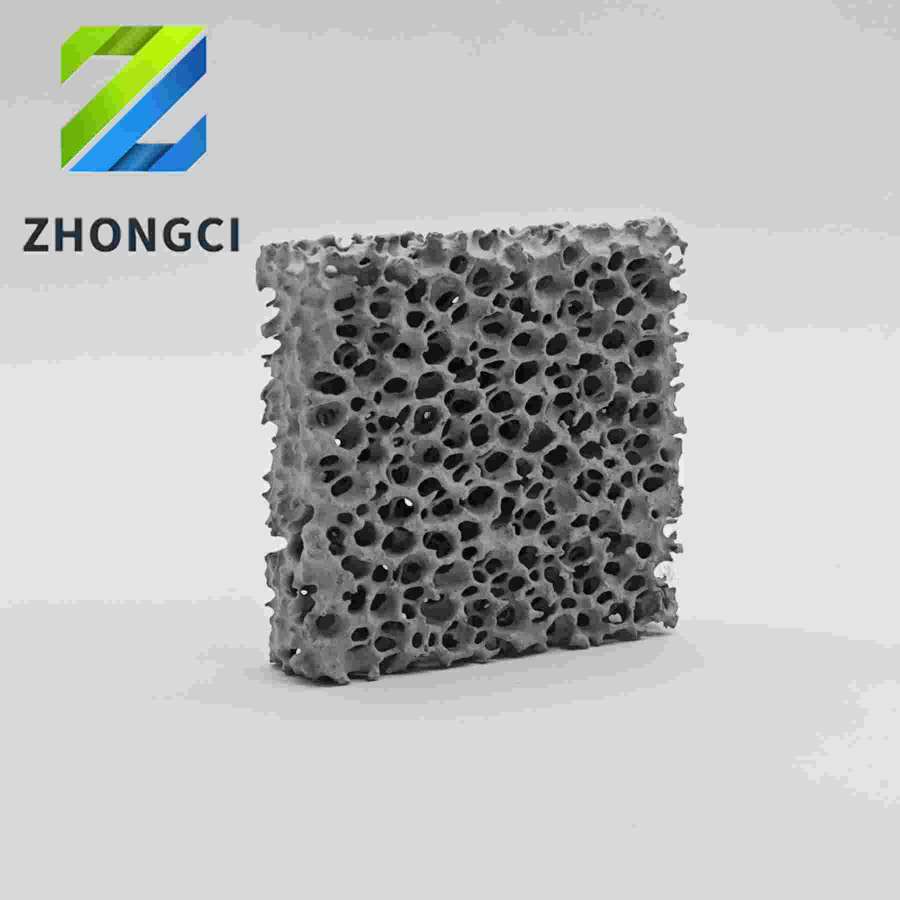
Composed primarily of silicon carbide (SiC), these ceramics possess a porous, foam-like structure. The SiC crystals form the skeletal framework that defines the overall shape and integrity of the material. While the pores are distributed throughout, creating a three-dimensional network. The pore sizes can be precisely controlled during the manufacturing process, typically ranging from several micrometers to several millimeters. Depending on the intended application. This porosity endows the material with a high specific surface area. Which is advantageous for processes such as catalysis and filtration where extensive surface interaction is crucial.
Exceptional Properties
1. High Temperature Resistance: Silicon carbide foam ceramics exhibit outstanding thermal stability, capable of withstanding extremely high temperatures, often up to 1500°C or even higher in an inert atmosphere. This makes them ideal for applications in high-temperature industrial furnaces, kilns. and heat exchangers. Where traditional materials would rapidly degrade or lose their mechanical properties.
2. Excellent Mechanical Strength: Despite their porous nature, they possess remarkable compressive and flexural strength. The interconnected SiC struts within the foam structure effectively distribute applied loads, enabling the material to bear significant mechanical stresses without collapsing. This property is vital in applications like molten metal filtration in the foundry industry, where the ceramic foam needs to endure the impact and pressure of flowing metal.
3. Good Chemical Inertness: They show high resistance to chemical corrosion, being inert to a wide range of acidic and alkaline substances. In the chemical processing industry, for example, they can be used as reactor linings or components in corrosive chemical environments, ensuring long service life and stable performance.
4. Low Thermal Conductivity: Thanks to the presence of pores filled with air or other gases, the thermal conductivity of silicon carbide foam ceramics is relatively low compared to their dense counterparts. This characteristic makes them excellent thermal insulators. Suitable for applications where heat dissipation needs to be controlled, such as in thermal protection systems for aerospace components.
Manufacturing Processes
There are several common methods for fabricating silicon carbide foam ceramics. One prevalent approach is the replication technique, which starts with a polymeric foam template. The template is impregnated with a SiC precursor slurry. Followed by pyrolysis to convert the precursor into SiC while burning off the polymer template, leaving behind the desired porous SiC structure. Another method is the direct foaming process. Where a SiC-based mixture is foamed through the addition of suitable blowing agents and then sintered to achieve the final ceramic foam with the required properties.
Applications
1. Metallurgical Industry: In the foundry sector, silicon carbide foam ceramics are widely used as filters for molten metal. They effectively remove inclusions and impurities from the molten alloy during the casting process. Improving the quality and mechanical properties of the final metal products.
2. Energy Sector: In high-temperature fuel cells and gas turbines, they serve as components that can withstand the harsh operating conditions, enhancing the efficiency and durability of these energy conversion devices.
3. Environmental Protection: Due to their good adsorption and filtration capabilities, they can be applied in air and water purification systems, trapping particulate matter and harmful substances, thereby contributing to cleaner air and water resources.
4. Aerospace and Defense: Their combination of lightweight, high-temperature resistance, and mechanical strength makes them suitable for thermal protection shields, engine components, and other critical parts in aerospace and defense applications, where reliability and performance under extreme conditions are of utmost importance.
In conclusion, silicon carbide foam ceramics, with their unique properties, versatile manufacturing techniques, and broad application prospects, continue to play a significant role in driving technological advancements across multiple industries, promising to unlock even more potential in the future as research and development efforts progress.