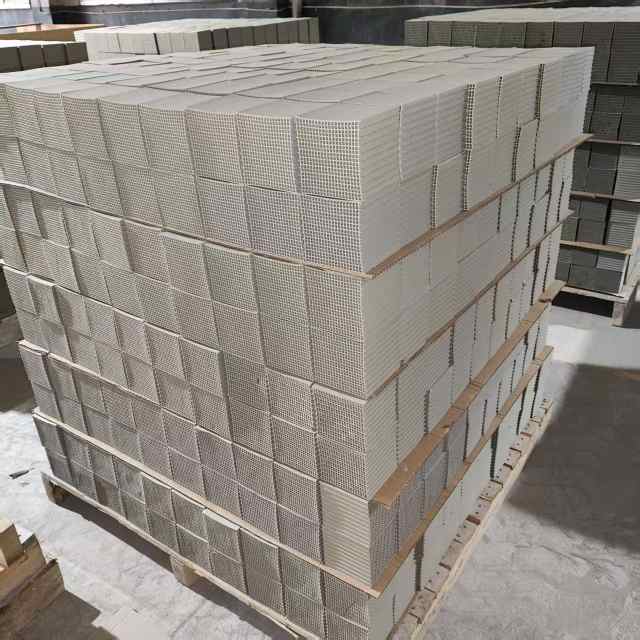
1. Core Material & Performance Specifications
These regenerators boast impressive high-temperature resistance. They can withstand temperatures ranging from 1180°C to 1680°C, depending on the material composition. Common base materials include corundum-mullite, cordierite, alumina, and zirconia blends. With a typical alumina content of 65–70% and silica content of 25–30%, they achieve a perfect balance of hardness and thermal stability. Their bulk density ranges from 2.25 to 2.35 g/cm³, and compressive strength exceeds 20 MPa, making them durable against mechanical impact and thermal shock.
2. Working Principle
The working principle of plate-type honeycomb ceramic regenerators is straightforward yet efficient. They act as temporary heat storage units in cyclic thermal processes. During the heating phase, they absorb massive heat from high-temperature flue gases. In the regeneration phase, they release the stored heat to preheat cold air or process gases. Short switching cycles between absorption and release ensure continuous heat exchange, maintaining optimal temperature levels for industrial processes. Their heat recovery rate often exceeds 95% in well-designed systems, significantly reducing energy consumption.
3. Industry Applications
These regenerators find widespread applications across multiple industries.https://www.chempackings.com/honeycomb-ceramic/honeycomb-ceramic-heat-exchanger.html
- Environmental Protection: They serve as critical components in RTO (Regenerative Thermal Oxidizer) systems for VOCs treatment. They efficiently recover heat from waste gas combustion, lowering operational costs for industrial waste gas purification.
- Iron & Steel Industry: They preheat combustion air in HTAC (High-Temperature Air Combustion) burners and blast furnace stoves, improving fuel efficiency and reducing emissions.
- Glass Manufacturing: They recover flue gas heat for air preheating in glass melting furnaces. This not only cuts energy usage but also enhances product quality by stabilizing furnace temperatures.
- Petrochemical Sector: They support cracking furnaces and reforming processes, ensuring consistent heat supply and process efficiency.
- Ceramics & Building Materials: They play a vital role in reducing energy consumption in tunnel kilns and roller kilns.
4. Key Advantages & Customization
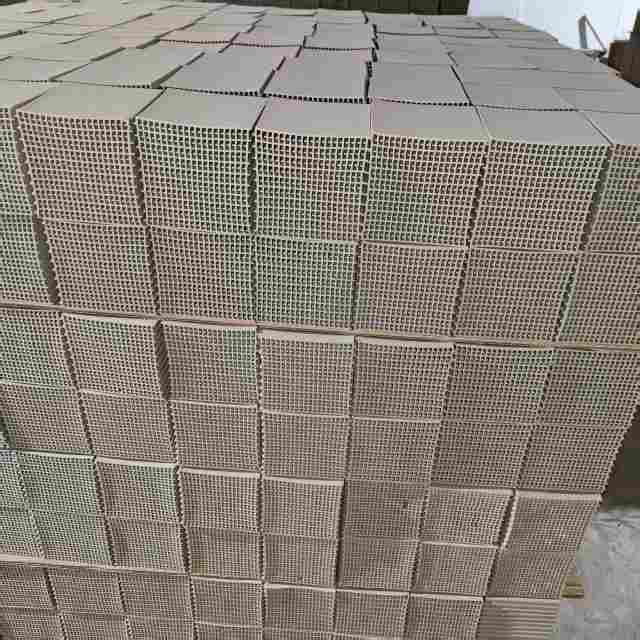
Key advantages include low pressure drop, long service life, and customizable designs. Manufacturers can adjust size, pore shape (square or hexagon), and cell density to meet specific industrial needs. Their resistance to corrosion and slag buildup further extends operational lifespan, minimizing maintenance costs. As industries focus more on energy conservation and environmental protection, plate-type honeycomb ceramic regenerators continue to gain popularity for their ability to balance efficiency, durability, and sustainability.https://www.rtoceramic.com/product-category/all-products/rto-honeycomb-ceramic/