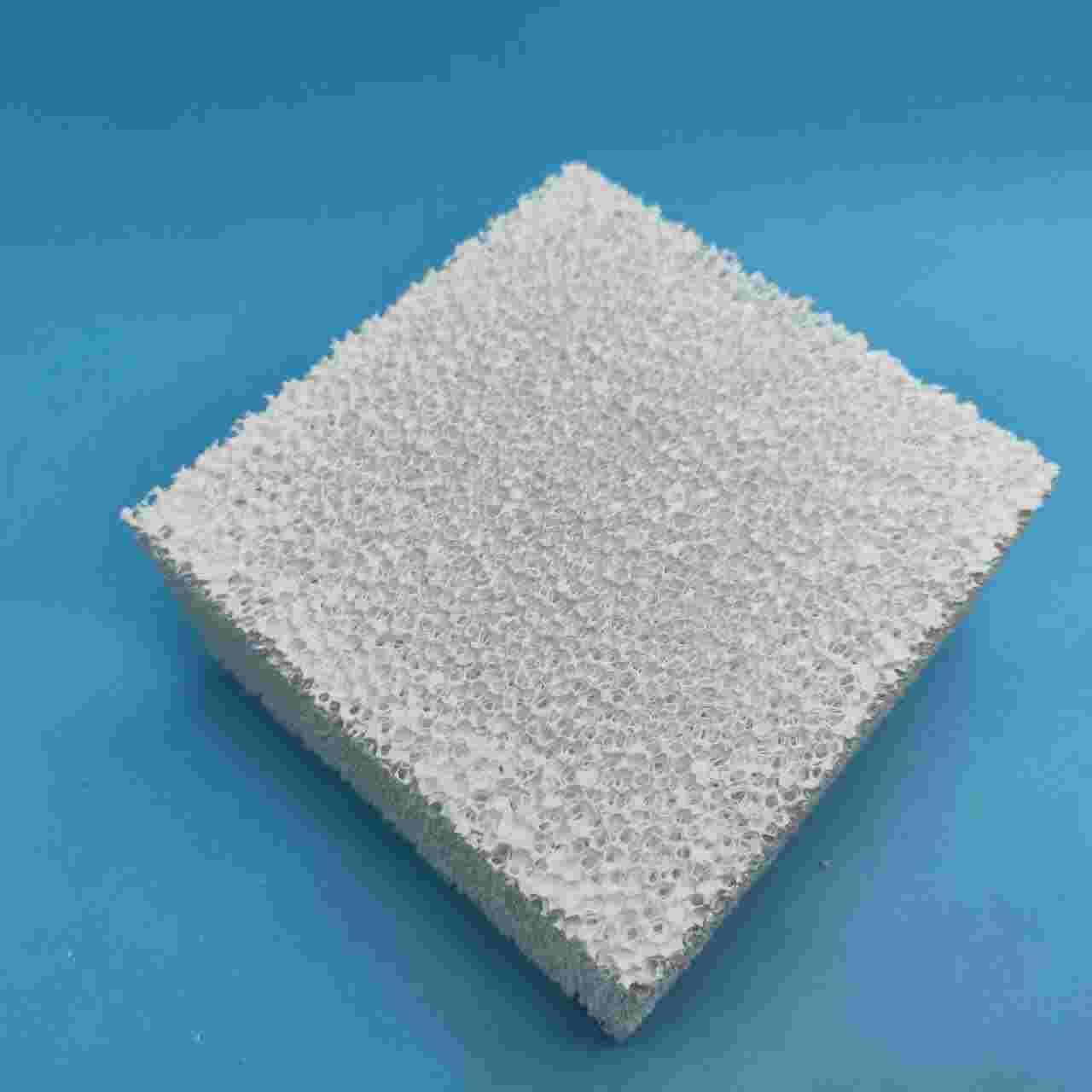
Introduction of Aluminum Oxide Foam Ceramic

Table of Contents

Specification:

is a type of advanced structural ceramic material that possesses unique properties due to its foam structure.

Here’s an introduction to its characteristics and Introduction of Aluminum Oxide Foam Ceramic of applications:

  • Material Composition and Structure:
  • Aluminum oxide foam ceramics are composed primarily of aluminum oxide(Al2O3),which is known for its high melting point,hardness,and chemical inertness.
  • These ceramics are characterized by their foam-like structure,which provides a high porosity level.This structure is achieved through various fabrication methods,such as particle-stabilized foaming,which involves the use of a precursor like boehmite that undergoes volume changes during the reaction,contributing to the open-cell structure.
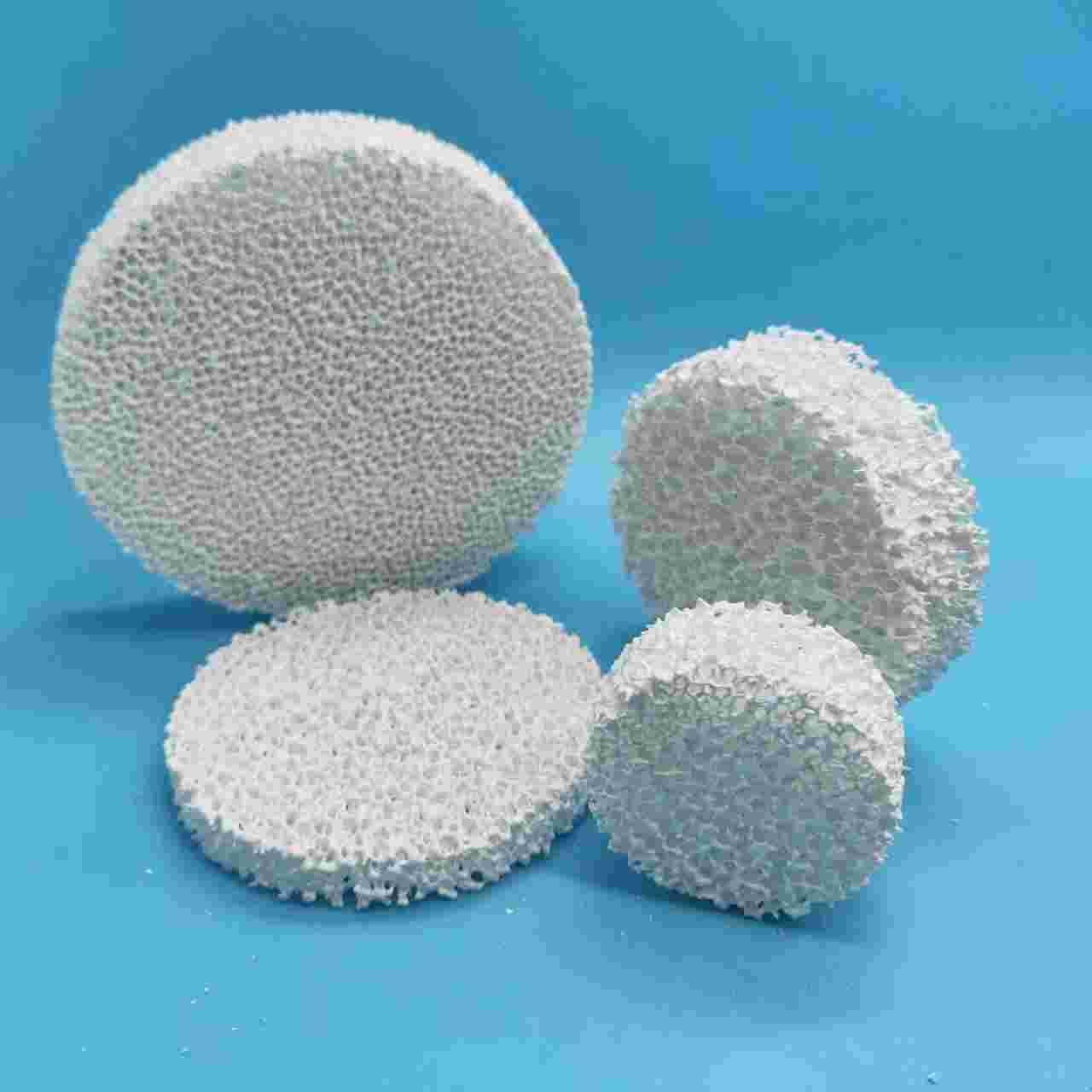
Properties:

  • High Porosity:Aluminum oxide foam ceramics can have porosities ranging from 62%to over 80%,which is comparable to aerogels.
  • High Strength:Despite their high porosity,these foam ceramics can exhibit high strength due to the strong grain bonding facilitated by the sintering process.
  • Thermal and Chemical Stability:Being made of aluminum oxide,these foam ceramics are resistant to high temperatures and have excellent chemical stability.
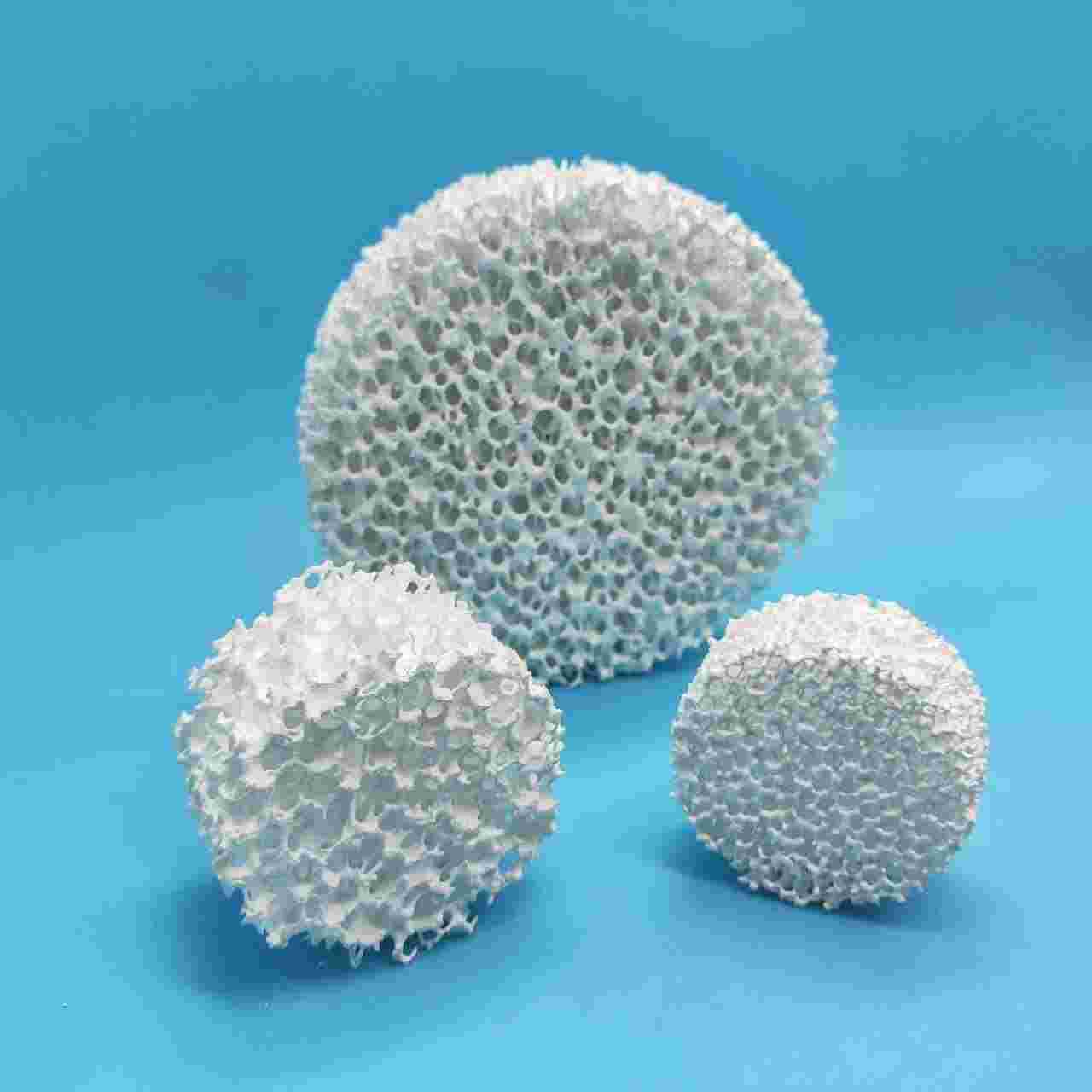
Introduction of Aluminum Oxide Foam Ceramic

Applications:

  • Filtration: Due to their porous nature,aluminum oxide foam ceramics are used as filters in various industrial processes,including molten metal filtration.
  • Thermal Insulation:The high porosity of these ceramics provides excellent thermal insulation properties,making them suitable for applications where heat management is critical.
  • Catalytic Supports:The high surface area of the foam structure can make aluminum oxide foam ceramics effective as catalyst supports in chemical reactions.
  • Adsorption:They can be used as adsorbents for removing contaminants from water,such as fluoride ions. Aluminum-rich fly ash was used as a sintering additive to produce SiC-Al2O3 foam ceramics for fluoride removal.

Fabrication Methods:

  • The fabrication of aluminum oxide foam ceramics often involves the use of precursors like boehmite,which are then subjected to processes like particle-stabilized foaming and sintering to create the final foam structure.
  • Advanced techniques such as cold-pressing and hot pressing are also employed to achieve the desired microstructure and mechanical properties.

Aluminum oxide foam ceramics represent a significant advancement in materials science make them suitable for a high-performance applications. Their unique combination of high porosity,strength,and thermal stability positions them as a promising material in various industrial sectors.

What is a honeycomb ceramic regenerator and what is its function?

Honeycomb ceramic regenerator is the key and core component of regenerative high-temperature combustion technology (HTAC technology). It has been widely used in various pusher-type heating furnaces, walking-type heating furnaces, heat treatment furnaces, forging furnaces, melting furnaces, ladle/tundish roasters, soaking furnaces, radiant tube burners, and hood-type furnaces in the metallurgical machinery industry. Furnace, blast furnace hot blast stove; various ceramic kilns, various glass kilns in the building materials industry; various tubular heating furnaces, cracking furnaces and other industrial furnaces in the petrochemical industry. Material of honeycomb ceramic regenerator: Regenerator material——mullite, cordierite, cordierite-mullite, corundum-mullite, high-aluminum and other materials honeycomb ceramic regenerator are resistant to With significant advantages such as high temperature, corrosion resistance, good thermal stability, high strength, large heat storage, and good thermal conductivity, the various indicators of the product can fully meet the use and operation requirements of industrial furnaces.

What is honeycomb ceramic regenerator – honeycomb ceramic regenerator hole pattern:

Thermal body hole type——Produces four hole types including square hole, hexagonal hole, round hole, and triangular hole.

Application of honeycomb ceramic regenerator: The principle of the regenerative incineration system (RTO) is to use ceramic regenerators to store the heat generated when organic waste gases are decomposed, and use the thermal energy stored in the ceramic regenerators to decompose untreated organic waste gases. , thereby achieving high thermal efficiency.

In view of the process requirements of the regenerative combustion deodorization oven (RTO), honeycomb ceramic products of various materials and sizes such as dense cordierite, loose cordierite, lithium porcelain, mullite, etc. are developed, which have large specific surface area and excellent exhaust resistance. Small, low thermal expansion and contraction coefficient, high bulk density, good thermal shock resistance and other characteristics.

This product is widely used in waste gas treatment equipment in the chemical industry, automotive paint, spray paint drying equipment, organic chemical industry, petrochemical industry, engraving printing, offset printing, food processing and other industries. For more specifications, please see the product page: Honeycomb Ceramic Regenerator

Share your Needs!

Share

Get Custom Quote

Have a question? Get in touch instantly using the form below.
Our customer support team would get back to you soon.

    Get Custom Quote