Improvement Measures for Honeycomb Ceramic

Table of Contents

best honeycomb ceramic . causes-of-honeycomb-blockage-and-damage-and-improvement-measures.
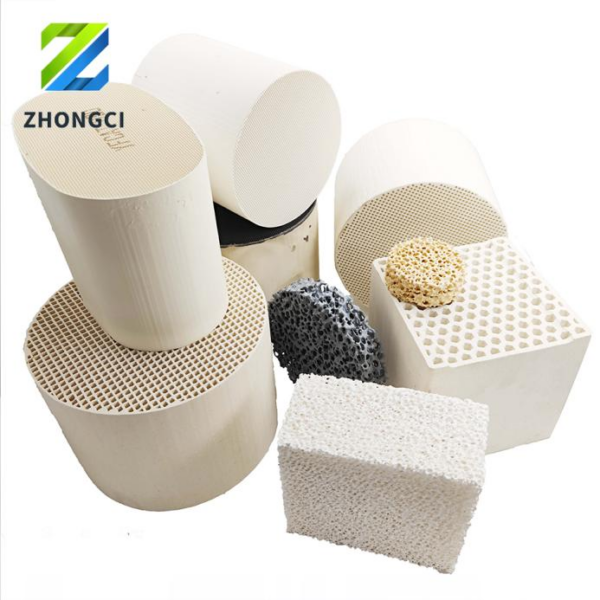
① High dust content in gas. Before there is no bag dust removal, the dust content of blast furnace gas is 1-10s/m, this gas can not directly through the honeycomb. If directly used, it will soon plug the honeycomb. Therefore, the blast furnace gas must be dusted by the cloth bag, and the blast furnace dust bag should be replaced regularly . Improvement Measures for Honeycomb Ceramic, causes-of-honeycomb-blockage-and-damage-and-improvement-measures

causes-of-honeycomb-blockage-and-damage-and-improvement-measures. honeycomb ceramic

High water content in gas

② High water content in gas. In the process of gas combustion, the condensate water in the gas pipeline will cause the ceramic plate of the regenerator chamber, which will form a blockage for a long time. Treatment method: Install a trap every 100 meters in the gas main pipe to collect and discharge the condensate water in the gas pipe, and play the role of water seal under the allowed pipeline gas pressure.

Flash seam of the upper honeycomb of the regenerator

③ best honeycomb ceramic. Flash seam of the upper honeycomb of the regenerator. On the one hand, this situation is due to the gap between the size changes in the heat storage room, and on the other hand, The design is convenient to install the honeycomb body with a gap, and this gap becomes the inevitable channel of fire leakage, and the smoke exhaust airflow passes directly from the flash seam, causing the smoke exhaust temperature to be extremely high.

The usual treatment method is to plug asbestos into the gap, but it is not reliable and easy to blow off. Switch to refractory material, can be used for a longer time.

Erosion of iron oxide

④ best honeycomb ceramic. Erosion of iron oxide. After being used for a period of time, the iron oxide slag at the bottom of the furnace is piled up, and the oxidizing slag is too close to the burner nozzle, and the iron oxide dust in the furnace enters the regenerator with the flue gas.

These substances are harmful substances for refractory materials and react with the honeycomb body to form low-melting point substances at high temperature. It increases the dust adsorption capacity of the pore wall. At the same time, due to the increase of sediment. The reaction goes deeper and the liquid phase volume increases. Resulting in honeycomb deformation, rupture.

https://www.rtoceramic.com/pingxiang-zhongci-environmental-ceramics/

What is a honeycomb ceramic regenerator and what is its function?

Honeycomb ceramic regenerator is the key and core component of regenerative high-temperature combustion technology (HTAC technology). It has been widely used in various pusher-type heating furnaces, walking-type heating furnaces, heat treatment furnaces, forging furnaces, melting furnaces, ladle/tundish roasters, soaking furnaces, radiant tube burners, and hood-type furnaces in the metallurgical machinery industry. Furnace, blast furnace hot blast stove; various ceramic kilns, various glass kilns in the building materials industry; various tubular heating furnaces, cracking furnaces and other industrial furnaces in the petrochemical industry. Material of honeycomb ceramic regenerator: Regenerator material——mullite, cordierite, cordierite-mullite, corundum-mullite, high-aluminum and other materials honeycomb ceramic regenerator are resistant to With significant advantages such as high temperature, corrosion resistance, good thermal stability, high strength, large heat storage, and good thermal conductivity, the various indicators of the product can fully meet the use and operation requirements of industrial furnaces.

What is honeycomb ceramic regenerator – honeycomb ceramic regenerator hole pattern:

Thermal body hole type——Produces four hole types including square hole, hexagonal hole, round hole, and triangular hole.

Application of honeycomb ceramic regenerator: The principle of the regenerative incineration system (RTO) is to use ceramic regenerators to store the heat generated when organic waste gases are decomposed, and use the thermal energy stored in the ceramic regenerators to decompose untreated organic waste gases. , thereby achieving high thermal efficiency.

In view of the process requirements of the regenerative combustion deodorization oven (RTO), honeycomb ceramic products of various materials and sizes such as dense cordierite, loose cordierite, lithium porcelain, mullite, etc. are developed, which have large specific surface area and excellent exhaust resistance. Small, low thermal expansion and contraction coefficient, high bulk density, good thermal shock resistance and other characteristics.

This product is widely used in waste gas treatment equipment in the chemical industry, automotive paint, spray paint drying equipment, organic chemical industry, petrochemical industry, engraving printing, offset printing, food processing and other industries. For more specifications, please see the product page: Honeycomb Ceramic Regenerator

Share your Needs!

Share

Get Custom Quote

Have a question? Get in touch instantly using the form below.
Our customer support team would get back to you soon.

    Get Custom Quote