
Okay, here’s a clear, structured guide on how to choose the right foam ceramic filter for your needs.
1. Understand Your Core Requirements
Start by defining your application. The filter choice depends heavily on:
- Molten Metal Type: Aluminum, Cast Iron, Steel, or Non-ferrous alloys.
- Casting Process: Gravity casting, Die casting, or Investment casting.
- Target Impurity Level: What is the required final metal quality?
2. Key Selection Criteria
Material & Chemistry
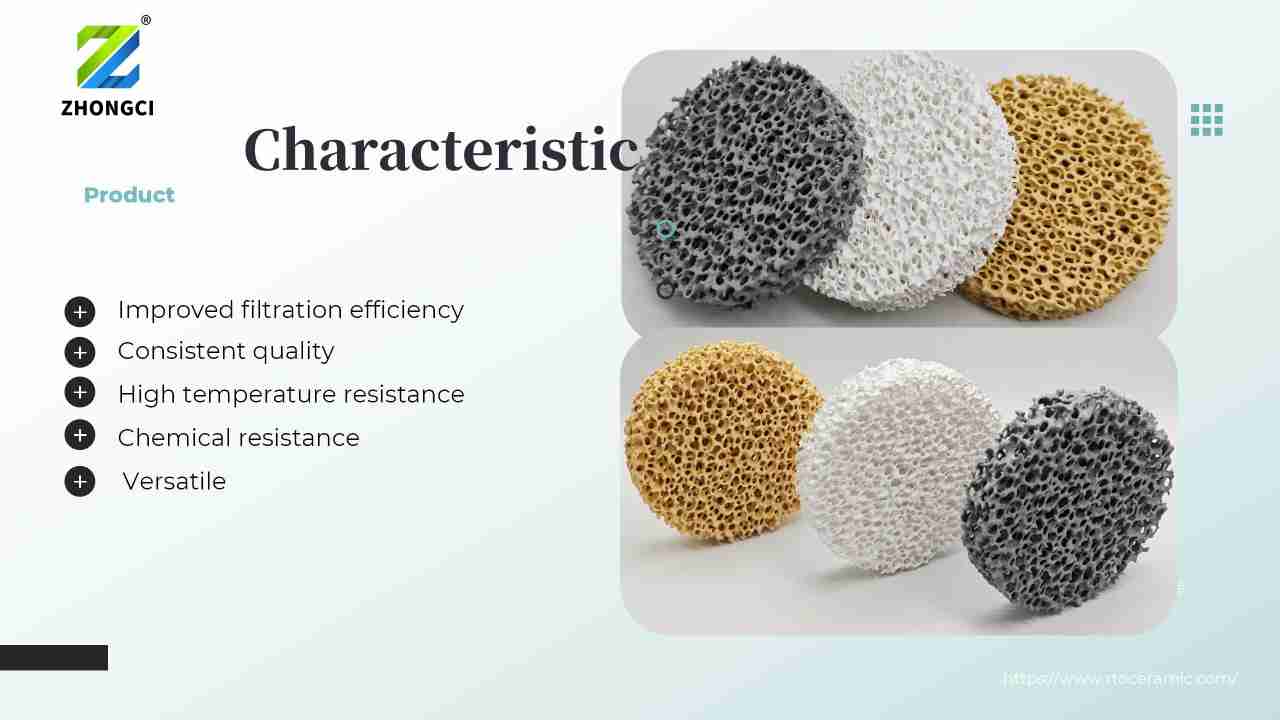
- Alumina (Al₂O₃): Best for aluminum and non-ferrous metals. Resistant to chemical attack.
- Zirconia (ZrO₂): Ideal for steel and high-temperature alloys. Offers superior thermal shock and corrosion resistance.
- Silicon Carbide (SiC): Excellent for cast iron. Has high thermal conductivity and good abrasion resistance.
Pore Size (PPI – Pores Per Inch)
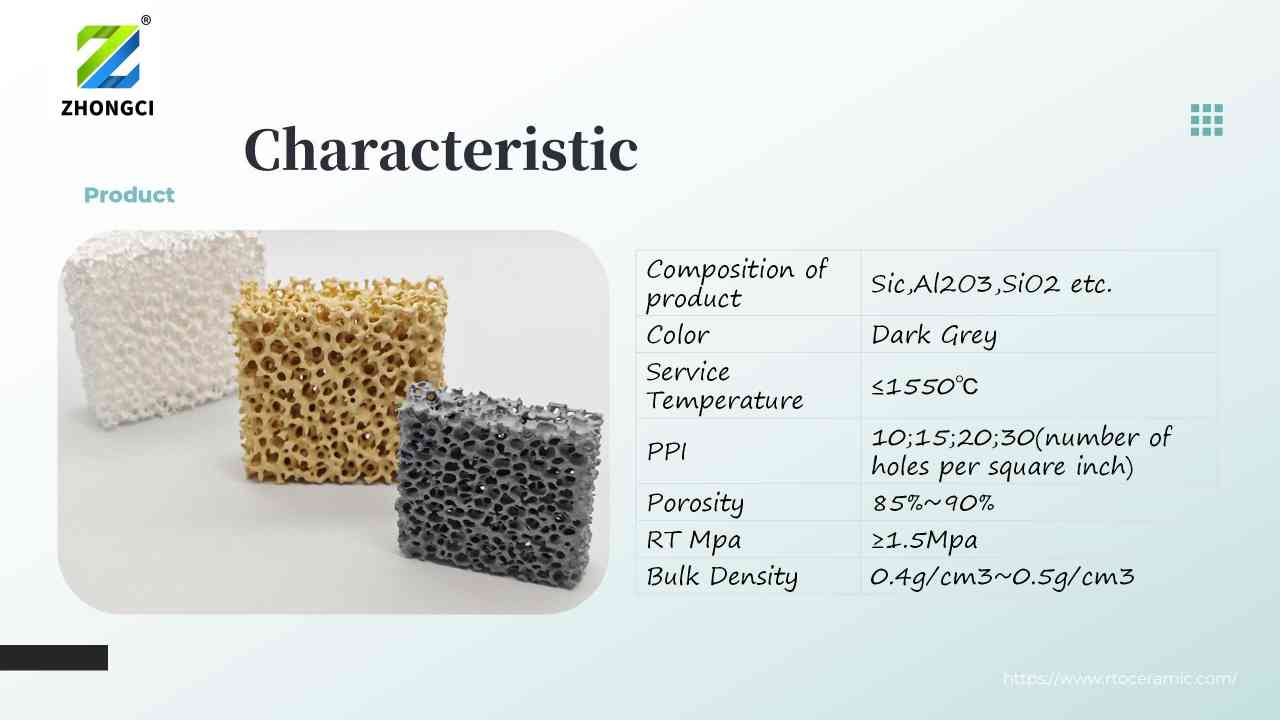
- Small Pores (40-60 PPI):
- Pros: Removes finer inclusions.
- Cons: Higher pressure drop, easier to clog.
- Best for: High-precision castings (e.g., automotive parts, aerospace).
- Large Pores (10-30 PPI):
- Pros: Low pressure drop, high flow rate.
- Cons: Less effective at removing tiny particles.
- Best for: General purpose casting, removing large dross.
Size & Shape
- Size: Must match your gating system. Larger filters offer more surface area but increase pressure.
- Shape: Common shapes include square, round, or custom. Choose based on your mold design.https://www.zhongciceramic.com/products_12/181.html
Strength & Thermal Shock Resistance
- High Strength: Prevents breakage during handling and molten metal impact.
- Thermal Shock Resistance: Critical to avoid cracking when in contact with molten metal. Zirconia filters excel here.
3. Quick Selection Guide
| Metal Type | Recommended Material | Typical PPI Range |
|---|---|---|
| Aluminum | Alumina (Al₂O₃) | 20 – 50 PPI |
| Cast Iron | Silicon Carbide (SiC) | 10 – 30 PPI |
| Steel | Zirconia (ZrO₂) | 20 – 40 PPI |
4. Common Mistakes to Avoid
- Pore Size Too Small: Can cause metal to freeze before filling the mold.
- Wrong Material: Using an alumina filter with steel will cause it to dissolve.
- Poor Installation: Gaps around the filter will let metal bypass it, making it ineffective.https://www.rtoceramic.com/product-category/all-products/ceramic-foam-filter-plate/
If you tell me the specific metal you’re casting and the casting process you’re using, I can recommend a specific material and pore size for your filter.