
best honeycomb ceramic . causes-of-honeycomb-blockage-and-damage-and-improvement-measures.
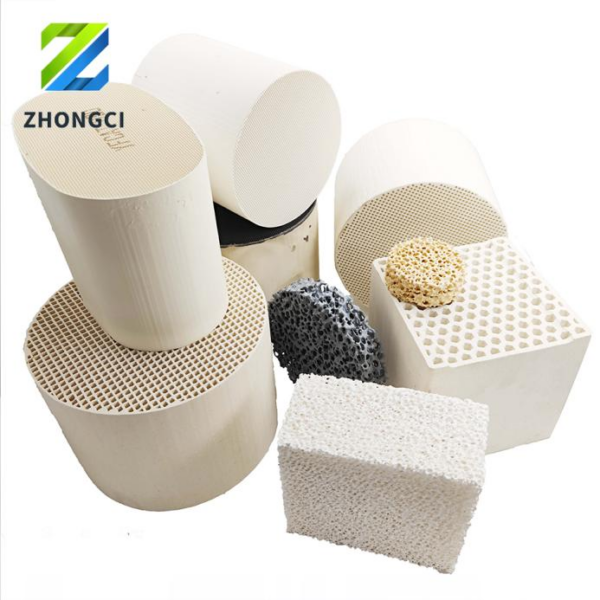
① High dust content in gas. Before there is no bag dust removal, the dust content of blast furnace gas is 1-10s/m, this gas can not directly through the honeycomb. If directly used, it will soon plug the honeycomb. Therefore, the blast furnace gas must be dusted by the cloth bag, and the blast furnace dust bag should be replaced regularly . Improvement Measures for Honeycomb Ceramic, causes-of-honeycomb-blockage-and-damage-and-improvement-measures
causes-of-honeycomb-blockage-and-damage-and-improvement-measures. honeycomb ceramic
High water content in gas
② High water content in gas. In the process of gas combustion, the condensate water in the gas pipeline will cause the ceramic plate of the regenerator chamber, which will form a blockage for a long time. Treatment method: Install a trap every 100 meters in the gas main pipe to collect and discharge the condensate water in the gas pipe, and play the role of water seal under the allowed pipeline gas pressure.
Flash seam of the upper honeycomb of the regenerator
③ best honeycomb ceramic. Flash seam of the upper honeycomb of the regenerator. On the one hand, this situation is due to the gap between the size changes in the heat storage room, and on the other hand, The design is convenient to install the honeycomb body with a gap, and this gap becomes the inevitable channel of fire leakage, and the smoke exhaust airflow passes directly from the flash seam, causing the smoke exhaust temperature to be extremely high.
The usual treatment method is to plug asbestos into the gap, but it is not reliable and easy to blow off. Switch to refractory material, can be used for a longer time.
Erosion of iron oxide
④ best honeycomb ceramic. Erosion of iron oxide. After being used for a period of time, the iron oxide slag at the bottom of the furnace is piled up, and the oxidizing slag is too close to the burner nozzle, and the iron oxide dust in the furnace enters the regenerator with the flue gas.
These substances are harmful substances for refractory materials and react with the honeycomb body to form low-melting point substances at high temperature. It increases the dust adsorption capacity of the pore wall. At the same time, due to the increase of sediment. The reaction goes deeper and the liquid phase volume increases. Resulting in honeycomb deformation, rupture.
https://www.rtoceramic.com/pingxiang-zhongci-environmental-ceramics/