What is the meaning of foam ceramic filter PPI ?

Table of Contents

foam ceramic filter ,what-is-the-meaning-of-foam-ceramic-filter-ppi. OEM, Lower MOQ. fast deliver. Good quality with competitive price.https://www.rtoceramic.com/product-category/all-products/ceramic-foam-filter-plate/

Ceramic foam filter is a material widely used in filtration, separation, and purification. Its excellent performance and wide range of applications have gradually attracted attention. The manufacturing process, performance fields, advantage comparison, use and maintenance, and development trends of alumina ceramic foam filters.

A ceramic foam filter is a three-dimensional porous structure ceramic material with high air permeability, high corrosion resistance, high heat resistance, and high mechanical strength. It is mainly used in liquid-solid and gas-solid separation fields, such as water treatment, Filtration, separation. And decomposition in chemical protection, social security, pharmaceutical, and other industries.

It has the advantages of good thermal shock resistance, high porosity, high strength, good heat shock resistance, and can withstand large flow of hot metal filtration. Can be used for casting steel, can greatly reduce sand holes, slag holes, pores, inclusions and other defects. Improve the surface quality of castings, improve machining performance, improve mechanical properties.
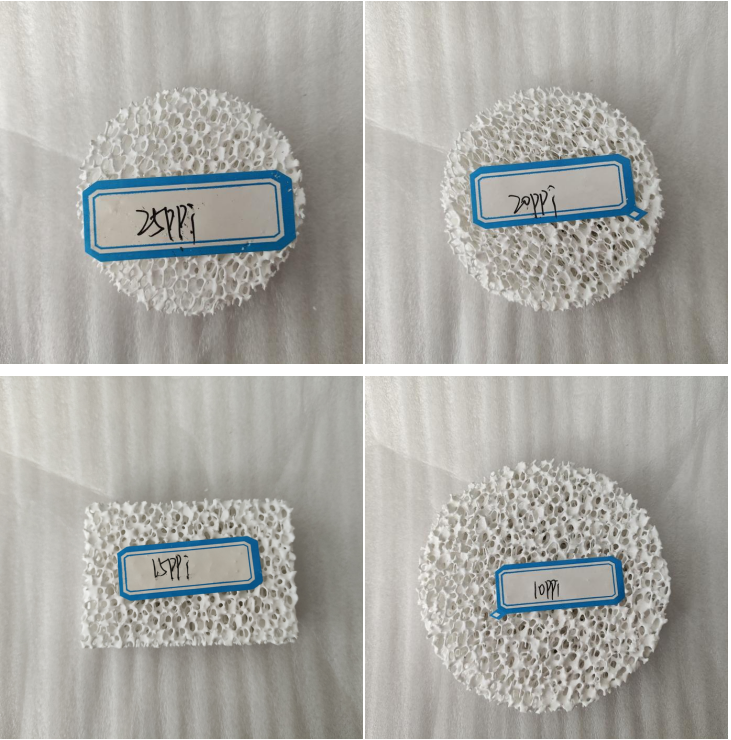
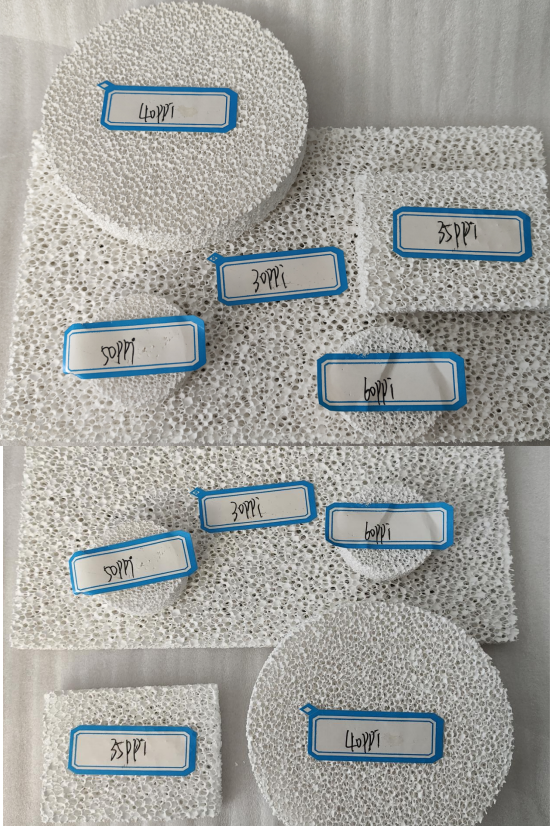
The filter PPI, the model is indicated by P, and the internationally common PPI is indicated, that is to say, the pore density and pore uniformity of the product. The average number of holes in a unit of square inch length. The ppi here is a relatively unique representation of the mesh of the foam ceramic filter, similar to what we usually call “mesh”. Ceramic filter 10ppi and 20ppi compared to 10ppi, 10ppi aperture is larger. 10ppi means there are 10 mesh holes at a distance of one inch, and 20ppi means there are 20 mesh holes at a distance of one inch. The larger the PPI value, the smaller the hole, and the larger the value, the larger the hole.https://www.chempackings.com/ceramic-foam-filter/ceramic-foam-filter-for-aluminum-casting.html
What is a honeycomb ceramic regenerator and what is its function?

Honeycomb ceramic regenerator is the key and core component of regenerative high-temperature combustion technology (HTAC technology). It has been widely used in various pusher-type heating furnaces, walking-type heating furnaces, heat treatment furnaces, forging furnaces, melting furnaces, ladle/tundish roasters, soaking furnaces, radiant tube burners, and hood-type furnaces in the metallurgical machinery industry. Furnace, blast furnace hot blast stove; various ceramic kilns, various glass kilns in the building materials industry; various tubular heating furnaces, cracking furnaces and other industrial furnaces in the petrochemical industry. Material of honeycomb ceramic regenerator: Regenerator material——mullite, cordierite, cordierite-mullite, corundum-mullite, high-aluminum and other materials honeycomb ceramic regenerator are resistant to With significant advantages such as high temperature, corrosion resistance, good thermal stability, high strength, large heat storage, and good thermal conductivity, the various indicators of the product can fully meet the use and operation requirements of industrial furnaces.

What is honeycomb ceramic regenerator – honeycomb ceramic regenerator hole pattern:

Thermal body hole type——Produces four hole types including square hole, hexagonal hole, round hole, and triangular hole.

Application of honeycomb ceramic regenerator: The principle of the regenerative incineration system (RTO) is to use ceramic regenerators to store the heat generated when organic waste gases are decomposed, and use the thermal energy stored in the ceramic regenerators to decompose untreated organic waste gases. , thereby achieving high thermal efficiency.

In view of the process requirements of the regenerative combustion deodorization oven (RTO), honeycomb ceramic products of various materials and sizes such as dense cordierite, loose cordierite, lithium porcelain, mullite, etc. are developed, which have large specific surface area and excellent exhaust resistance. Small, low thermal expansion and contraction coefficient, high bulk density, good thermal shock resistance and other characteristics.

This product is widely used in waste gas treatment equipment in the chemical industry, automotive paint, spray paint drying equipment, organic chemical industry, petrochemical industry, engraving printing, offset printing, food processing and other industries. For more specifications, please see the product page: Honeycomb Ceramic Regenerator

Share your Needs!

Share

Get Custom Quote

Have a question? Get in touch instantly using the form below.
Our customer support team would get back to you soon.

    Get Custom Quote