

Description
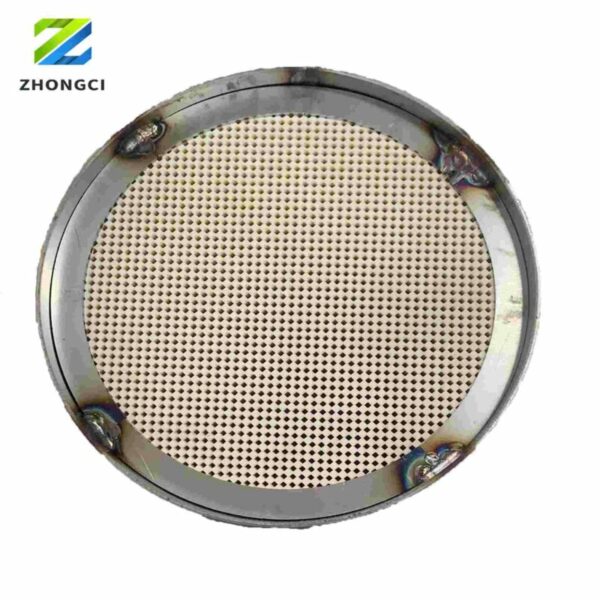
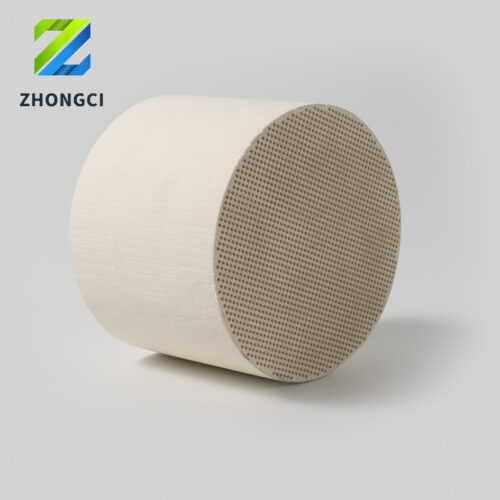
DPF is a device designed to remove diesel particulate matter or soot from the exhaust gas of diesel engine vehicles.The DPF filters first trap particulates and then use a catalytic technology to continuously burn them at normal diesel operating exhaust temperatures.
Cordierite material, which is raw material molding and synthesized cordierite after burning, cordierite DPF filters are one of the most viable solutions available for use today.
DPF Diesel Particulate Filter for PM Exhaust Purification
DPF Diesel Particulate Filter for PM Exhaust Purification
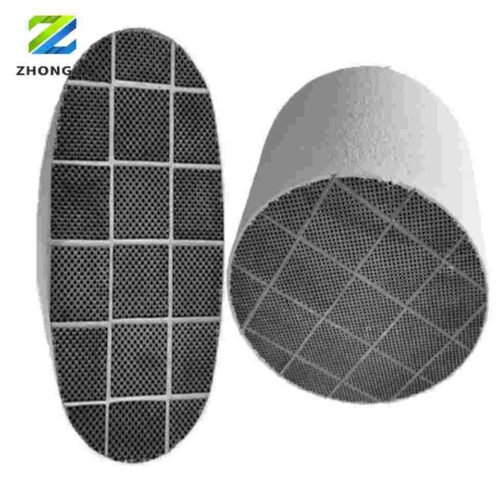
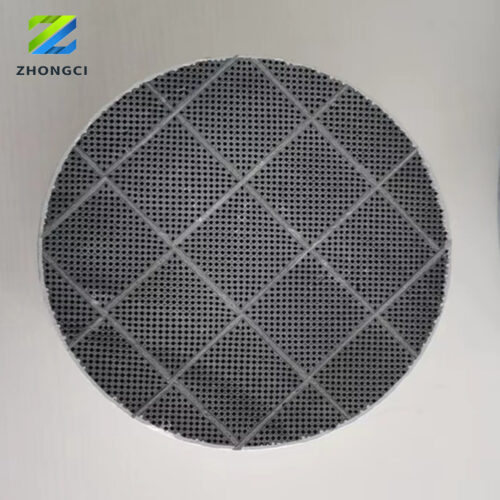
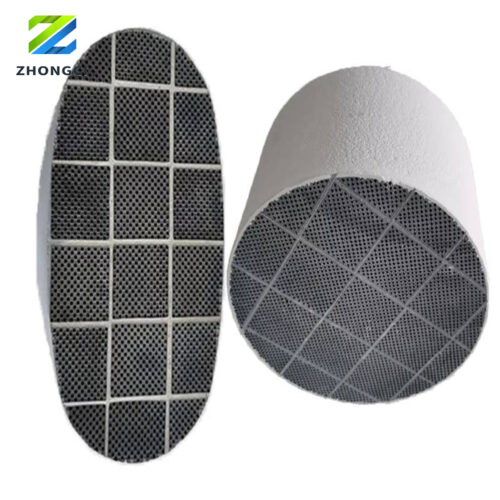
are one kind of wall-flow monolith, the channels are open at one side, but plugged at the other. it will be installed in the diesel car exhaust system, to reduce particulate matters (PM) of exhaust by trapped. The main components of Diesel engine exhaust are particulate matter(PM), carbon monoxide(CO) and hydrocarbons(HC), Diesel Particulate Filters Can reduce them by 90+% from diesel engines
Product Advantage:
High filtration efficiency
Low coefficient of thermal expansion (CTE)
Low thermal shock resistance
Low back pressure
Outstanding durability
Low pressure drop
Technical data of DPF Diesel Particulate Filter for PM Exhaust Purification:
| Item | Technical index | |
| Chemical Composition | SiO2 | 50.9 ± 1% |
| AL2O3 | 35.2 ± 1% | |
| MgO | 13.9 ± 1% | |
| Physical Properties | Compression Strength in normal temperature | ≥ 10Mpa |
| Thermal expansion coefficient | ≤ 1.2 × 10⁻⁶ / ° C | |
| Wall thickness of hole density of 100 hole/ in2 | 0.42-0.50mm | |
| Wall thickness of hole density of 200 hole/ in2 | 0.32-0.40mm | |
| Apparent porosity | ≥ 50% | |
| Average hole diameter | 10-15 micron | |
| Highest Working Temperature | 1400 ° C | |
| Soot-filtration efficiency | ≥ 95% | |
Reference size,we can OEM other size too.
| Size | CPSI | Volume(L) |
| φ118*152.4 | 100/200 | 1.67 |
| φ118*254 | 100/200 | 2.78 |
| φ127*152.4 | 100/200 | 1.93 |
| φ127*180 | 100/200 | 2.3 |
| φ127*254 | 100/200 | 3.22 |
| φ144*152.4 | 100/200 | 2.49 |
| φ144*203 | 100/200 | 3.31 |
| φ144*254 | 100/200 | 4.44 |
| φ144*305 | 100/200 | 4.97 |
| φ190*152.4 | 100/200 | 4.32 |
| φ190*203 | 100/200 | 5.76 |
| φ190*305 | 100/200 | 8.65 |
| φ240*240 | 100/200 | 10.9 |
| φ240*305 | 100/200 | 13.8 |
| φ250*305 | 100/200 | 14.97 |
| φ267*254 | 100/200 | 14.22 |
| φ267*267 | 100/200 | 14.95 |
| φ267*305 | 100/200 | 17.07 |
| φ286*305 | 100/200 | 19.6 |
| φ286*355 | 100/200 | 22.8 |
| φ305*305 | 100/200 | 22.28 |
| φ330*381 | 100/200 | 32.59 |
How doc works:
When the tail gas with harmful gases (HC, Co, NOx) enters doc (diesel oxidation catalyst),
it will be destroyed under the action of catalyst
The oxidation content is effectively reduced to make the discharged tail gas meet the Euro IV emission standard.
Because doc can burn PM in tail gas at high temperature,
When used together with DPF, it can achieve better purification effect and prolong the blocking time of DPF.
Working principle of DPF:
The exhaust gas with PM enters the honeycomb carrier of DPF. PM is intercepted in the honeycomb loading body. When the exhaust gas flows out of DPF, most of the PM
Has been filtered out. The filtration effect of DPF on PM can reach more than 95%,
which has been internationally recognized as a good method to reduce PM emission. tiny
Working principle of particle trap:
by alternately blocking both ends of the honeycomb porous ceramic holes, the ceramic wall holes are used to filter and remove PM.
Reviews
There are no reviews yet.