
Description
Product Description
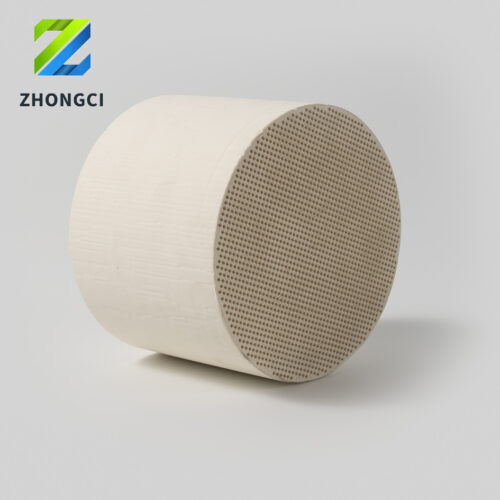
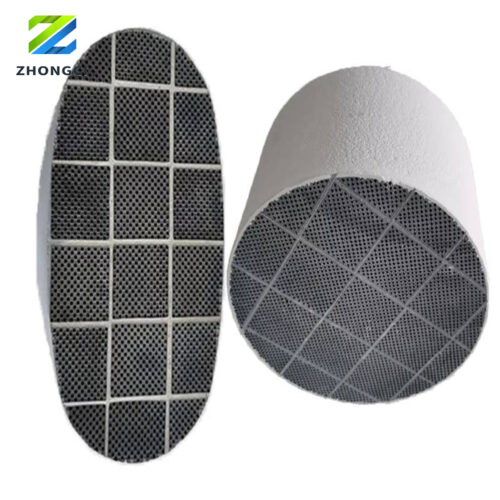
The tail gas emitted by diesel engine enters the air inlet of tail gas filtration system and contains a large amount of carbon particles
After passing through the TPS filter element wall from the outside to the inside, the carbon particles are captured by the filter element wall, and the clean gas is discharged from the exhaust port Into the atmosphere.
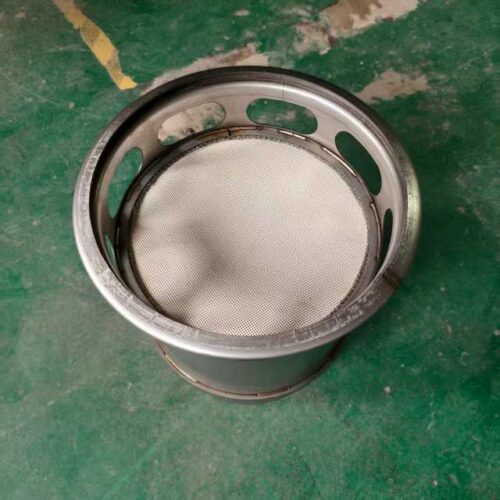
With the continuous operation of the engine, the carbon particles on the outer surface of the filter element accumulate continuously, and the back pressure of the tail gas filtration system increases;When the carbon particles on the outer surface of the filter element accumulate to a certain value, when the back pressure rises to a certain value, the machine can be shut down and the card can be removed Clamp, pull out the filter element, put the filter element under the water, wash it with water, reinstall it into the shell, and tighten the clamp, i.e
Can be used again. This cycle.
Technical data:
| Item | Technical index | |
| Chemical Composition | SiO2 | 50.9 ± 1% |
| AL2O3 | 35.2 ± 1% | |
| MgO | 13.9 ± 1% | |
| Physical Properties | Compression Strength in normal temperature | ≥ 10Mpa |
| Thermal expansion coefficient | ≤ 1.2 × 10⁻⁶ / ° C | |
| Wall thickness of hole density of 100 hole/ in2 | 0.42-0.50mm | |
| Wall thickness of hole density of 200 hole/ in2 | 0.32-0.40mm | |
| Apparent porosity | ≥ 50% | |
| Average hole diameter | 10-15 micron | |
| Highest Working Temperature | 1400 ° C | |
| Soot-filtration efficiency | ≥ 95% | |
Reference size,we can OEM other size too.
| Size | CPSI | Volume(L) |
| φ118*152.4 | 100/200 | 1.67 |
| φ118*254 | 100/200 | 2.78 |
| φ127*152.4 | 100/200 | 1.93 |
| φ127*180 | 100/200 | 2.3 |
| φ127*254 | 100/200 | 3.22 |
| φ144*152.4 | 100/200 | 2.49 |
| φ144*203 | 100/200 | 3.31 |
| φ144*254 | 100/200 | 4.44 |
| φ144*305 | 100/200 | 4.97 |
| φ190*152.4 | 100/200 | 4.32 |
| φ190*203 | 100/200 | 5.76 |
| φ190*305 | 100/200 | 8.65 |
| φ240*240 | 100/200 | 10.9 |
| φ240*305 | 100/200 | 13.8 |
| φ250*305 | 100/200 | 14.97 |
| φ267*254 | 100/200 | 14.22 |
| φ267*267 | 100/200 | 14.95 |
| φ267*305 | 100/200 | 17.07 |
| φ286*305 | 100/200 | 19.6 |
| φ286*355 | 100/200 | 22.8 |
| φ305*305 | 100/200 | 22.28 |
| φ330*381 | 100/200 | 32.59 |
Advantages of diesel exhaust purifier
1. The filtration efficiency of particulate matter exceeds 90%, and the discharge is fully up to the standard.
2. The maintenance is simple, and water can be washed and regenerated in 1 minute;
3. Convenient installation, clamp type installation, quick disassembly in 30 seconds;
4. Zero secondary pollution;
5. Low comprehensive cost, simple modification and convenient maintenance;
The carbon monoxide (CO) and hydrocarbon (HC) emitted from the diesel engine are reduced through the oxidation catalyst (DOC), and then through the bee
The honeycomb ceramic wall flow particle trap (DPF) captures ultra-fine nano soot particles (PM) in DPF to reduce polluting gas and carbon
Purpose of smoke particle emission. The pressure value in the system is monitored in real time through the electronic control unit. When the pressure value in the system reaches the regeneration set value, it is powered on
Automatic alarm at cockpit end of sub control unit.
How doc works:
When the tail gas with harmful gases (HC, Co, NOx) enters doc (diesel oxidation catalyst), it will be destroyed under the action of catalyst
The oxidation content is effectively reduced to make the discharged tail gas meet the Euro IV emission standard. Because doc can burn PM in tail gas at high temperature,
When used together with DPF, it can achieve better purification effect and prolong the blocking time of DPF.
Working principle of DPF:
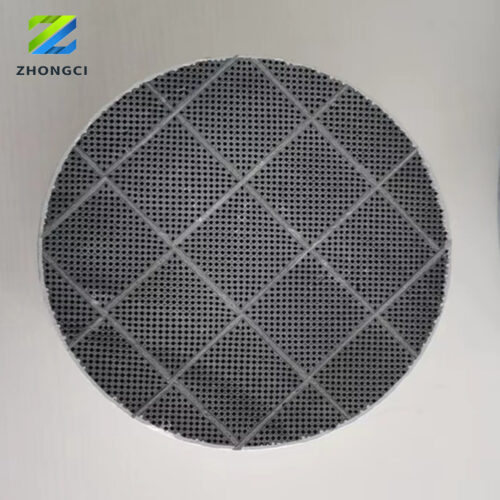
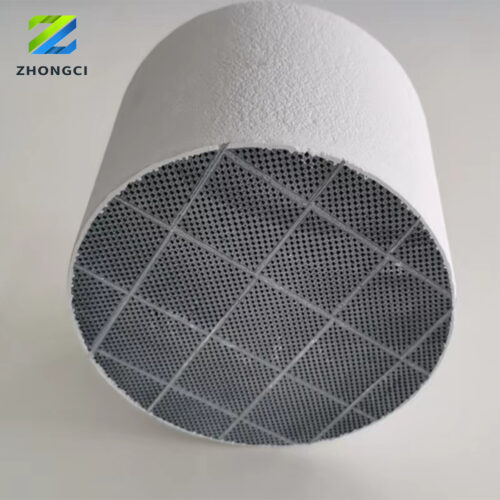
The exhaust gas with PM enters the honeycomb carrier of DPF. PM is intercepted in the honeycomb loading body. When the exhaust gas flows out of DPF, most of the PM
Has been filtered out. The filtration effect of DPF on PM can reach more than 95%, which has been internationally recognized as a good method to reduce PM emission. tiny
Working principle of particle trap: by alternately blocking both ends of the honeycomb porous ceramic holes, the ceramic wall holes are used to filter and remove PM.
Reviews
There are no reviews yet.