


Description
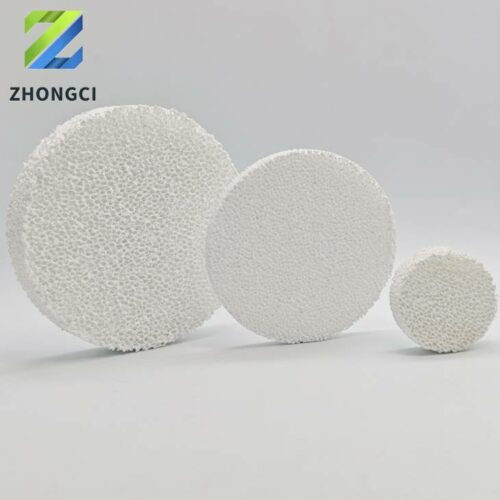
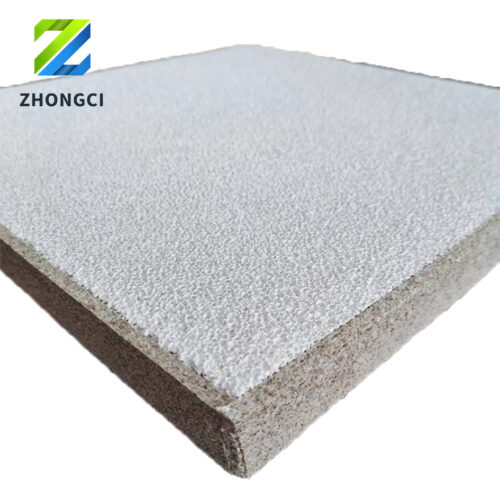
ZIRCONIA CERAMIC FOAM FILTER
Applications Applied apply high melting point metal alloys alloy steel stainless steel yellow zirconia foam ceramic filter
Zirconia Ceramic Foam Filter is a phosphate-free, high metling point, It is characterized by high porosity and mechanochemical stability and excellent resistance to thermal shock and corrosion from molten steel, It can effectively remove inclusions, reduce trapped gas and provide laminar flow when molten zieconia foam filtrated, it is machined to tight dimensional tolerance during production, this combination of physical properties and precise tolerance make them first choice for molten steel,alloy steel, and stainless steel, etc.
| Main Material | ZrO2 |
| Working Temperature | ≤1700ºC |
| Color | Yellow |
| Hole density | 10/20/30PPI(PPI=pores per inch) |
| Porosity(%) | 80‐87 |
| Compressive Strength(MPa) | ≥1.5 (Room temperature) |
| Bulk Density(g/cm3) | 0.8‐1.3 |
| Thermal shock resistance | ≥3times/1350ºC‐Room temperature |
Zirconia ceramic foam filters are determined for filtering of steel and steel alloys up to the temperature of 1700 °C.
Filters are recommended especially for high quality grades of alloys.
Ceramic foam filters offer a simple, reliable and costeffective method to remove inclusions. Filtering with CFF is a supplement to metal treatment within the furnace, such as fluxing and degassing or inline filtration.
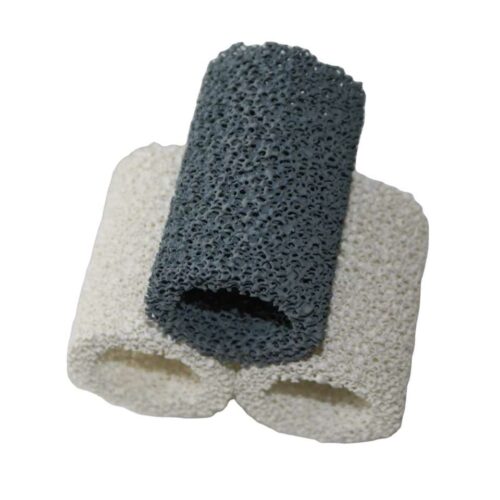
Ceramic foam filters have an open pore reticulated structure with very high porosity and surface area to trap inclusions. The open foam structures are compose of ceramic material, such as alumina, mullite or silica. Alumina is the most common filter material. Ceramic foam filters operate in a deep bed filtration mode where inclusions smaller than the pore openings are retained throughout the cross-section of the filter.
CFFs typically are a polyurethane foam coated with a ceramic slurry then dried and fired. During firing, the polyurethane foam dissipates leaving behind a porous ceramic structure. The ceramic can be a phosphate-bonded alumina and pore sizes and thicknesses can vary.

Reviews
There are no reviews yet.